Windows are everywhere. Depending on where you are — your bedroom, your office, a hotel room, or a tiny tourism office overlooking a lively street in a beach town in the Dominican Republic, shown above — a window can reveal different things.
They are portals into the world’s stories. Glimpses into other people’s lives. Looking out (or into) a window can tell you about where you are — and where you’re not — and mark a particular moment in time, linking you to a physical place. Windows are also enablers of our daydreams and desires, and can stir up memories and big ideas.
This week, in a post created specifically for this challenge, share a photo with a window, say Cheri Lucas Rowlands at the Daily Post.
This photo was taken on a balmy summer evening from inside one of my favourite restaurants. It is looking across the green at the Norman Cathedral of St Peter, here in Exeter. There can be few better views to enjoy while waiting to be served and the photo – with my phone – doesn’t do it justice, so you’ll have to imagine the rest or search my tags for other posts about the cathedral!
Mount Etna is the largest active volcano in Europe and it’s been very active in the last year. When I visited in June 2013, it wasn’t possible to climb it because of the eruptions in April. I could still tour the area and the best views of Etna are possible from the 1800 metres Monti Sartorius,which I did climb.
Travelling around Etna you will see lava flow, both recent and ancient. Where there has been a flow, vegetation takes times to recover, but gradually signs of life appear through the ash.
Where there are full grown trees, they have grown through lava from way back. Christmas tree sized and the lava is not so old, and in places where there is only low growing plant life, soapworts for example, the lava is from very recent eruptions. So, the flora is beginning to re-establish itself.
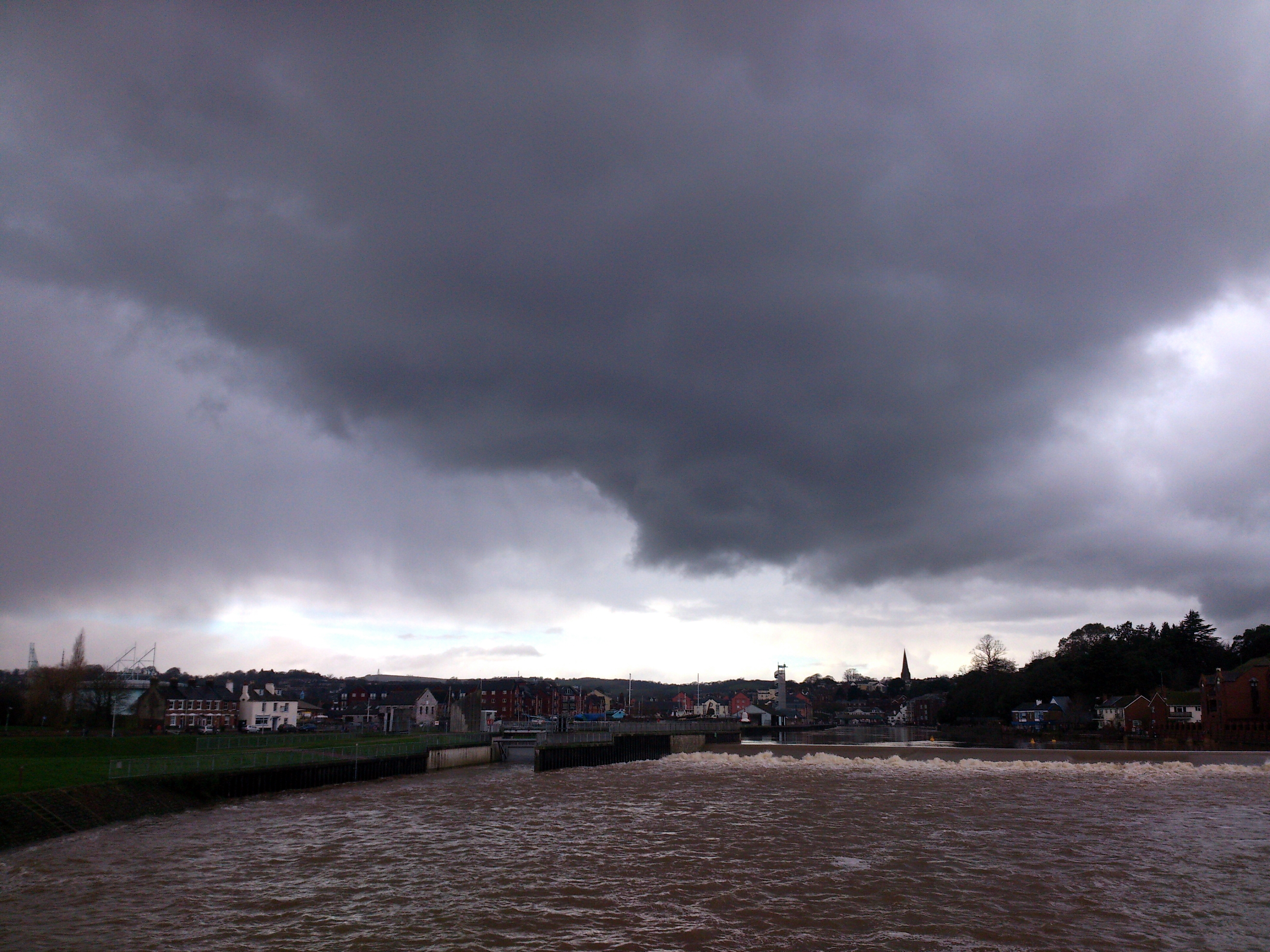
When will I learn not to believe the weather forecast and to dress appropriately? Probably never, you see I have this blind faith and optimism that it won’t dare to rain on me. I hate rain, at least in daylight. The dogs were in the car and they knew they were going to the river when it began and for Dido it would be a tough decision, she wanted an adventure but she hates rain even more than I do! We decided to compromise by walking at the quay, instead of the fields.
We headed for the short cut back, on the bouncy bridge, this is why.
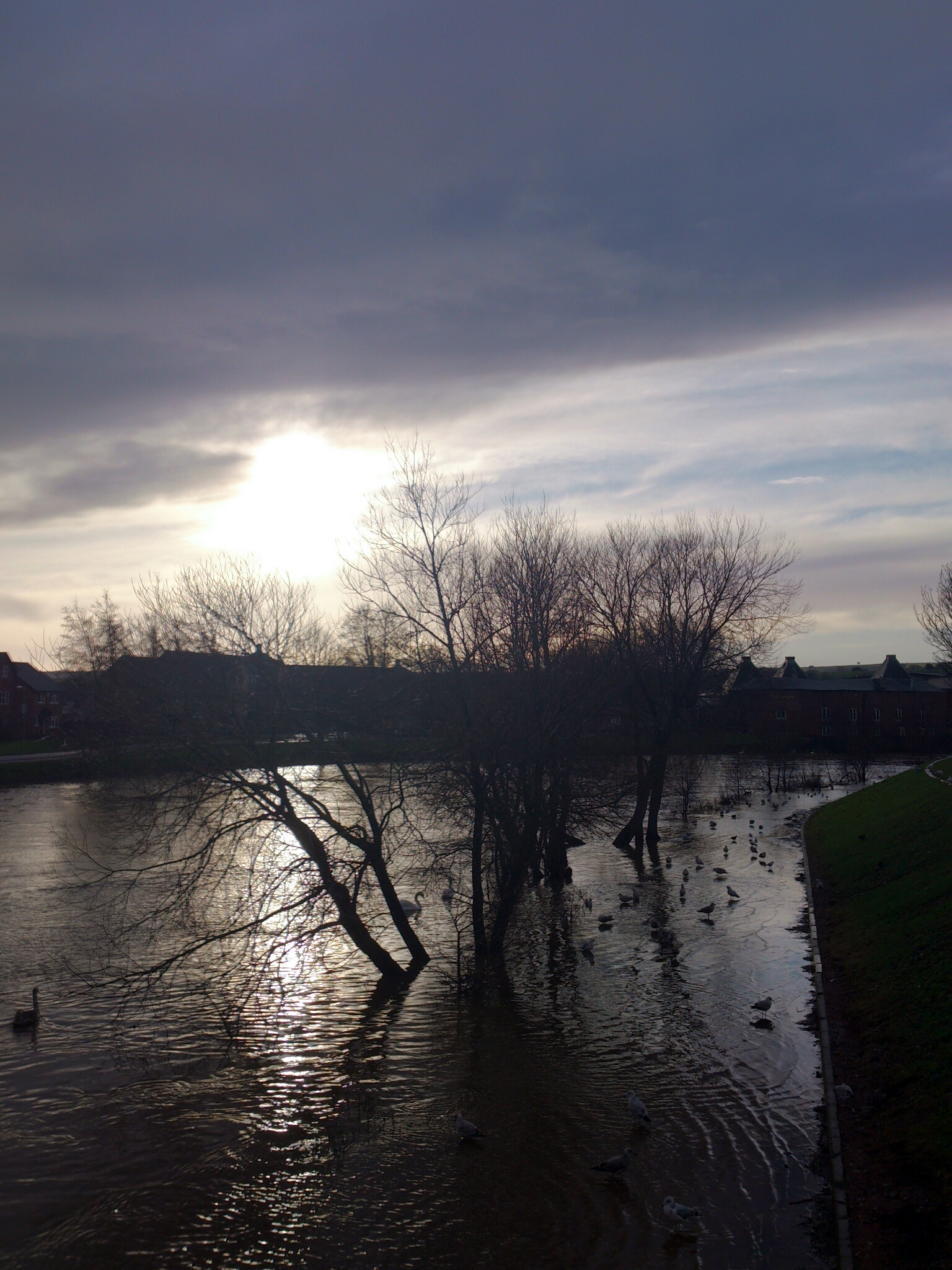
From there the way back is only about a mile, but the rain came sideways, the sort that gives you a headache because it’s so cold. There’s a really nice dog friendly cafe when you’re nearly back to the start, but all of us were wet, and we knew the dogs would shake off the excess as soon as they got inside, so we ploughed on. At the little blue foot bridge we had to divert because the path was flooded.
Looking back at the flooded path.
And below, there’s a path beneath the grass bank also flooded.
Cricklepit bridgeOld warehouses, now cafes and shops
We headed back to our start, along the west side of the quay. Opposite, where we were before crossing the bridge, more warehouses have been made into little shops.
There are several of these Victorian lamp posts.
This one is on the canal basin, at Piazza Terracina, named after Exeter’s twin city in Italy.
And this lass does her best to lure you in for something warm.
So that was today’s walk, cut short by the rain but I hope you still enjoyed it. Dido didn’t, she looked thoroughly fed up by the time she climbed into the car!
It’s been ages since I took part in Marianne’s CBBH challenge, sorry Marianne! When I saw that street art is this months’ theme it reminded me of a day spent with friends in Bristol a couple of months ago. Cannon Street is known for its street art and I snapped my favourite work there.
Marianne says
‘Don’t forget that the CBBH Photo Challenge is a little different from some other challenges, in two ways. First, it’s only once a month – giving you lots of time to consider your entry before the end of the calendar month. Second, and most important, this is a BLOG HOP (after all, it is the CBBH – Conejo Blanco Blog Hop, meaning white rabbit in Spanish), so DON’T FORGET that in your post you need to add links to two blogs that you have visited and commented on during the past month. That way, when we visit each other, we can HOP OVER to your links, connect with others and share a little blog love around!’
And so here are two blogs that I hope you will enjoy.
The first is Paul’s Learning from Dogs, where the vision statement is,
Our children require a world that understands the importance of faith, integrity and honesty
Learning from Dogs will serve as a reminder of the values of life and the power of unconditional love – as so many, many dogs prove each and every day
Constantly trying to get to the truth …
The power of greater self-awareness and faith; faith that the only way forward for us is through the truth …’
Next is Donna from Michigan who writes as Huffy Girl. She always makes me laugh and she believes in cycling for fitness and fighting a one woman war against cheese! If you need help with health and fitness tips or just cheering up she’s your girl! Find Donna at, http://huffygirl.wordpress.com/
If you’ve visited Lucid Gypsy a few times you’ll know that I don’t do science, but if I ever decided to, it would be geology. The ground we walk on really fascinates me, especially around here. On Saturday my friend and I went to Axmouth (and saw yesterday’s robin) and walked on the pebble beach for a while.
Just a small area, but a part of both the East Devon Area of Outstanding Natural Beauty and the Jurassic Coast World Heritage Site, this 304 hectares has been named Haven Cliffs.
I’m not posting this first photo for its beauty but so that you can see the change in the rock, at Beer, a couple of miles west of where I stood, from white chalk to red sandstone.
Back to the cliff above me, click to see the layers.
And again. See how the landslips have made the layers visible?
Apparently, the red sandstone was formed 210 million years ago in the late Triassic era, when conditions were desert like. The grey rock layers are the remains of dried up lake beds when the deserts were inundated by rising sea levels. The overlying chalk cliffs formed 85-95 million years ago from the remains of billions of tiny sea creatures.
The South West Coast Path rises above these cliffs and it’s possible to walk the 7 miles east to Lyme Regis. It would be a killer though unless you’re really fit, in which case it would take 5 hours. The time and distance is fine but I don’t do hills very well. I’d like to take a boat trip along the Jurassic Coast, and see it from that perspective, perhaps this summer.








 Lucid Gypsy