Karni Mata, facing my fear

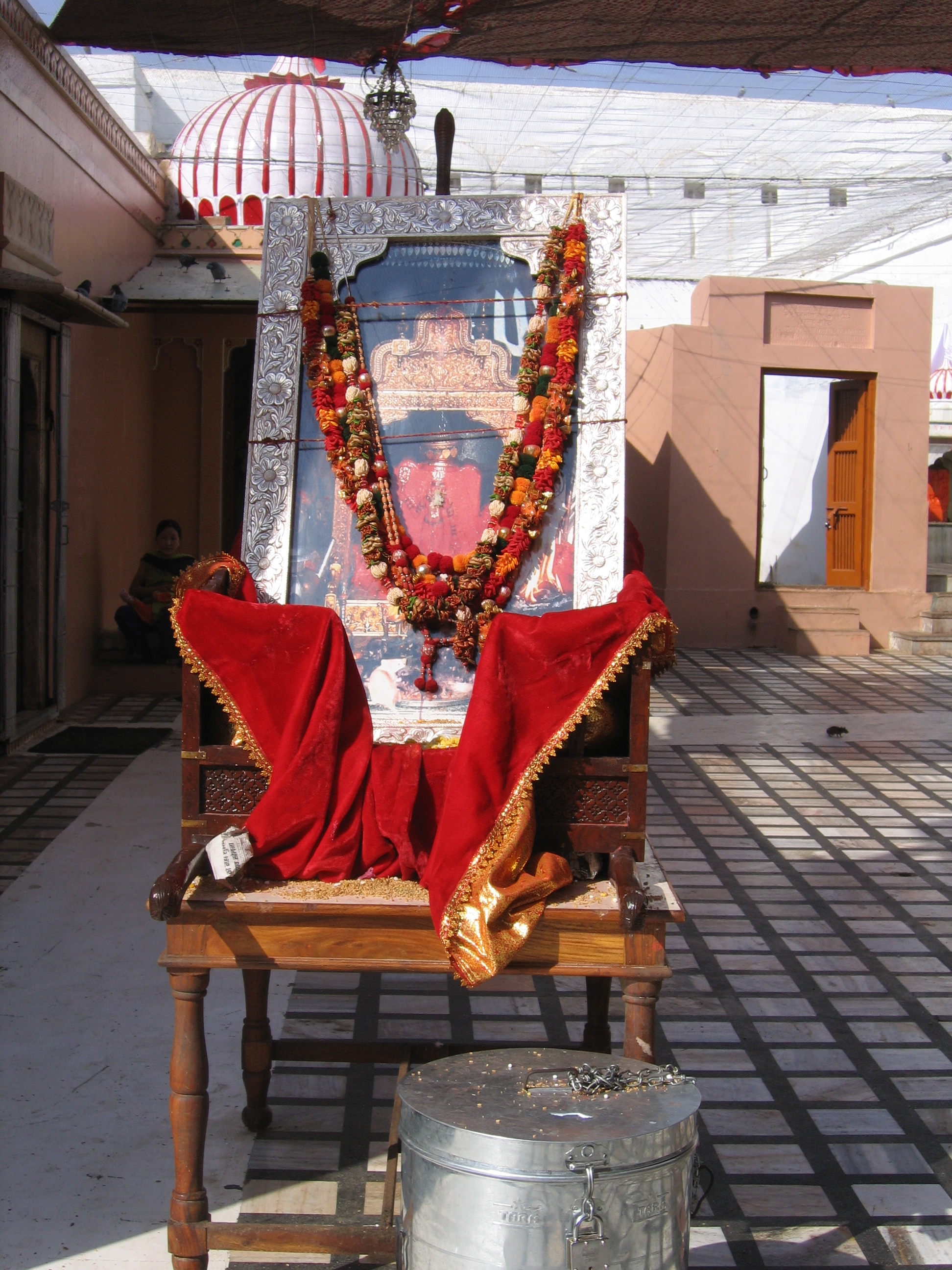
In the depths of the Thar desert, Rajasthan, stands the wonder that is Karni Mata, and bravely or foolishly we decided to visit. We had been advised to put socks on, so we obeyed and left our expensive walking sandals by the entrance in a pile of worn, grubby, flip flops. It was only 9am but the courtyard felt like a hotplate and we were grateful for the barrier the socks provided. Right away we spotted rats running along the ground. I stood still and looked around, realising there were odd ones everywhere, mainly quite still but on all levels of the temple walls, on little crevices and niches. Following the route around, I kept my head facing directly forwards, on a neck that was as rigid as the temple walls. My eyes roamed in every direction to the degree where whatever that muscley cordy thing is that stops eyeballs falling out, was hurting. I didn’t want to see them, but I wanted to know where they were and whichever way I looked I could see them. Not many, not flocks or whatever the collective term is, but a few, just going about their ratty business, dashing, pottering, sitting upright with whiskers twitching. 
The place was getting busier, mainly with Indian families, well dressed tourists, the women and young girls in colourful saris and salwar kameez, the men in smart fawn trousers and neatly pressed shirts. Judging by their appearance, our sandals probably looked less posh in the pile now.

We were being funnelled from the sun towards a cave-like entrance. Just as I was thinking what on earth is this dark hole, someone drew my attention to the walls where a series of hand prints were visible. ‘It’s the widows’ they said, ‘they were mourning and about to commit Sati . . . throw themselves on the pyre. I’d heard of this of course but having it presented to me was another matter. The rats scurrying around my feet became as nothing. How could I fear an eight inch long-tailed creature when those women had felt compelled to throw themselves onto a fire? Looking at every hand, I reached a point where the hallway turned a corner, into total darkness. My worst nightmare and I turned to look behind, meeting the eyes of the Hindi women who saw that my eyes were moist, ‘Don’t worry’ they said, ‘the practice is outlawed now, it rarely happens, keep going it’s okay’. I had to walk on and after five yards or so another corner with light at the end.

Emerging into the heat I took a deep breath and the stench registered for the first time. A bell sounded and I don’t know if it was coincidence or if the rats knew it was chow time, but far too many of them emerged and headed towards a corner area. There an elderly man had set down large metal trays of milk, which they devoured. 
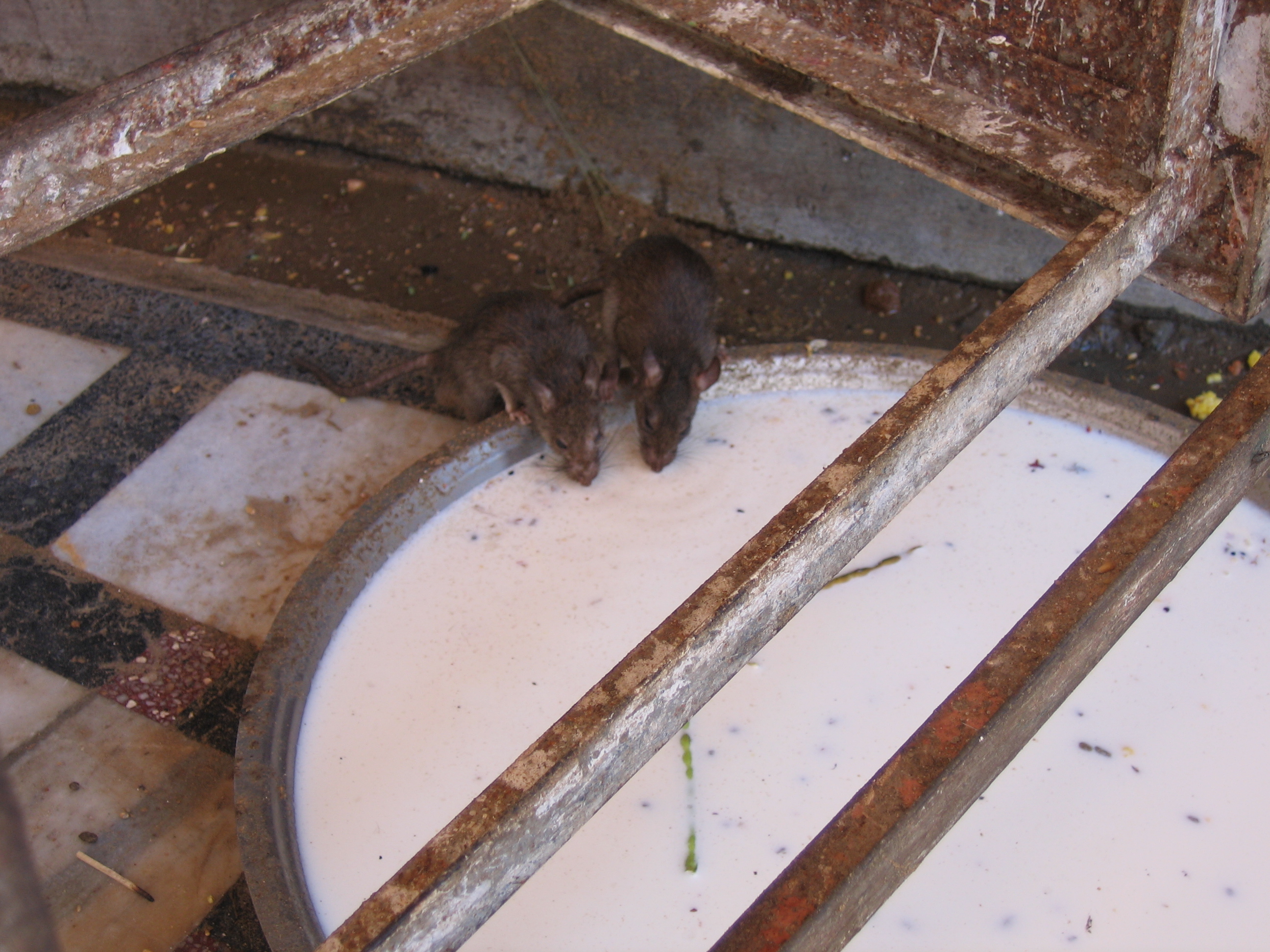
I felt very queasy, but also drawn to watch, it was easier in the courtyard. It is considered very bad luck to step on or harm any of these creatures; they are revered as sacred Hindu deities. There are thousands ruling in this temple, with its ornate silver doors and marbled floors littered with droppings. Just a few are white, and I saw one, supposedly very auspicious. Having them that close made me feel really anxious. I don’t think it was auspicious for me; Karni Mata could have been where I caught the bug that made me lose three days of the journey being ill. I still can’t bear rats, but when I look back at my photos – very few because I couldn’t concentrate – and don’t have to avoid stepping on them, they look nearly, just a tiny bit cute. Apart from those tails. I’m glad I dared to visit and I’m grateful to Mugan Singh for the sock advice. 

A reluctant time traveller

I stumbled across a prompt, what period of history or event would you like to time travel to? It sent my mind butterflying through the centuries and around the world, to Egypt when the pyramids were being built and then feeling a touch guilty, back closer to home and Stonehenge. I didn’t linger in either place; gruelling physical labour in either climate would have meant an unpleasant life and an early death. The story of the stones arriving from Preseli 150 miles away is known to be a myth but someone still had to shift them upright. Naturally as I would be arriving via time machine they might revere me as a goddess, but more likely they’d torture and punish me as something demonic. So, an alternative? I live in a city founded by the Romans around AD50, the arrival, overthrowing of the Dumnonii tribe and establishment of a fort overlooking the river as part of their march westward would have been terrifying to the locals. Some of them still get a bit anxious when tourists arrive for a bank holiday to drink our most expensively rated and billed water for free. Would it be worth cranking up the time machine for? Only for the wine they brought with them!

Many years ago I devoured a series of books, ‘Earth’s Children’ by Jean Auel. The heroine, Ayla manages to tame a young horse, the first step towards domestication of an animal. Since then I have often wondered about that period when other creatures started to share our lives, to mutual benefit – maybe, and carried to the extreme with the training of cormorants to fish for us. That’s quite high on my list of who, why, how did someone first think that up questions. This all takes place 30,000 years ago when the oral tradition of storytelling was probably flourishing but I’d probably miss my shelves of books and the Kindle app on my Android.

Take a quick step forward. I’ll disembark from Viator, as I’ve named my time machine, to the industrial revolution, the nineteenth century and the wonder of the first railways. To be among the first people to travel on, to be propelled from place to place, by a beast of a machine belching steam with a smell that I can conjure in an instant. Suddenly machines were making farm workers life easier, productivity increased and many moved to cities and factory jobs. Would I want to be there? Child labour abounded, workers were exposed to dangers appalling to our health and safety conscious society, exposure to toxic chemicals, I don’t think so.

The end of World War 2 in 1945, elation, sorrow, grief and loss. Children without fathers, women without husbands and mothers without sons. A time to rebuild and move forward with hope. What was there for women? To make way for the return of the troops they were forced into a backwards move to hearth and home, to being the housewife scrubbing the step instead of making ammunition and aircraft. Making do with food rationing for another decade and for those able to work the inequality of being paid at a lower rate than men for the same job, a situation my daughter couldn’t imagine, but was still in place when at 15 I had my first Saturday job. The joy and relief of peacetime would quickly dissipate under the daily struggle.

History is littered with war, destruction, misery, brutality, with a sprinkling of beauty and creativity for the rich, usually the perpetrators. If I’m correct in believing that I’ve been round a few lifetimes already, than I’ve experienced enough of history and I don’t think I want to travel to any past life anytime soon. Can Viator please take me to the future? The future of beauty queens where there is world peace and no-one is poor, hungry, at war or living with oppression.

Weekly Photo Challenge: Up

This week I really couldn’t decide how I wanted to interpret the challenge of ‘Up’, so I thought I would have some fun with . . .

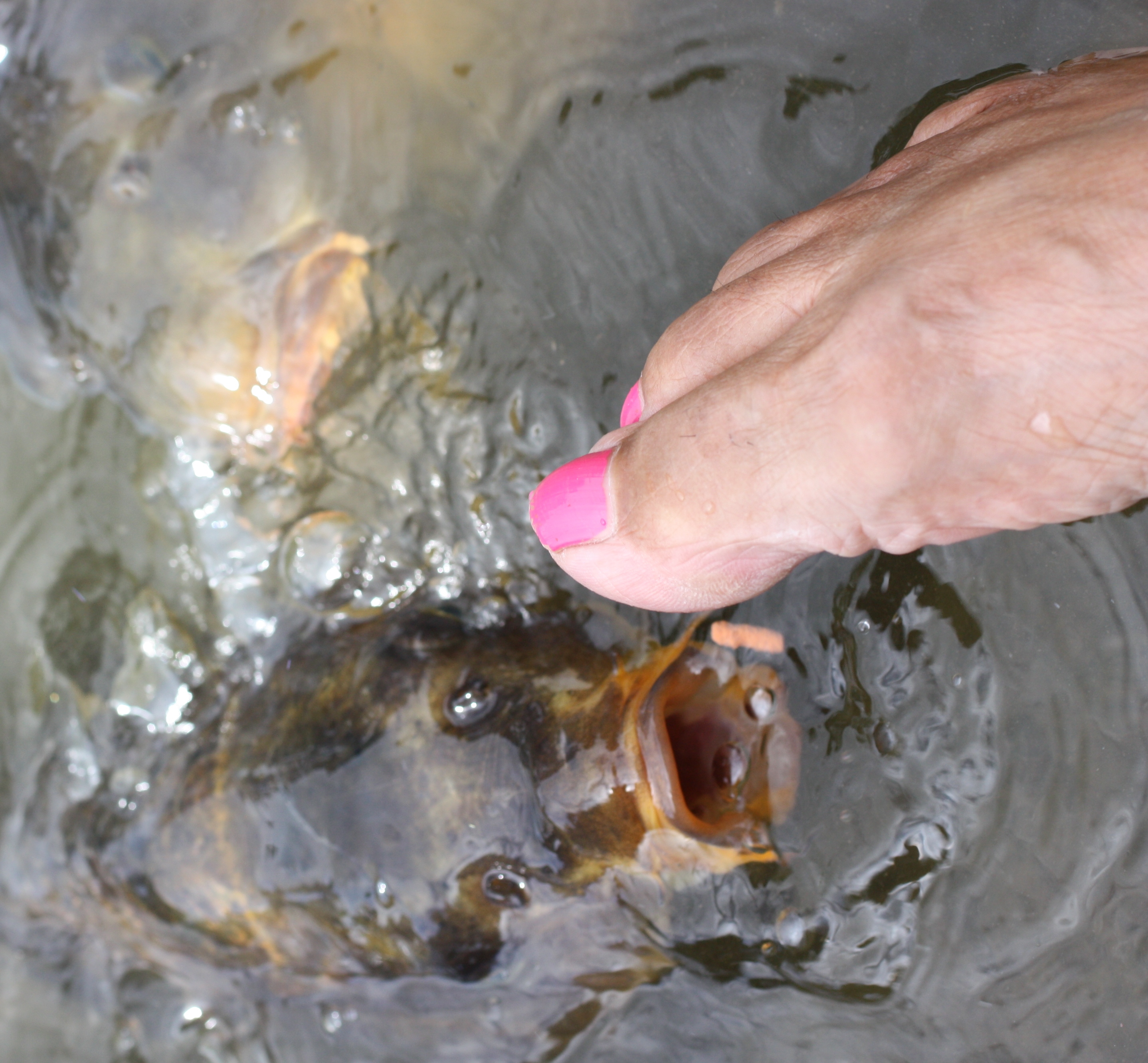
a very hungry carp!

and a  laughing Arabian . . .

And finally . . .

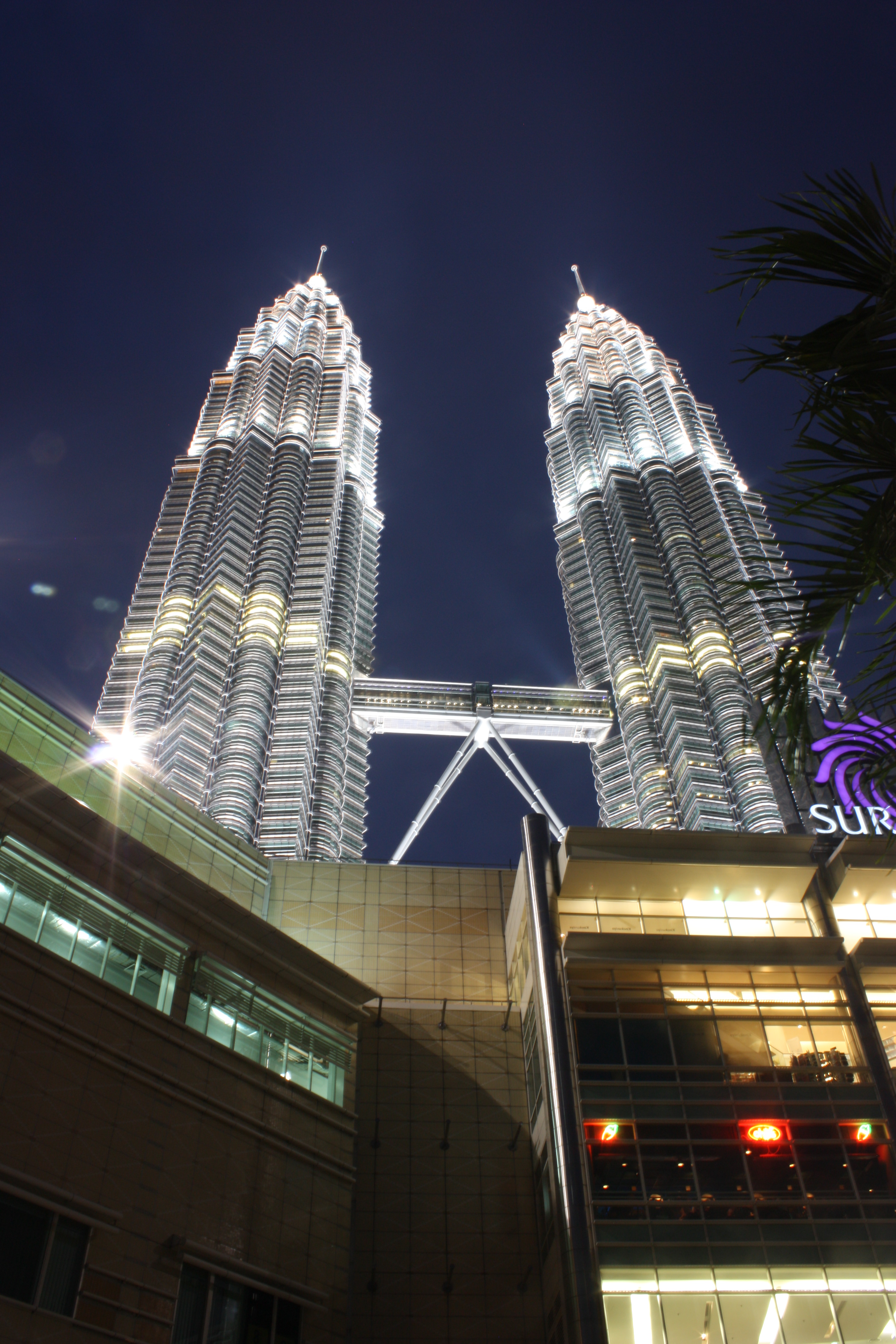
The Petronas Towers in Kuala Lumpur, for a few years the world’s tallest building,  now second or third on the list but still the tallest twin towers. I was there in December 2009 and my hotel room http://www.shangri-la.com/en/property/kualalumpur/traders had the most stunning view. I found it so incredible that I’d lie awake at night just mesmerised by it.

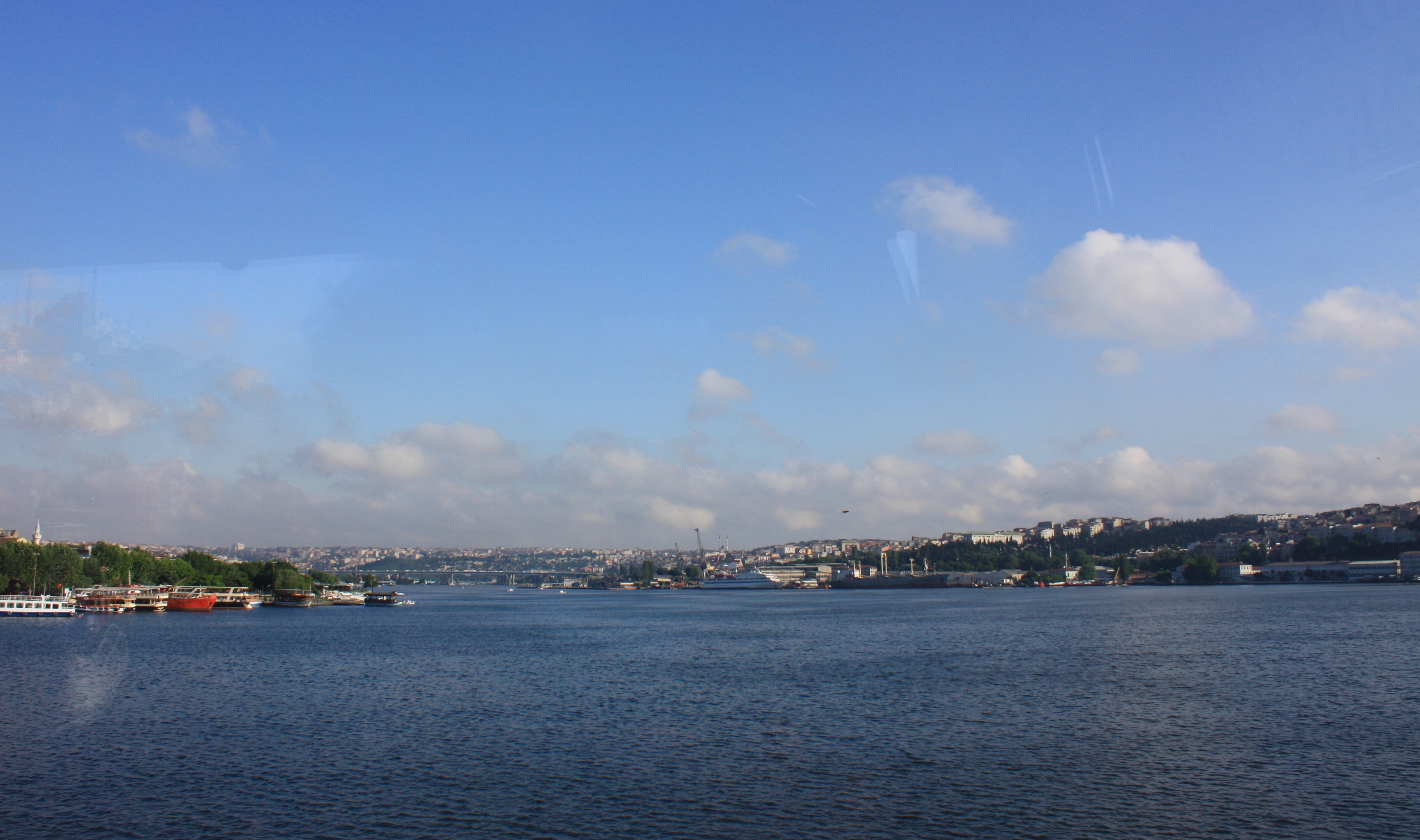
Twinset and Pearls at the Golden Horn

I’d wondered what sort of person books a ‘Grand tour of Turkey’ and kept my eyes open at Heathrow. Sitting at the departure gate, I got a glimpse of my first pair. ‘Oldies’ travelling friend called them, they must be mid seventies, and I said ‘That’s not old and anyway I like old peeps, I hope to be one someday.’

I asked the Mister if he was indeed on the Grand Tour and he replied ‘Yes hopefully, pleased to meet you.’ Hopefully? Does he think he won’t make it? Maybe he knows something that I don’t. There had been terrorist bombs in Istanbul in recent weeks, so I’d been informed by my colleague, who warned me to be careful. ‘I’m not going to worry about things like that’ I reply, ‘If my numbers up that’s all there is to it.’ ‘Just be vigilant’ he says. I am touched by his concern, check the reports and find there had been a bomb in a tourist market, just the sort of place I head for.

Missus Twinset is actually wearing a Persil washes whiter blazer, embroidered with pastel coloured daisies and she is very ‘Keeping up Appearances’. I wonder if this holiday is going to be quite me. I’m more the trekking trousies, hoodie and vest and my concession to dressing for the evening, are flip flops with sequins in case I have the energy to join in with any belly dancing opportunities. Missus makes me feel scruffy, I wouldn’t ever want to dress like that, but …ladies of her ilk usually leave me feeling a tadge grimy, like I’ve bought all  my clothes at Oxfam and have been under canvas for a week. You get the picture don’t you? Because when I’ve said this to other people I’ve been told that I always look ‘well turned out’, ha! Like a Peter Pan collar over a hand knitted navy blue cardy? The briefing meeting will be interesting, if they are all fogeys I’ll have to try to ruffle them up a bit.

At the arrival meeting we sit beside the above crusties, Frank and Betty – yes really! And are joined by Dave and Lesley, more our age.

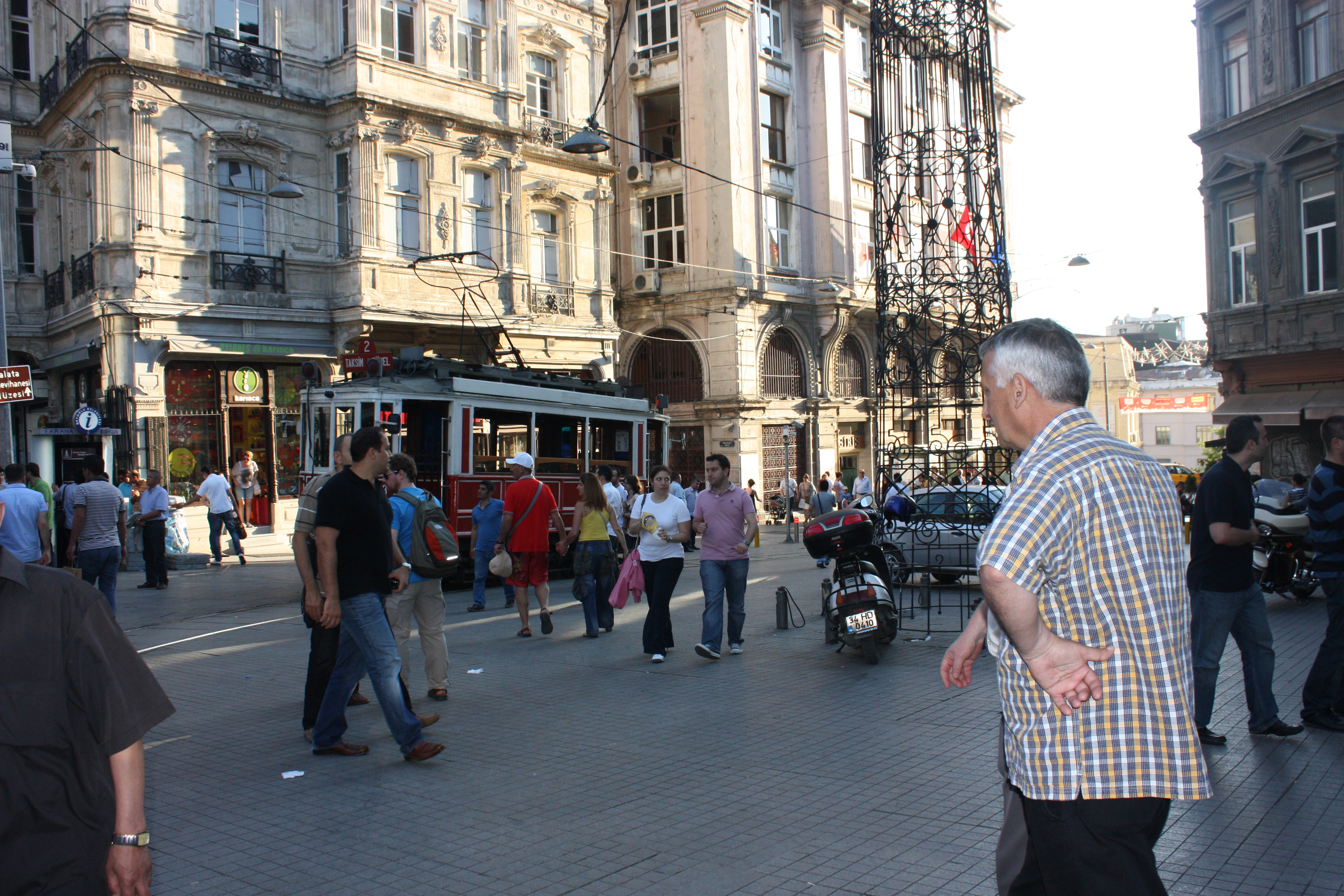
We walk with them along Istiklal Caddessi towards Taksim Square, a lively area, pedestrian except for the odd tram carving a path through the crowds. There were fabulous shops, but apart from buying water really cheaply, I was in too much of a daze to soak it up. I’d just been told that breakfast would be at six because we leave at seven-thirty, meaning I would have to get up at five because I’m slow. I didn’t go to bed the night before. Instead, my body had fought against being asked to settle, on the Red Eye, with my head against the cold window, brain whirling with excitement.

We found dinner and sat outside the café with a spinach crepe and an Efes beer for around £8. The beer was just what the doctor ordered to help acclimatize in the sizzling heat, the food just so-so and the Crusties – hilarious!

The room at the Grand Halic (Halic means horn)  http://www.booking.com/hotel/tr/grand-halic.en-gb.html?dva=0  was pretty good for a City hotel, but I woke, God only knows how in my depleted state, several times in the night because the noise was dreadful. Do you know what? I really didn’t care, I was right beside the Golden Horn in Istanbul, a place I’d wanted to visit for years.

Konya, Mevlana-Rumi and Selimiye Camii Mosque

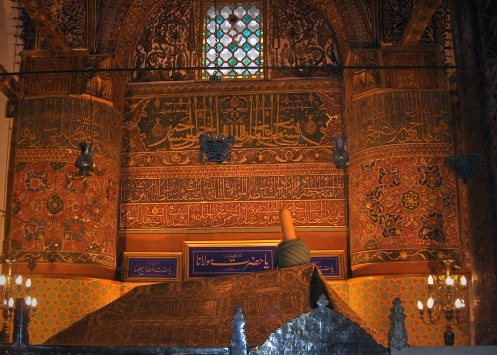
Konya is reputedly the most devout city in Turkey and when we arrived in the hot late afternoon it certainly had a different feel to the other towns along the way. We were directed towards the exquisitely tiled tomb of the Sufi mystic Mevlana, also known as Rumi.

The mausoleum holds a collection of ancient Korans, some very tiny, some gilded, and a carpet that is supposed to be the world’s most valuable. We were the only westerners and attracted a lot of warm, curious stares especially from a group of teenage girls. They giggled at us behind their hands and never one to miss an opportunity I said hello in my best Turkish, merhaba. They blushed and giggled even more. I tried ‘Where are you from? What is your name?’ and a slightly older girl was pulled to the centre of the group. ‘Do you speak English?’ I said ‘Yes I am English.’ There followed a sweet conversation where through her they asked questions and looked at me strangely. I knew they didn’t get me – I was wearing a scarf around my head and shoulders, so because of my skin they thought I must be Muslim. I explained that I’m from England but am half Nigerian and watched the quizzical frowns smooth to happy smiles. I could have stayed all day but eased myself away to look around and every so often I’d turn a corner and catch one of them smiling.

I was drawn to a crowd gathering around a glass case and edged closer to investigate. There was an ornate casket inside and people seemed to be taking turns to press their nose to the corner of the case. I tried to keep a respectful distance, but again the friendly glances and they started to talk to me. I understood nothing but a woman took my hand and led me closer. I was instructed to follow them in the nose pressing activity, and saw a tiny hole that they were inhaling through. A sniff revealed a jasmine frankincense aroma, and a sign in English, that the casket contained the beard of Mohammed. Later there was a debate among friends as to whether it was supposed to be a hair from the Prophets beard or that of Rumi, this remains cloudy, maybe someone knows the definitive answer?

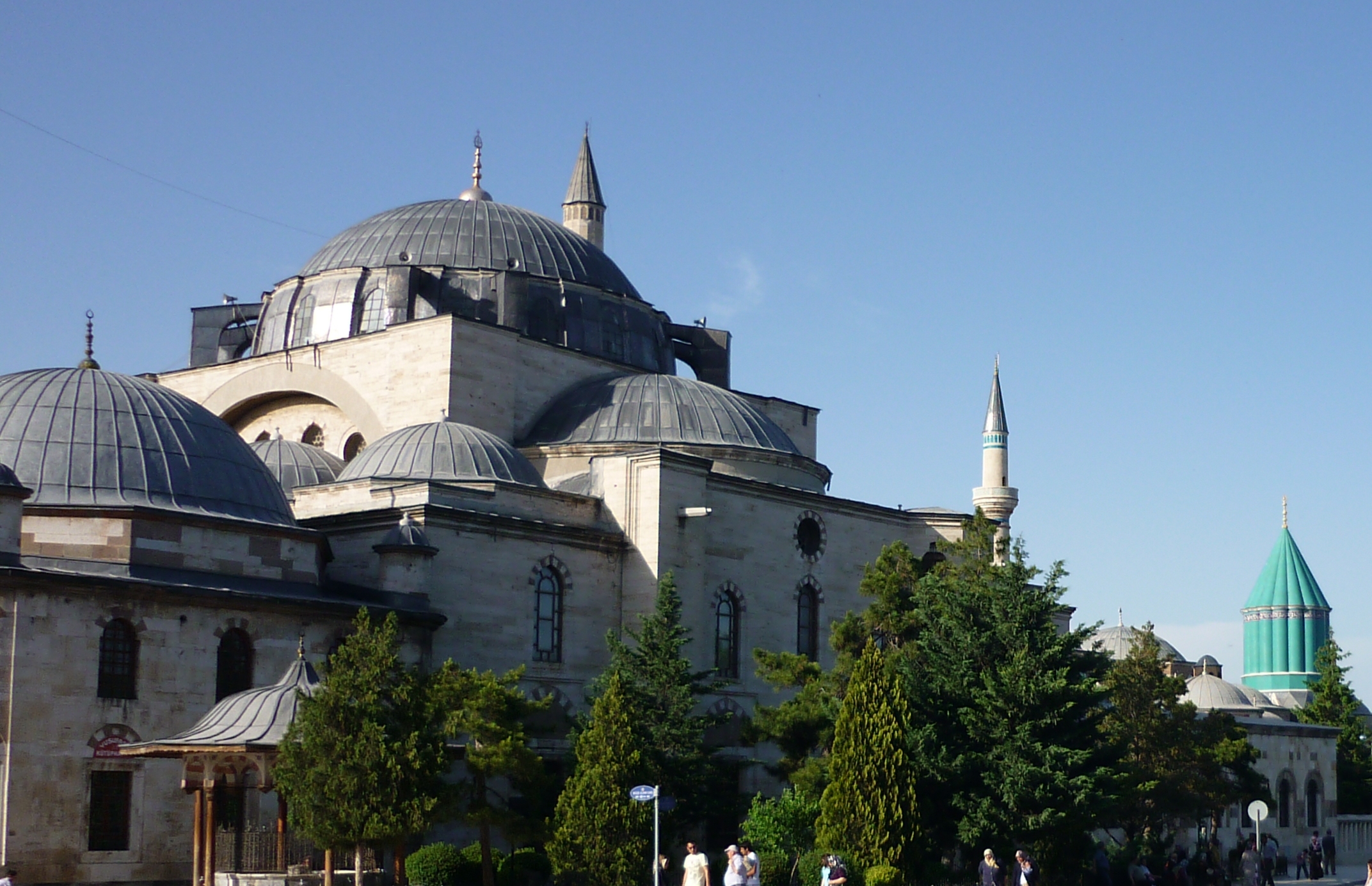
Through abundant rose gardens stands the Selimiye Camii mosque, 450 years old with sumptuous decorations in the Ottoman style. Friday prayers had ended and I approached the door. In contrast to the bustle of Rumi Mevlana’s tomb hardly a soul was around and my friend sat in the sun while I tried to find out if I could go inside. I was nervous, in one of India’s most important mosques, the Ajmer Dargah,  non Muslim women were not allowed to enter and I had felt uncomfortable even in the courtyard. Here though a gesture from me and a nod from a local gave me permission to enter. I tidied my scarf, slipped my shoes off and crept inside.

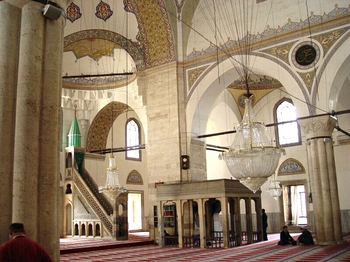
The silence was the sort that makes you hold your breath. The domed ceiling was as high as heaven and the carpet was the richest red, velvet to my feet. I sensed, rather than saw, a woman glide beside me to the door and taking stock I realised there were just three men and a small boy there now. My first instinct was to go right back outside but I stood like a statue (that would NOT be allowed in the building) and made sure that no-one was going to shoo me away. It was amazingly peaceful; I wandered around and found the niche which shows the direction of Mecca for prayer. I felt quite overwhelmed with emotion, nothing that I could name, but very spiritual, as if I was being safely held. 

Konya may be a lovely city, I don’t know, we only had an overnight stop in an okay hotel. I enjoyed the encounters both earthly and ethereal. For my friend the town itself had a heavier, darker atmosphere. I wonder, if she had gone into the mosque, would she have seen another side to Rumi’s ancient resting place?

On foot with elephants

I missed the elephant in the swimming pool by one week – in Mole national park, northern Ghana. It had strolled up the hill for a chlorinated swim by way of a change. But it was okay because I got closer to them than I was comfortable with, in a jeep, with my friend and two rangers. One of these guys was smaller than we were, and I am sure that an angry elephant would have been no more frightened of him, than of one of the baboons that were as populous as sparrows in my garden. The second warden came complete with a safari suit and a rifle. Or maybe a replica rifle. I don’t think I’ve ever been very close to a real gun, but it didn’t look like it could shoot a bullet big enough to even graze the hide of these healthy, well fed  pachyderms. I could only hope that the plan would be to scare them away with a little bang.

We were bullied, no ahem, persuaded into exiting the jeep, which was tied together with string anyway, to take photos of each other with three of the giants in the background.

‘We need to drive around that way, a bit closer’ said small warden without safari suit.

‘Closer, why closer?’ ‘I don’t want to get any closer thanks’. We were perhaps thirty feet away.

‘Please, speak in whispers and if they smell us they may charge, we have to be behind the wind’ he said. Now, I hadn’t felt any wind, it was as hot as well …Africa, as still as a graveyard before a thunderstorm, and my adrenaline was telling me to run back to the jeep pdq. These guys are probably used to re-assuring wussy travellers who like the idea of a gentle stroll, to see some cute wildlife just like Attenborough, but then turn chicken in the end.

‘Don’t you want to show your friends how close you were to elephants?’

No actually I want to throw up but I suppose that would be too noisy.

‘Okay, I guess I probably should do this.’ They led us closer and I snapped the two of them with my friend. Then I realised that I had to turn MY back on them, no more than twenty feet away. Needless to say my face tells all in that photo. I’m glad I did it; I still love elephants – from a distance!

We only stayed in Mole for two nights. It was a brilliant experience, a lot more rugged than a safari I did in Botswana a few years earlier, where the lodge was the height of luxury. In Mole, the water and electricity in our chalet was only on for a couple of hours a day and there were creepy crawly things that I’d rather forget. The atmosphere was great though and the view was about as good as it gets. Just before sunset herds of elephants of all sizes come to bathe in the waterhole down below the veranda. A much more relaxed way to see them!

So who has heard of threading?

Apparently it originated in the Indian sub-continent. Picture this: – Five women in a hotel room in Ankara, strangers just five days earlier. One American, one Indian, one Australian, one English-Nigerian and one Pakistani; two are sharing the room, the others are invited.

‘I’m going to deal with India’s whiskers’ says Pakistan.

‘You’re what???’

‘I’m going to thread her.’

‘What on earth?’

‘Come and see, I did Australia last night’

‘Yes look at me it’s amazing, let’s get some wine, you can watch her’

‘I’ll do you too’

‘Sounds painful, America, shall we go and watch?’

India lies on the bed; Pakistan takes two feet of white cotton, ties a knot to make a circle, a few deft movements and aims it at India’s top lip. They watch amazed as a mass of black hair is whisked away leaving a totally smooth finish. The process took just a few minutes.

‘Didn’t that hurt?’

‘No, I had it done before I came on holiday, it just pulls a little, no problem’

‘Where do you get this done? Pakistan are you a beauty therapist?’

‘No we learn from our mothers at home.’

‘You talk about it? How embarrassing.’

‘Why? It’s part of life, especially once you’re a certain age.’

Before she knew it America is on the bed lying on her side.

‘Owwww’, a squeal like murder, hope the room is sound proof.

‘Get her ice quick’

‘Ice, where from?’

‘The mini bar, quick a beer can, throw it here’ hisssss, it hits something hard on its journey across the room oozing brown lager bubbles onto the pristine five star bed linen.

‘Ow ow ow’ another half dozen whiskers hit the knots.

‘Uh . . . no need to worry about me, I immacced before I left home, I won’t have any long enough for you to grab.’

‘Bet you have, I’ll find some.’

‘Uh no, but I’d really like to learn how to do that, is it difficult?’

‘Just takes practise, here try it on your own legs.’ England-Nigeria takes a piece of thread and tries it on her hairless calves, nothing happens.

‘Here try it on America’s leg, she has plenty’

‘Ow ow ow aghhhh, noooo I need them to keep warm’

‘Oh how can I learn? This would be so useful, it can’t hurt that much’

‘Your turn now, over here, no you have to lie down I can’t reach you’

‘It’s too dark isn’t it? How can you see what you’re doing?’

‘Aha no problem, you have many, many fine hairs, it will take much longer on you, and you thought you didn’t need it, wouldn’t you rather be nice and smooth?’

‘Yes but…’

‘America, drink the wine it will stop the pain, now England-Nigeria you’re used to plucking your eyebrows so it won’t hurt, another beer can please!’

‘Put your tongue under your cheek to make your face stretch out’

‘This is crazy I never . . .’

‘Shush, you need to keep still stop giggling’

‘Ah’, England-Nigeria drew her breath quickly.

‘Watch America, you need to learn how to do it for me’. Four pairs of eyes looked down as a dozen hairs at a time were lifted from her skin. ‘Can you do this with bikini lines too?’ Five continents collided in a giggling heap.

Anzac Cove

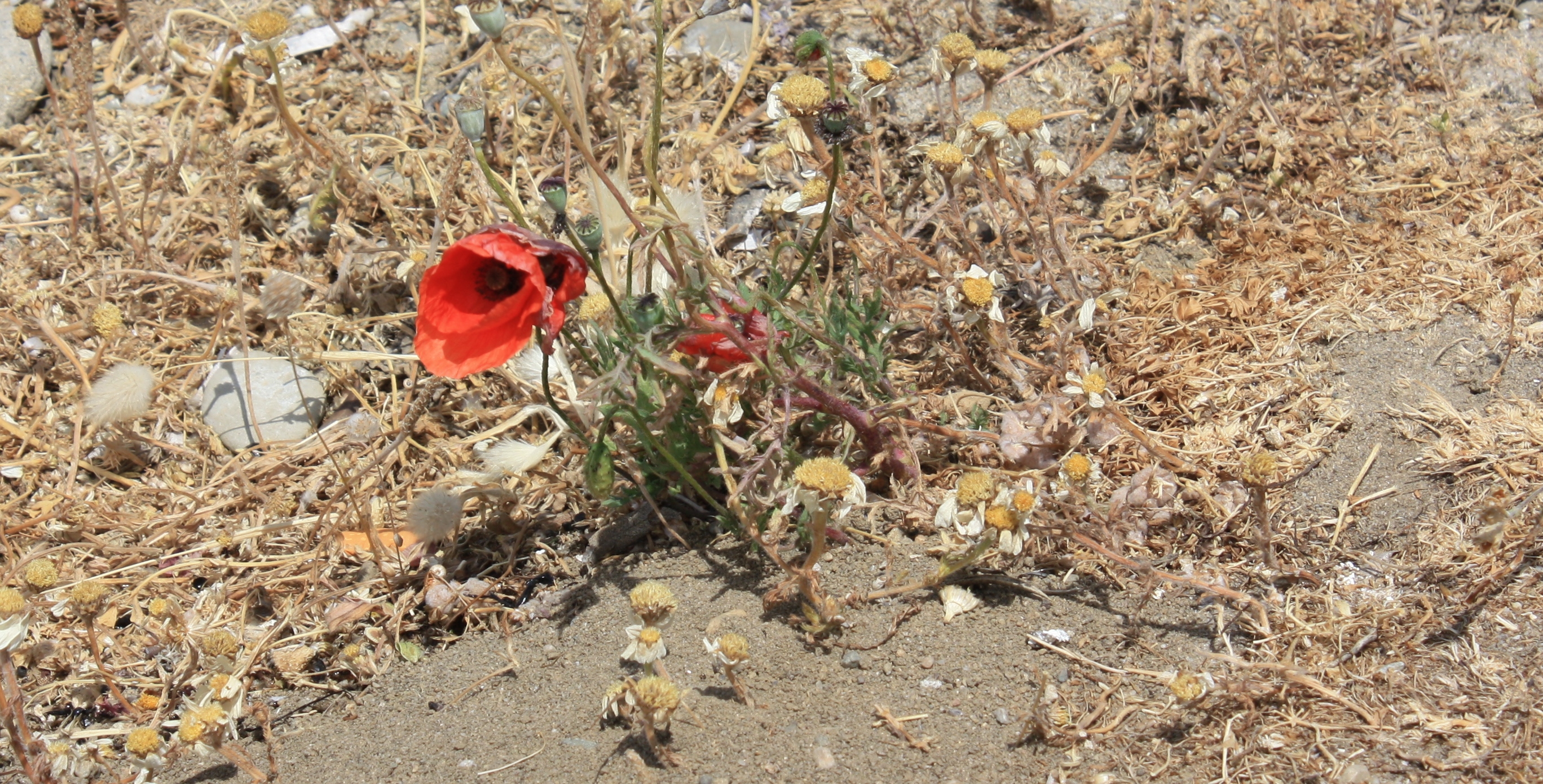
A single satin poppy like a drop of blood on innocent sand.

As far as the eye can see, empty turquoise, peacefulness,

In the loveliest burial ground in the world

For the thousands of ghosts of lost boys

Who were sent here to die.

Stones pierce the green like rows of shark’s teeth

Stones that name Anzacs in their teens and twenties

Few old enough to be dads, all young enough to be sons.

Antipodean voices whisper as they search

Emotion choked as names are uncovered

And Rosemary battles for remembrance

Against the fennel scorched air.

Nests of Primates

No-one can prepare for rain forest. Really dense rain forest that is. I’d travelled in several African countries pottering through patches of moist jungle areas, but it was a world away from Borneo. Here I found myself eyeball to nature in its rawest sense, even in my forest lodge, where I encountered a poisonous green snake crossing the path to my hut. I was brought up by my grandparents, Devon country folk who belonged in Victorian times. They told me that snakes can ‘kill you dead’ and that there are poisonous adders on Woodbury Common. This put the fear of God in me, and it never left.

The next morning, I found a snake trying to suffocate a toad on my doorstep. I watched, holding tight to my stomach, telling myself that it couldn’t be poisonous it was a constrictor, as moment by moment it’s grip on it’s dinner got tighter. A friend arrived and following my tense stare, grabbed a stick and thrust it onto the wooden deck startling the snake. The toad gained its freedom in the brief pause and the affronted creature slithered away.

We set off for the day, but it was a while before I could put aside my fear of the return. If there was a snake on my porch then how do I know there are not more in some giant pit underneath the stilted hut? I already searched corners and crevices for bugs whenever I came into the room and obsessively sprayed insecticide to keep lobster -sized ants off the toilet seat. Is there an anti -snake spray?

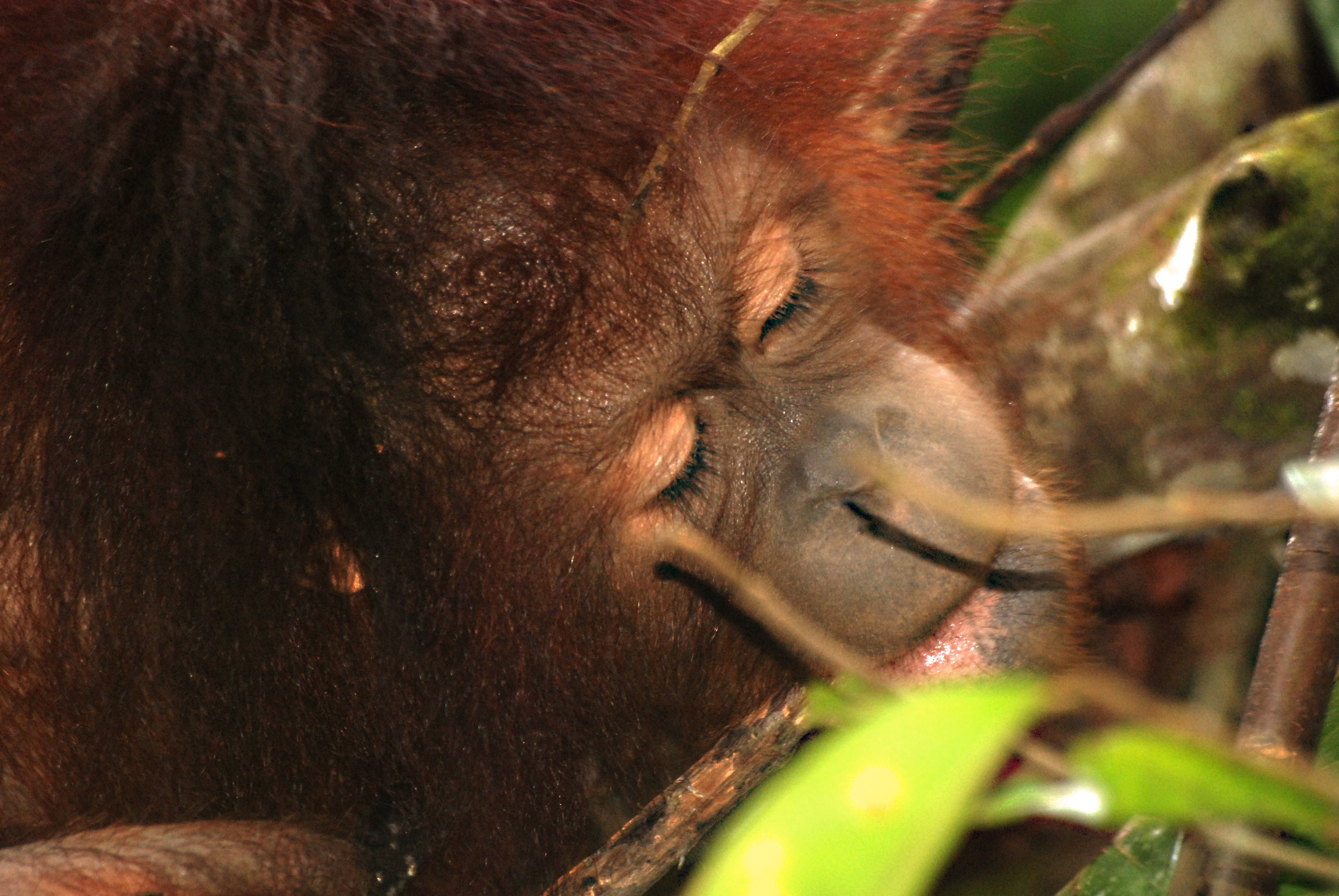
Our lodge was a ten minute walk from Sepilok Orang-Utan Rehabilitation Centre, so rather than being herded on a tour bus with a tight timetable, we could come and go at leisure. I was thrilled by the close proximity of the feeding platform where bananas and coconut milk were served as a halfway house for Orangs that were being treated and rehabilitated. Opportunist Macaques arrived for a chance handout and shortly there were thrashings and glimpses of ginger hair. But what’s this?  Black blobs are appearing in my eyes. I felt like I was in some sort of roundabout lift crashing to the ground. I slunk from my prized pole position and squeezed through the crowd to reach a bench at the back. Unable to stay upright my head fell between my knees and time stopped. Eventually my body found some equilibrium. I raised my eyes to re-focus just as a tiny monkey peeked at me through the fence, the only primate encounter for me that morning; the Orangs had breakfasted and lumbered back into the forest.

Our up-country journey today was made smooth by the lucky find of Khaled, a taxi driver who had a boat and a boatman. He can also spot an orang-utan or proboscis monkey high in trees a hundred meters away. Khaled agreed to become ours for the length of our stay around the Kinabatangan River and Sepilok. The drive to the caves from the lodge began with promise, but the diverse greenery soon gave way to relentless palm oil plantations. I’ve learnt that the roads had only been constructed to transport the constant harvest of the red brown fruit, so desired as an ingredient on supermarket shelves in the western world. That same fruit is responsible for the destruction of the indigenous habitat of the orang-utans that I’d come to Borneo to see.

Gomantong caves are reputedly one of the highlights of any trip to Sabah and we emerged from our air conditioned taxi into the 100% humidity of the cave complex. Its only concession to tourism is a toilet block, sadly of the squatter type, and an interpretation area with photos of the limestone mounds. We walked a mile through forest that seemed like ten, as every stitch of fabric adhered to every inch of wet body.

I was aware that my own body odour rivalled and added to the array of smells, rather like a well fermented compost bin. As the forest gave way to a clearing in front of the cave we were advised to tuck trousers into socks before we climbed to the entrance. And now I’m here. And my body odour became that of a rose among a pile of rotting Durian. Wait . . . this is no romantic crystal cave, no Hall of the Mountain King. Fingal had well and truly disappeared, and in his place were a trillion cockroaches, some as long as your finger. Walking up a narrow board path that clung to the cave wall, I felt my stomach heave as the stench pervaded my body. It’s everywhere as if I have fallen into a maggoty dustbin.

I fought the urge to run back out but, spotting an older woman ahead of me inappropriately dressed in smart delicate sandals, I resolved that if she could do it so could I. The rickety boards were slimy, but both top and sides of the handrail were covered in a mix of guano and the date sized roaches. I struggled to maintain my balance with nothing to hold. Don’t cry Gilly, don’t make a fool of yourself, there are people further in the caves that are here every day. Khaled reached for my arm to stop me slipping into the mire. Instead of focussing on the five inch long queen roach that’s closer to my left ear than my pounding heart, I start to look around. The view up a hundred metres towards the cave roof was glorious with shafts of light illuminating what looked like a torn string vest with toy Star Wars figures tangled in it. Squinting, I realised that it’s the nest collectors scrambling on ladders made of rattan and rope that I could just about see in the distance.

Reaching the high point of the path I came across some of the workmen taking a break in their rest area. They were friendly and open to chat, seeming as interested in me as I was them.

Iqbal, middle aged and wiry, proudly introduced me to his son Abdul-Wajid. ‘His name mean Servant of the finder, he first term in cave and I last term also.’

The father has been working here since he was Wajid’s age and is now too old for such dangerous work. I resisted asking why he was sending his son to work here but he may have read my thoughts.

‘Is a tradition in our family and the best way to earn money, we are lucky to be small bodies.’ Wajid passed me a small stiff object and with a grin like a low slung crescent moon told me it’s his very first nest,

‘This is it? This is what the fuss is about?’ I find it hard to believe that people actually eat this and the Chinese believe it keeps them young.

I learnt that they will stay for ten weeks, hot bedding – to make sure work carries on for twenty four hours each day, and eating on a few shared pallets amongst the filth and squalor. A season’s salary is a mere £700, a lot of money for them but appalling when you know you can pay around £70 for just one bowl of the coagulated bird saliva, poo and feathers. After an hour in the cave I was lucky enough to be free to leave and couldn’t imagine sleeping there, much less eating anything at all in such a place.

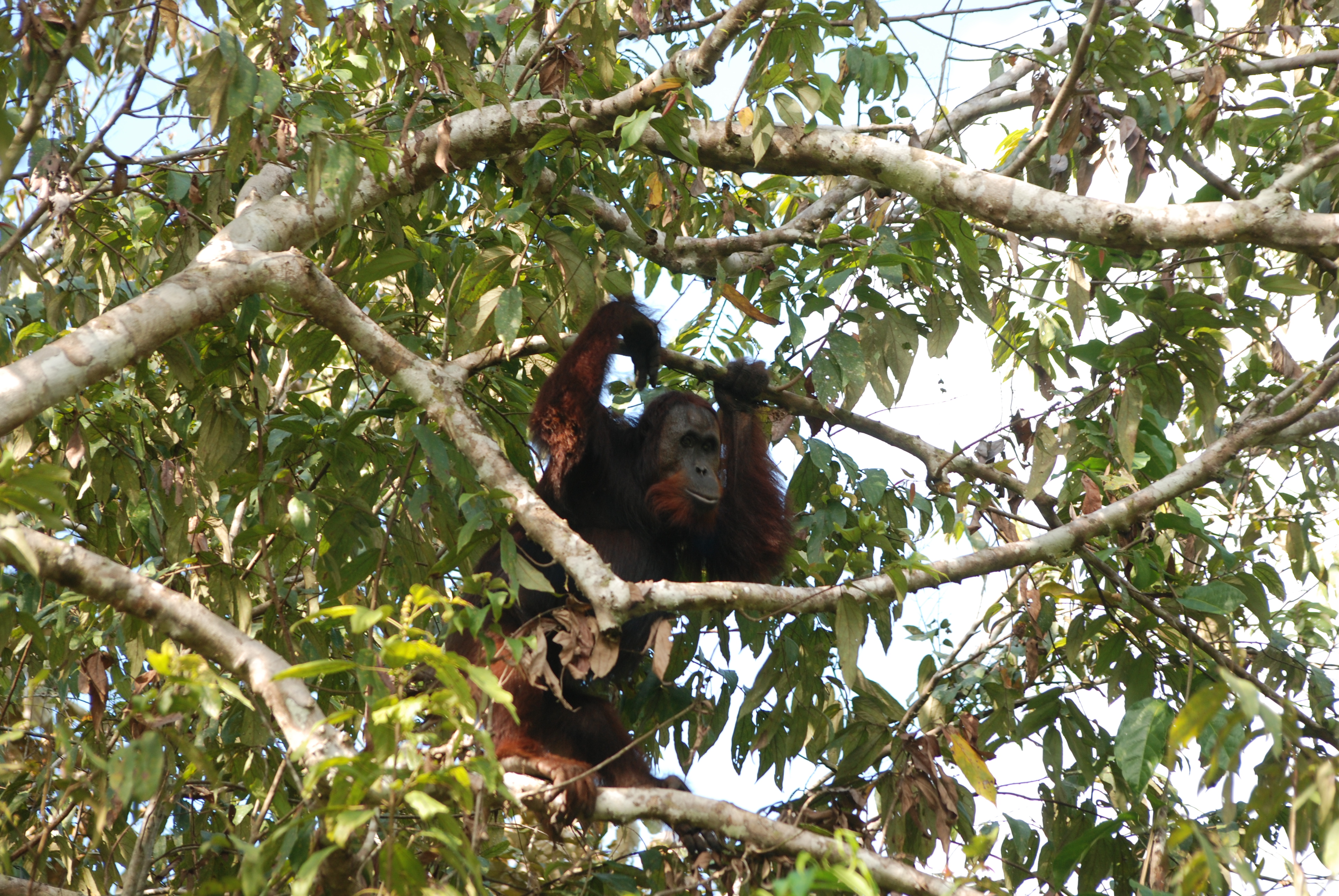
Approaching sunset found us on the Kinabatangan. The river provides a corridor of pristine natural forest and there we were privileged to see a couple of really wild Orangs. These wild ones are a rich mahogany shade and I asked Khaled why.

‘Miss, you may see bright coloured ones in the rescue centre, but their fur becomes orange because the scientists choose their food. Like the people only few can survive, their food is also gone along with the forest’.

We agreed that tourists won’t come without the spectacular wildlife, but I questioned how ethical it is for us to take long haul flights anyway, can it be justified when it increases global warming?

I went to Borneo to see Attenborough’s brilliant floral forests with pristine waterfalls and clear azure skies. I wasn’t disappointed, but the reality was different; smiling orang-utans are there at present but for how long?  In Gomantong the bats and swiftlets do not evacuate delicate guano onto designated mounds; they pelt it everywhere like an army of mechanical muck spreaders. Bats are not cute velvety creatures with gothic webbed wings soaring in synchronised flight for our pleasure like a mass of Red Arrows in an air display; they flit so quickly they are hard to see.