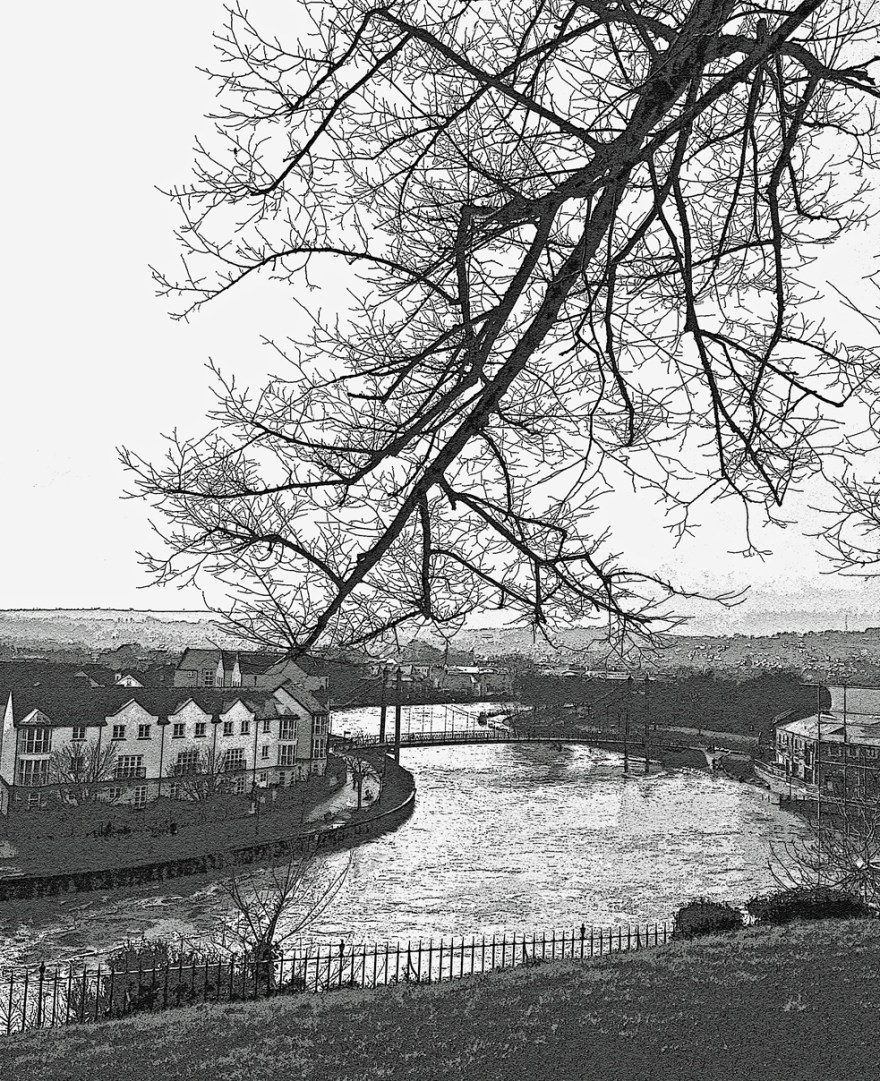
Paula’s Thursday Special this week is twilight. I wasn’t going to post this week, because any photos I take at twilight tend to be beside the sea or river, and I’ve posted similar many times. But, I had a quick flick through and decided I like this shot of the Exe, taken at 9pm close to the longest day in June.
You have until Thursday to join Paula’s challenge, meanwhile she has a gorgeous twilight photo of Florence.
As someone who likes sculpture, I have to confess to being a complete idiot. You know how you walk past something regularly and don’t even notice it? well this is one of those things. Commissioned in 1977 by Exeter city Council, for the Queen’s Silver Jubilee, it’s one of a series by Peter Thursby, and named Looking Forward.
The sculpture depicts a Podman, they were ‘Little men on scaffolding, constructing buildings. They appeared to be framed in boxes, like peas in a pod’. Thursby made a full sized model from polystyrene in his Exeter studio. The finished work was cast by the Chris Blackmore foundry near Ashburton.
Will any of you confess to discovering something that you’ve walked past hundreds of times and not seen?
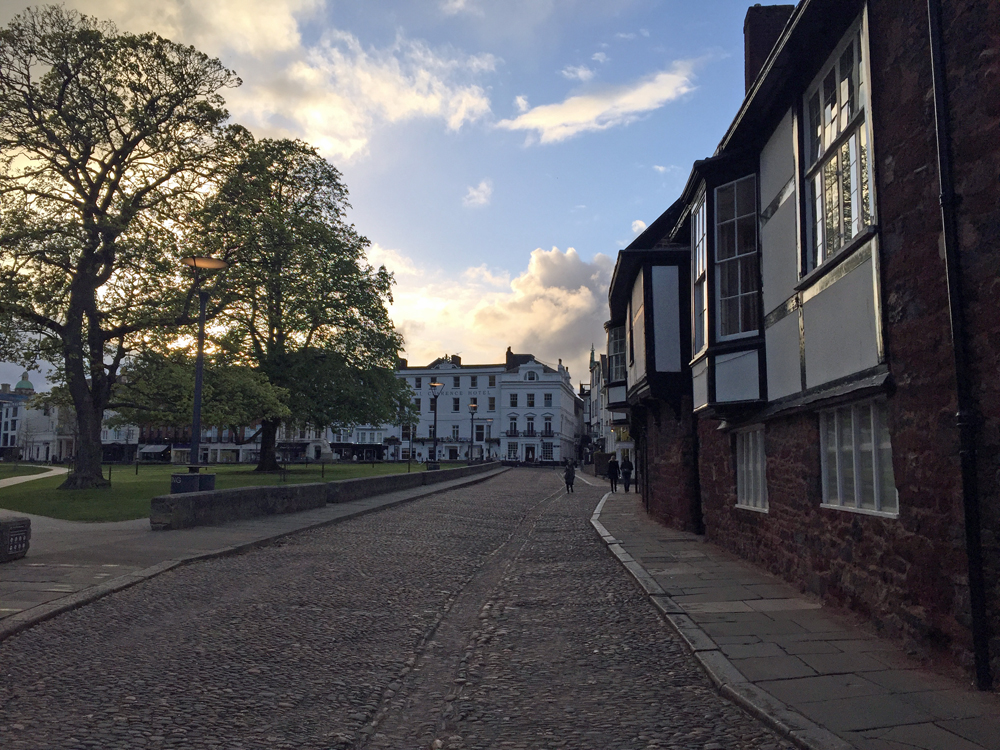
It isn’t often that Exeter makes the national news, which is a good thing. We’re a small city with mostly well behaved citizens, where bad things rarely happen. Last week though the unthinkable happened, a fire in the very heart of the city. At 5.20 in the morning, the Royal Clarence Hotel in Cathedral Yard caught fire, it’s believed that the fire began two doors down in the upper floors above a prestigious gallery, and the flying debris caused it to spread. More than 100 fire fighters worked to contain the blaze, and were still working three days later.
The Clarence was the first in the country to take call itself a hotel, a term copied from the French, prior to that there were only inns. The hotel was built in 1769, on the site of an earlier tavern and had a reputation for being haunted.
I’ve finally been to Cathedral yard to see the site for my self, here are some photos.
This slideshow requires JavaScript.
There were no injuries and for that we must be thankful. Quite a few shops around the hotel, including on the High street were slightly damaged and remain closed. Demolition work began this week, and owner has pledged a sensitive re-build, we have to hope.
I’ve posted both of these photos before, but first the hotel in the centre, with the cathedral green on the left and the buildings on the right date from 1500.
The hotel has always looked splendid at night. To the right 15th century St Martins,built on the site of a previous church from 1065, and Mol’s Coffee House, built in 1596 with it’s Dutch style gables.
Exeter suffered a great deal of damage during the blitz, including to the cathedral, but nearly all the buildings along the Yard survived, it’s desperately sad to see this part of our heritage destroyed.
“Home” is more than where we sleep at night. It is a place that is familiar and comforting, and it gives us a sense of belonging. Home is what and who is local — the places and people we know by heart.
Jen’s challenge this week is local. Those of you that have followed Lucid Gypsy for a while know that I have a deep attachment to my local area, the city and surrounding county. It isn’t grand, posh or showy, just very beautiful, and it isn’t difficult to show it off.
I hope you like what you see, are you sharing what local means to you?
Yesterday I grabbed a little bit of sunshine and walked the dogs in towards town, with no particular plan. They aren’t very keen on the High Street, so I took a right and headed up Northernhay Street to the park. It was the first time I’ve been there for years and a perfect day for a peaceful stroll. Back in the days when I worked in the Civic Centre, it was a regular lunchtime spot in summer. When I was little and when my own children were, it was a favourite spot, along with the adjoining Rougemont Gardens, for roly-polys, so there I was again.
At the Gate
The first borders on my left were mostly new to me.
This slideshow requires JavaScript.
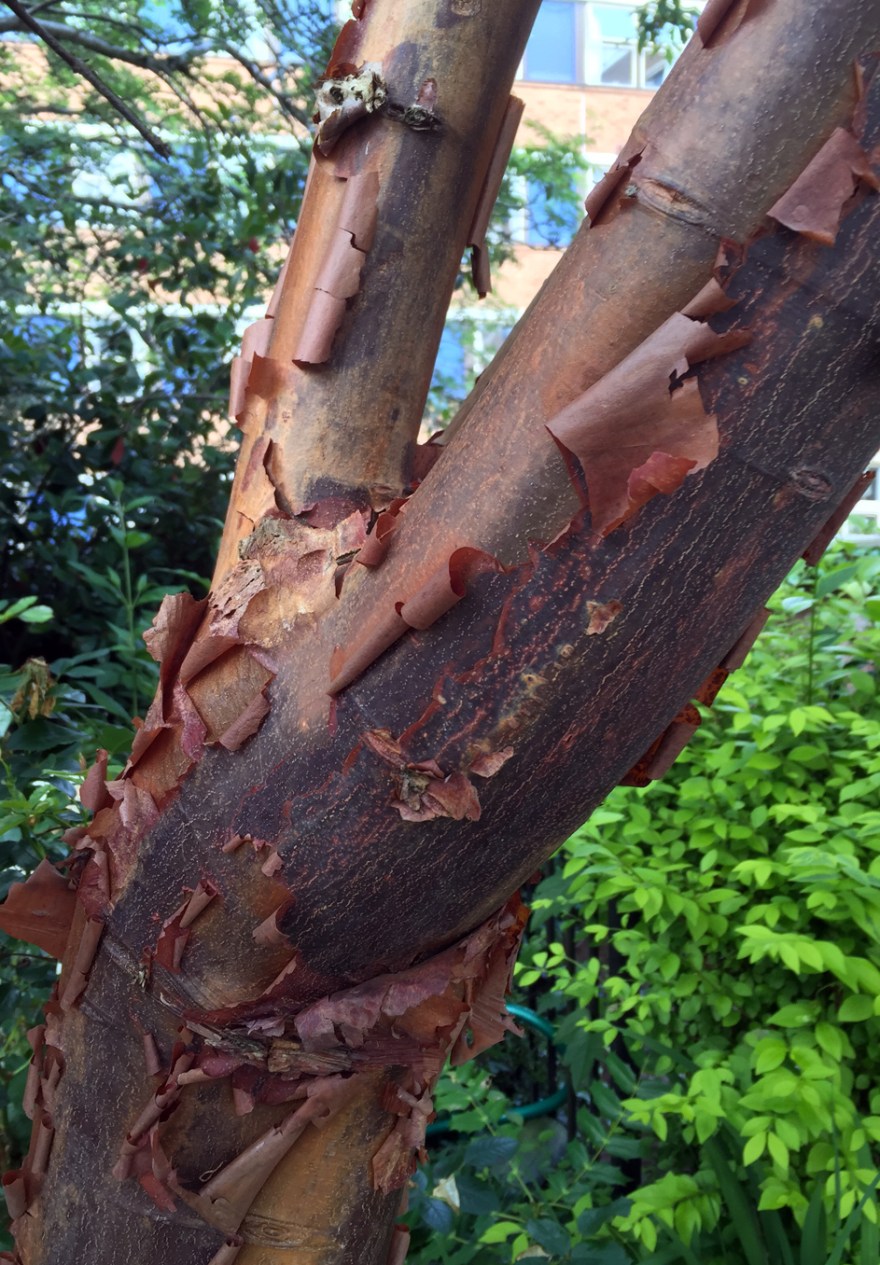
And I don’t remember this Paperbark Maple (Acer Griseum)
Acer GriseumStunning borders
Time to walk up the steps
This is part of the old city wall.
But it feels like I’m walking in the woods.
One of the old gates, walking on past there are places to peep through.
Dido and Daisy prefer the shade and would like to run off into the trees, I like the sun on my face.
One of the city’s great and good on a nice curvy path
This wall cries out to stroked.
Ahh more steps!
But the view makes it worth it.
This is the entrance I was looking for. The path through Athelstan’s tower leads to Rougemont garden where you can walk inside the wall.
This slideshow requires JavaScript.
I didn’t linger in Rougemont, a sign said no dogs, but I ignored it long enough to spot the teenagers through the trees above.
And to get another angle on the tower.
Okay, time to follow the rules and back through to Northernhay. By the way the ‘hay’ part means field and we have Southernhay as well.
A rather show offy foxglove variety.
I walked up past the war memorial, to the little pond at the bottom of the slope.
When I was little there were goldfish that I loved to see, but no-one’s home now.
This is a short circular walk, part of the longer City Walk Trail, perhaps I’ll take one of the Redcoat Guide tours one day. For now I’m nearly back to the beginning, with the wall high above me. Northernhay is actually England’s oldest public space, it was created as a pleasure walk for local people in 1612, 400myears and still giving pleasure. I hope you enjoyed it, are you walking with Jo this Monday?
A last little bit of treasure.
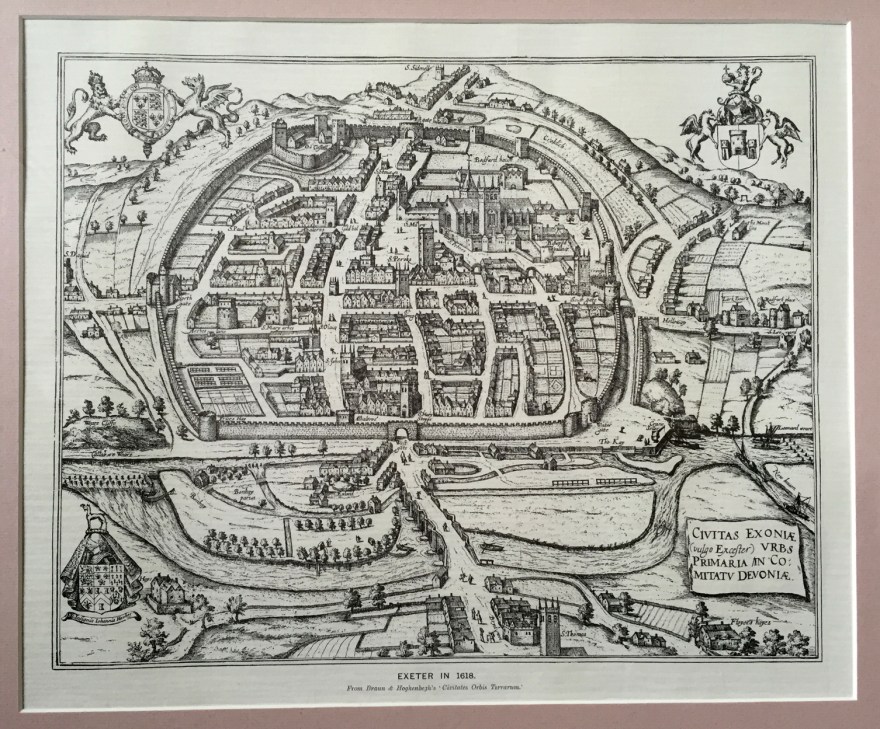
Exeter’s history began nearly 2000 years ago, when the second Augustan Roman legion settled here in 55AD. A fortress was built overlooking the lowest crossing point of the Exe, known as Isca and manned by 6000 soldiers. An earth and timber rampart with a deep ditch in front protected the fortress.
Over the centuries the original grey volcanic rock was repaired using Heavitree Breccia, white Triassic sandstone and a pink Permian sandstone was used in the 17th century.
When the fall of the roman empire the city was pretty much abandoned and the land inside the wall returned to farmland, and little is known until Saxon times and from the 9th century the city grew quickly becoming one of the most prosperous in the country.
King Athelstan is credited with repairing the wall in time to withstand Viking attacks in 1001 AD and William the Conqueror in 1068 AD.
This photo is of a print I have, showing the city in the 17th century with the wall still intact, about seventy percent remains now. You should be able to click for a bigger view.
 You have until Thursday to join Paula’s challenge, meanwhile she has a gorgeous twilight photo of Florence.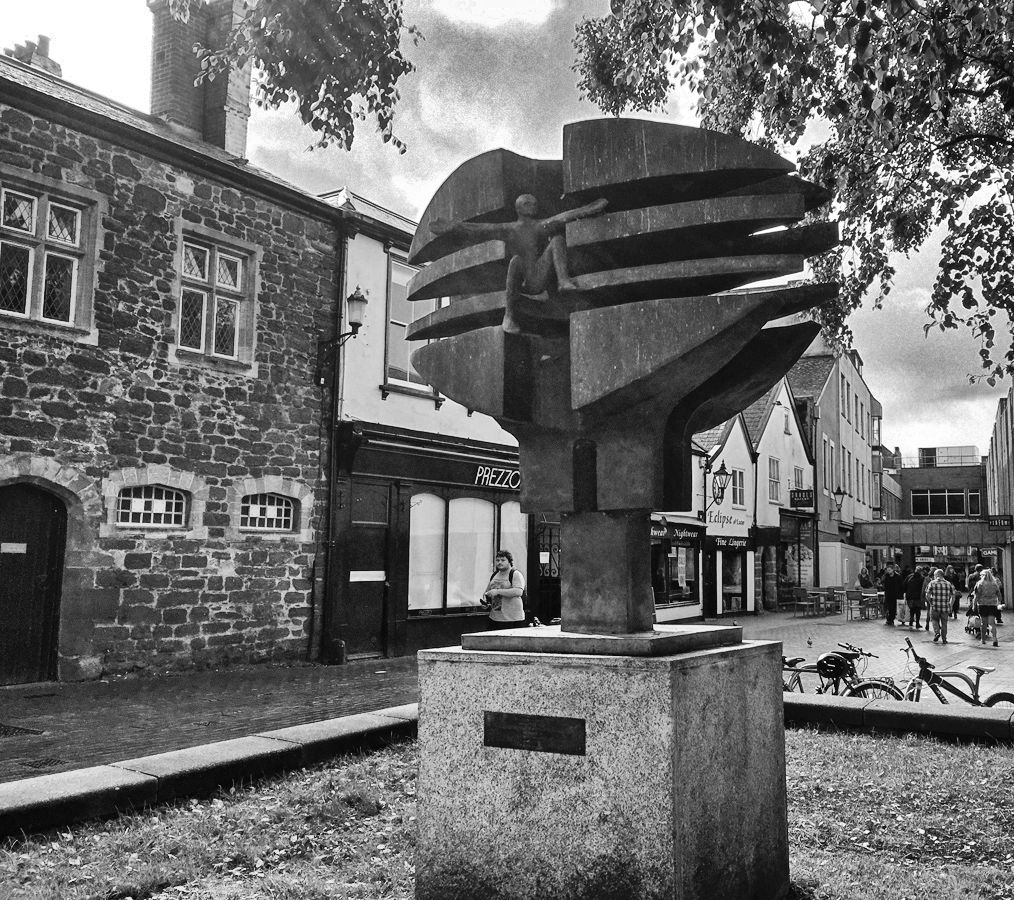


 You can join Black and White Sunday at
  Cath is a very historic rhino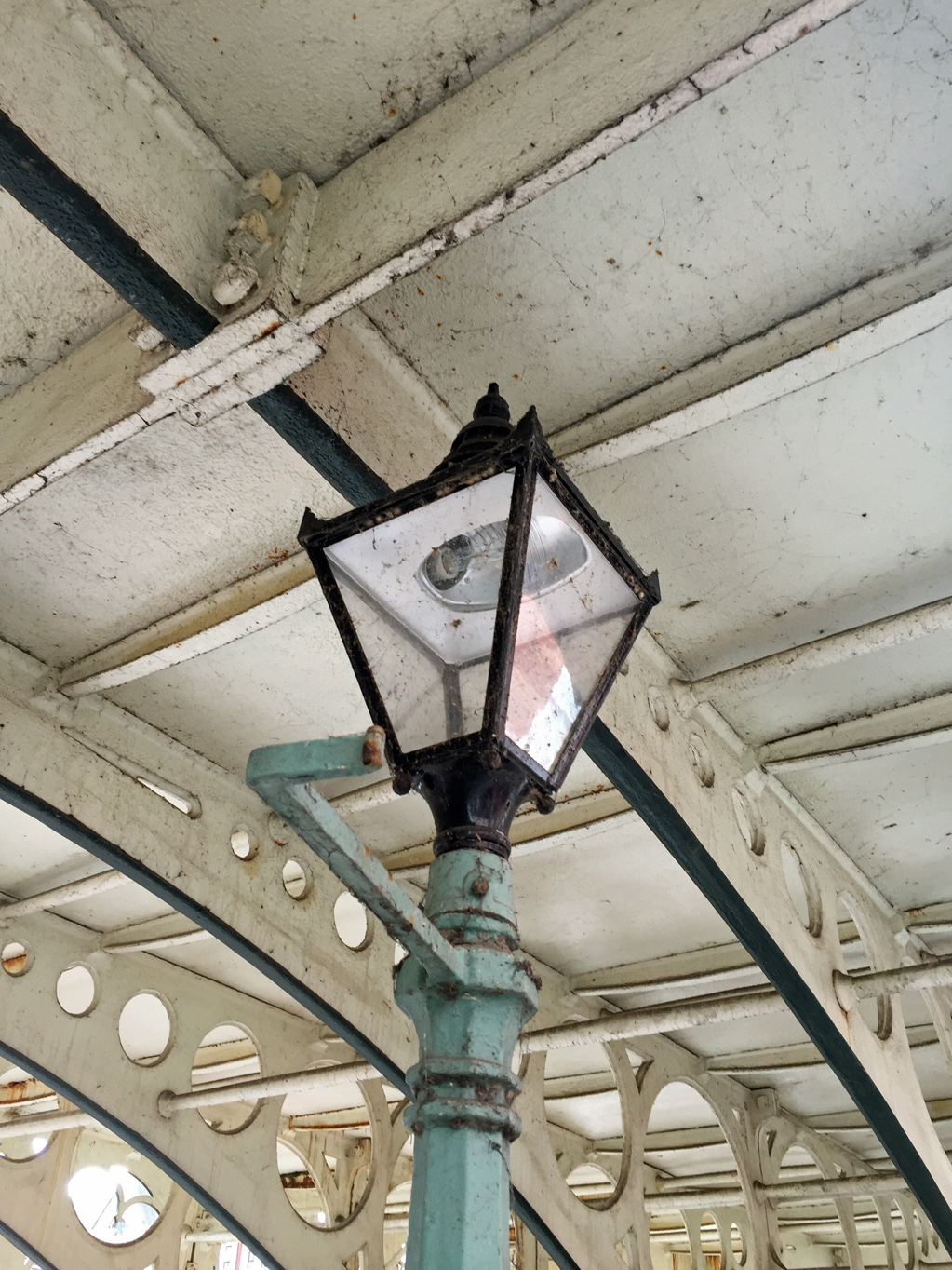


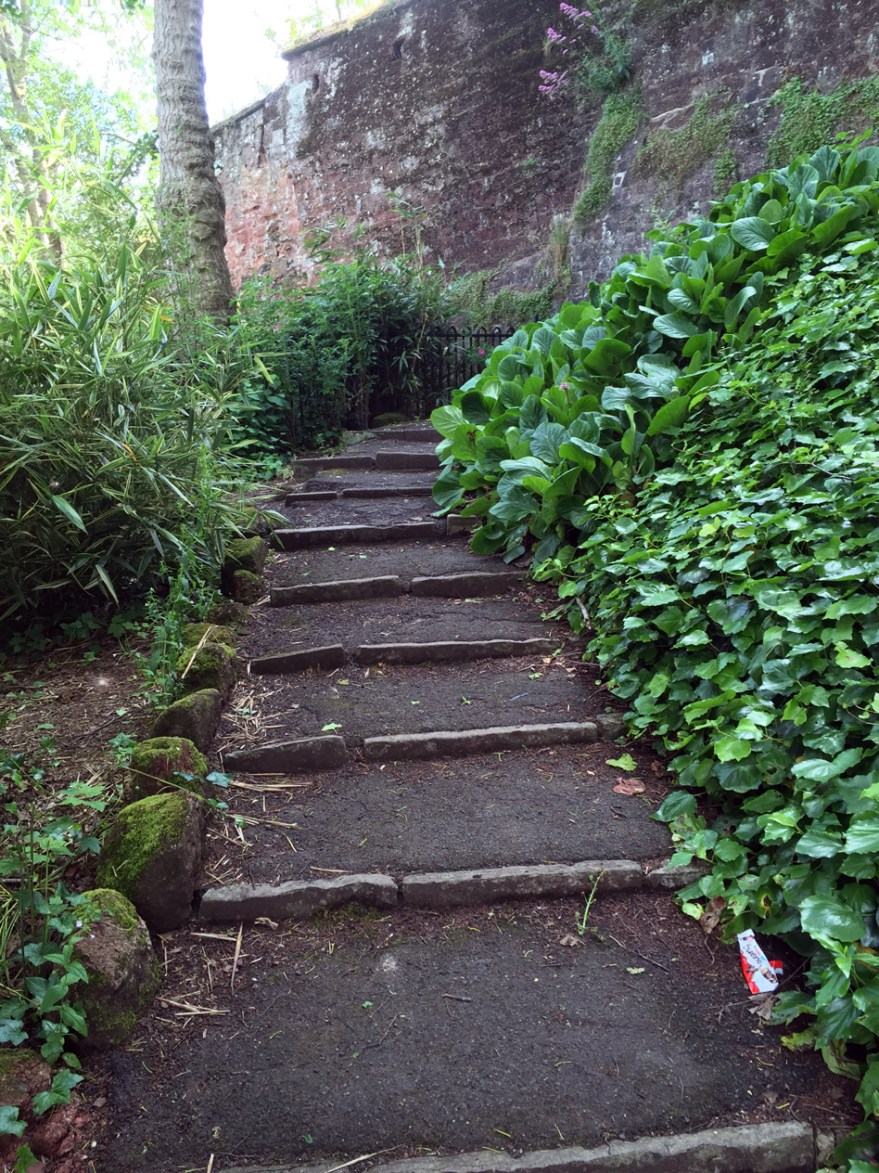 This is part of the old city wall.
 But it feels like I’m walking in the woods.
 One of the old gates, walking on past there are places to peep through.
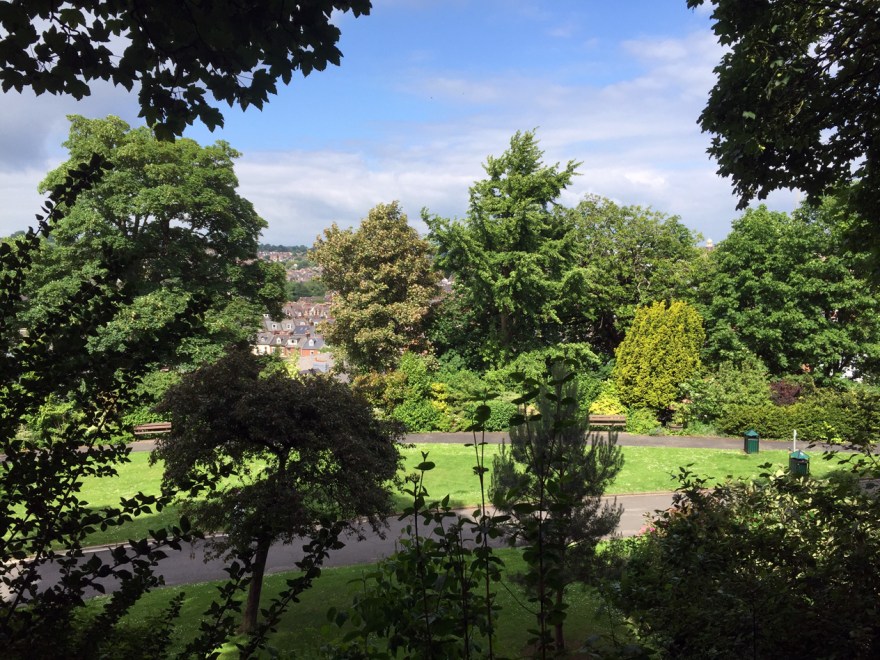 Dido and Daisy prefer the shade and would like to run off into the trees, I like the sun on my face.

 Ahh more steps!
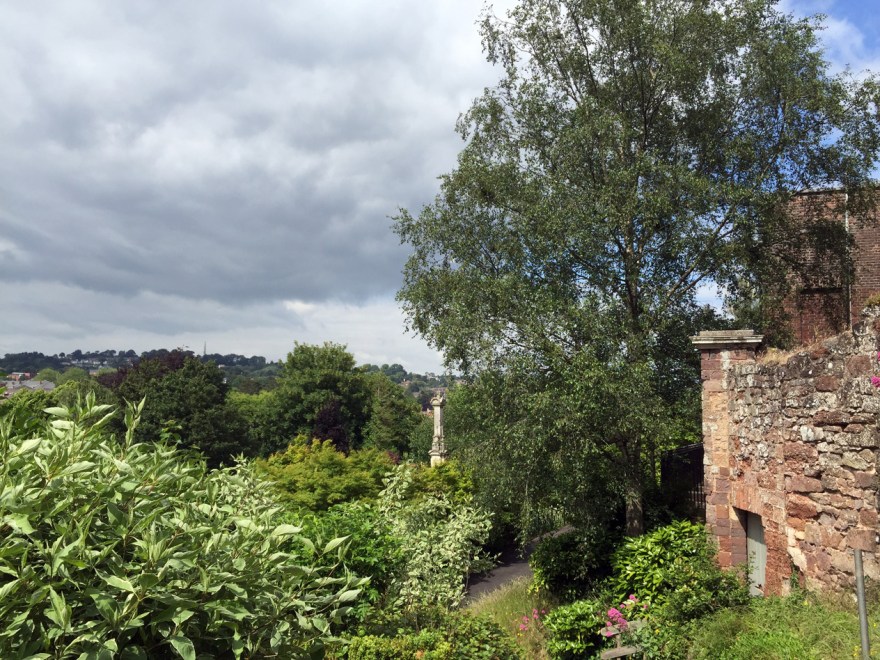 But the view makes it worth it.
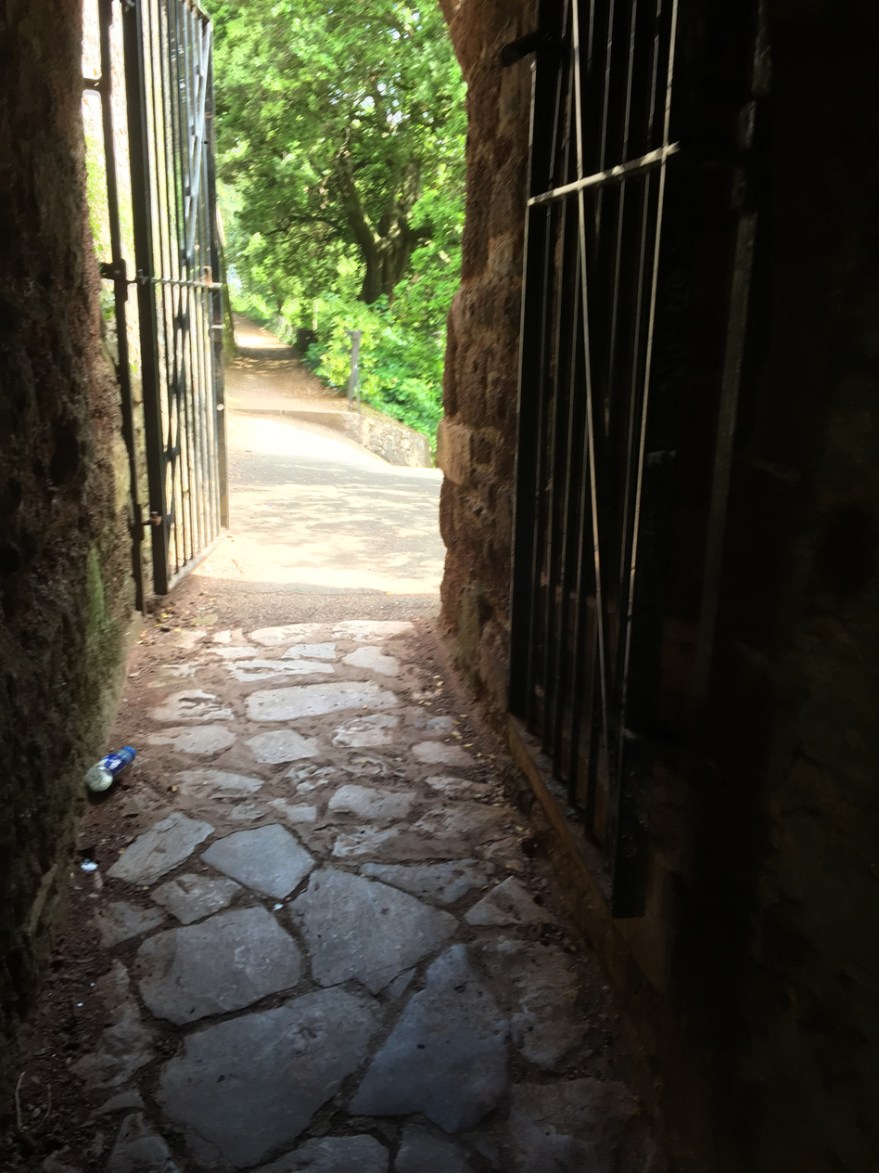 This is the entrance I was looking for. The path through Athelstan’s tower leads to Rougemont garden where you can walk inside the wall.
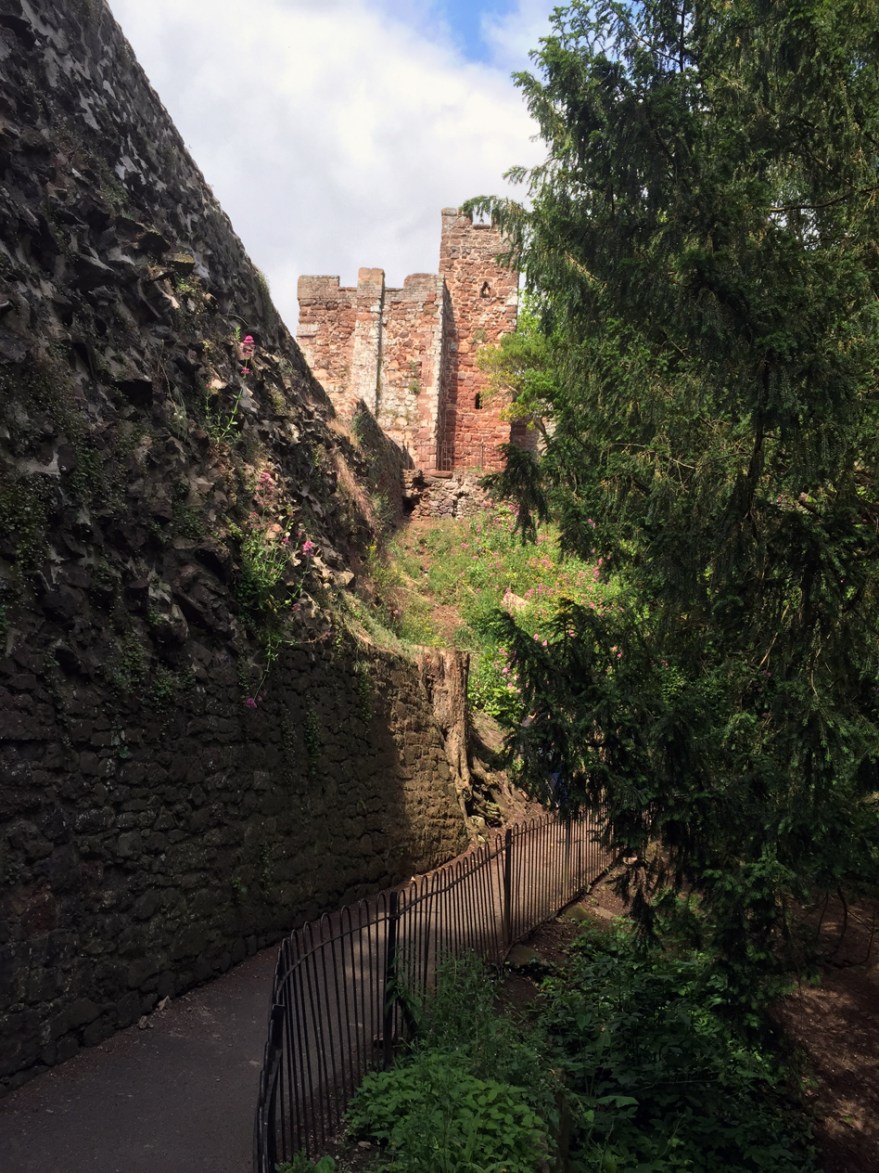


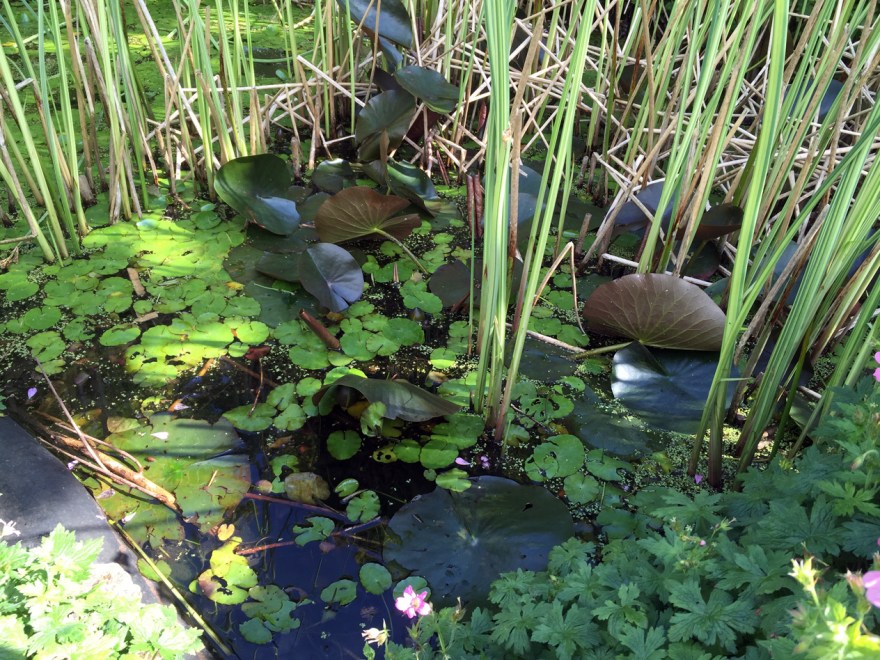

 A last little bit of treasure.
 Lucid Gypsy