Tavira is a great city for people who like to photograph doors, windows, knobs, knockers and decay. I started snapping as soon as I arrived, here are a few that I found.


My favourites are the fish!
Come away with the raggle taggle gypsy-o
Tavira is a great city for people who like to photograph doors, windows, knobs, knockers and decay. I started snapping as soon as I arrived, here are a few that I found.
My favourites are the fish!
From way back in the 1970’s I’ve wanted to walk down Gold Hill, in Shaftesbury, Dorset. Gold Hill became famous as a result of a much loved tv advert, created by Ridley Scott, for Hovis bread. It has a wonderful soundtrack, Dvorak’s New World symphony.
So here is my treat photo, fulfilling a long held dream.

I should add that Shaftesbury is only around 60 miles from home, but I think many of us neglect the gems to be seen locally don’t we?
Of course if I’d gone years ago that hill wouldn’t have been so steep, what goes down must go up and this is the view from near the bottom.

It was a real treat humming this tune!
This post is for the Weekly Photo Challenge of ‘Treat’
There’s still a few days for Jude’s bench challenge, this month it’s benches with people or other objects on them. This one was taken a few years ago on the waterfront at Kota Kinabalu. I’ve always felt that the blurriness gives it a slightly dreamy quality as the people gaze out on the islands of Tunku Abdul Raman park. What could they be thinking as they enjoy the view, is their conversation interesting, or perhaps they are silent?
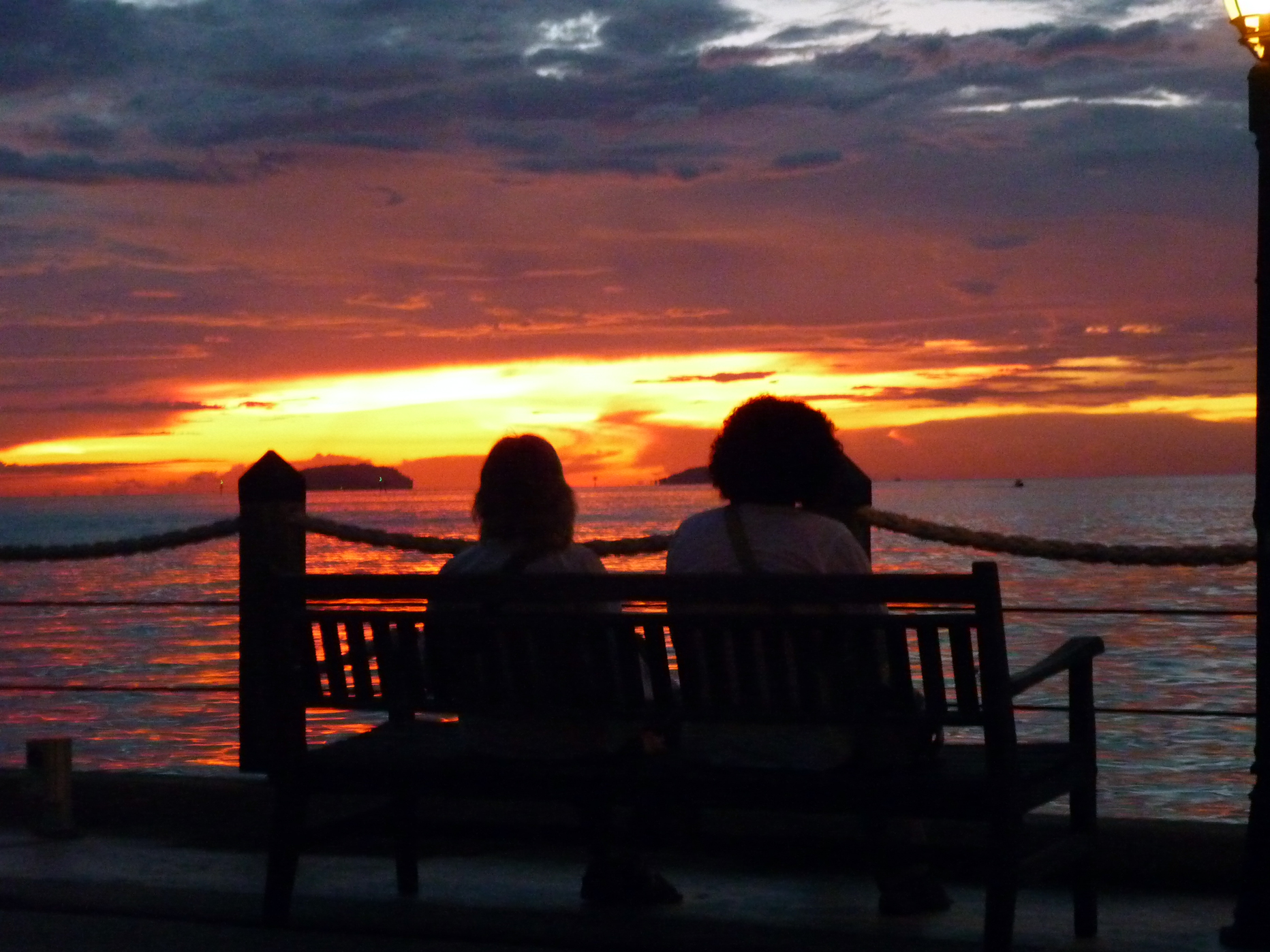
Do you have a bench photo to share with the world? visit Jude, she’ll explain!
. . . I was in India.
When I first heard of the city of Jaisalmer I was entranced, it seemed to me to be at the end of the world. The golden city is dominated by the fort, a living, vibrant place that has a life of its own, hanging on the edge of the far west of India.
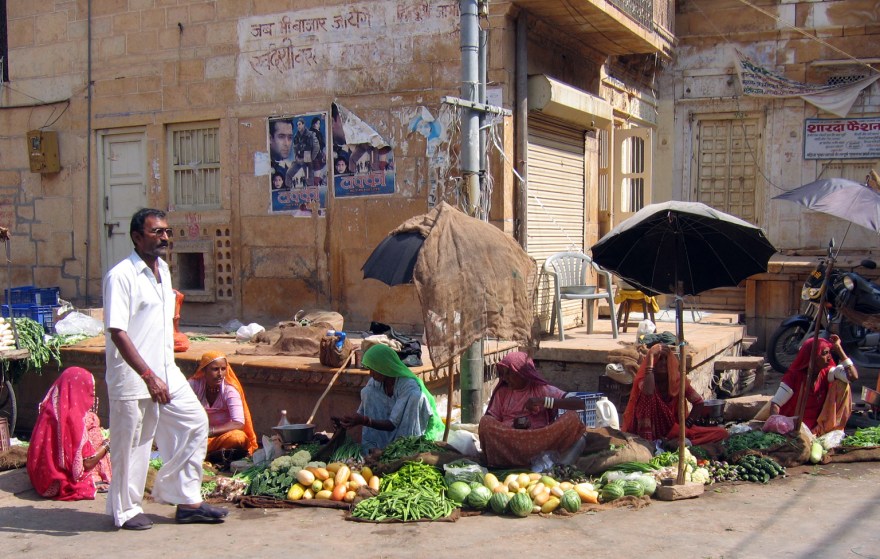
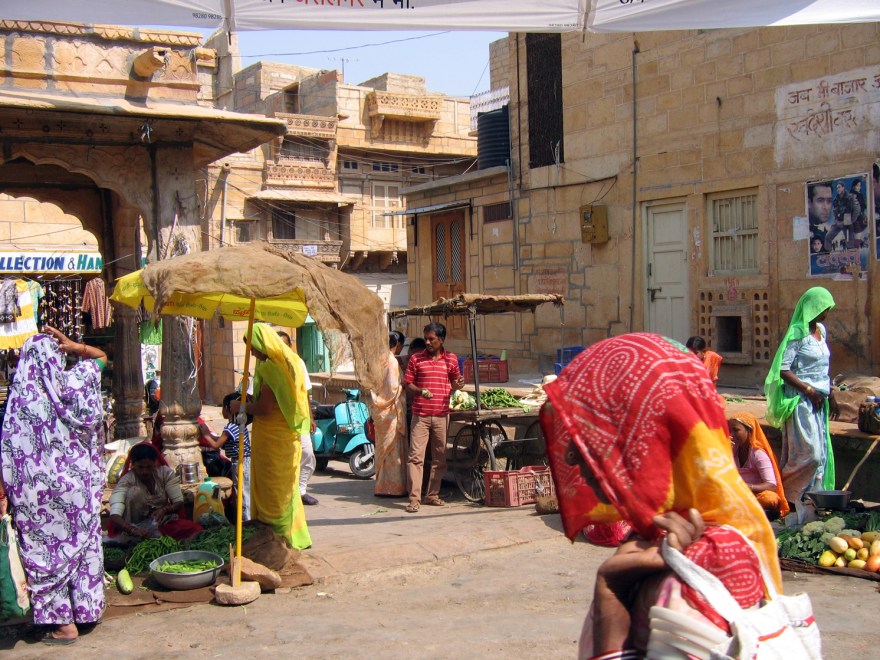
It’s a very commercial town, everywhere you turn someone is trying to persuade you that you need spices you’ve never heard of, saris, wall hangings, ornaments of all types. I expect it’s even more touristy now. But that doesn’t spoil it’s charm, the twists and turns of each cow inhabited alley, gets under your skin and even deeper into your nostrils.
There are several Jain temples, with finely detailed interiors, and a plethora of Buddhas.


The stoneware is so beautiful it’s hard to know where to look.

But there are quiet spots to reflect,
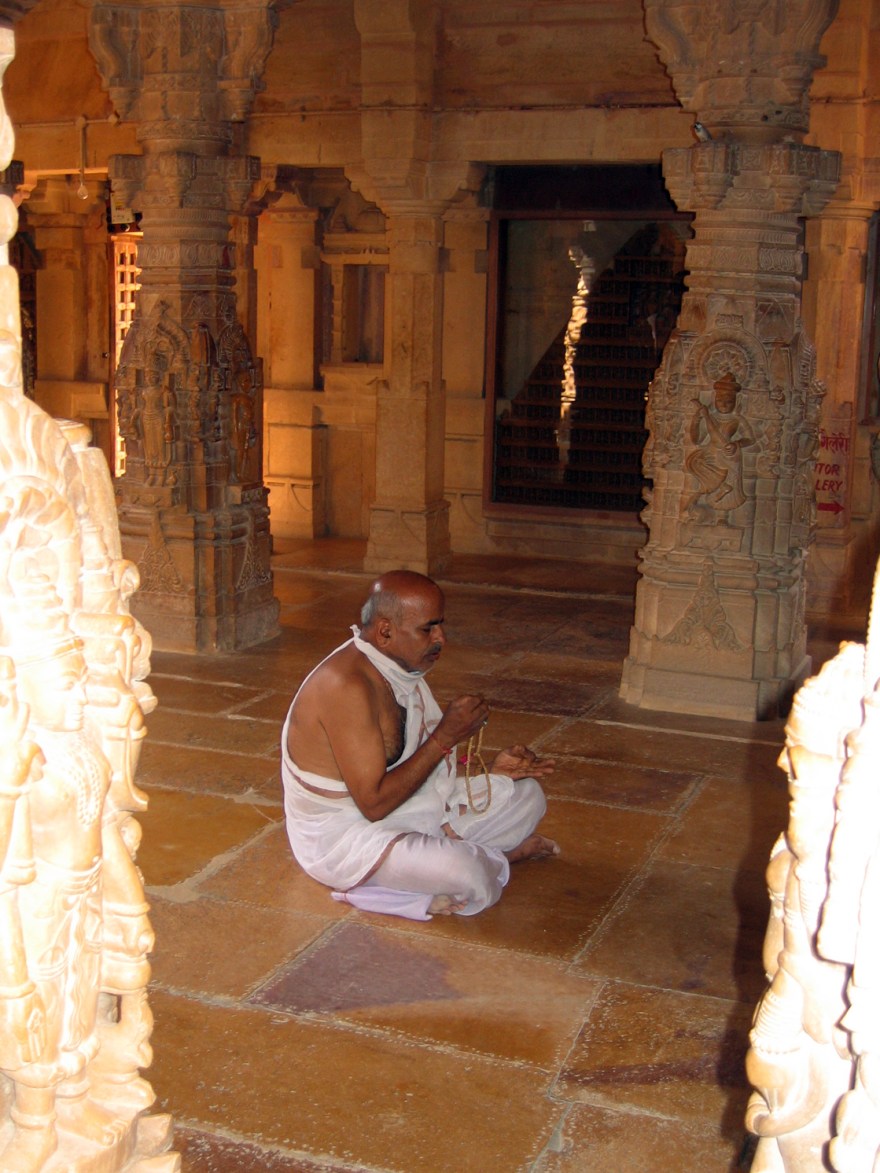
And sculpture to wonder at,

Haveli’s are mansion houses of the wealthy. While some in Rajasthan are dilapidated, many are well maintained and open to the public for a few hundred rupees. This one was a museum come antique shop, I think pretty much everything was for sale at a price, even though it was also a home.



In time for sunset, we went just outside the town to see the fort change colour, by day it’s the colour of a lion, but at sunset it turns to a honey gold.

Although the sunset was disappointing, traveling friend and I were happy to be all dressed up in our finery, in the most mesmerising city at the end of the world.
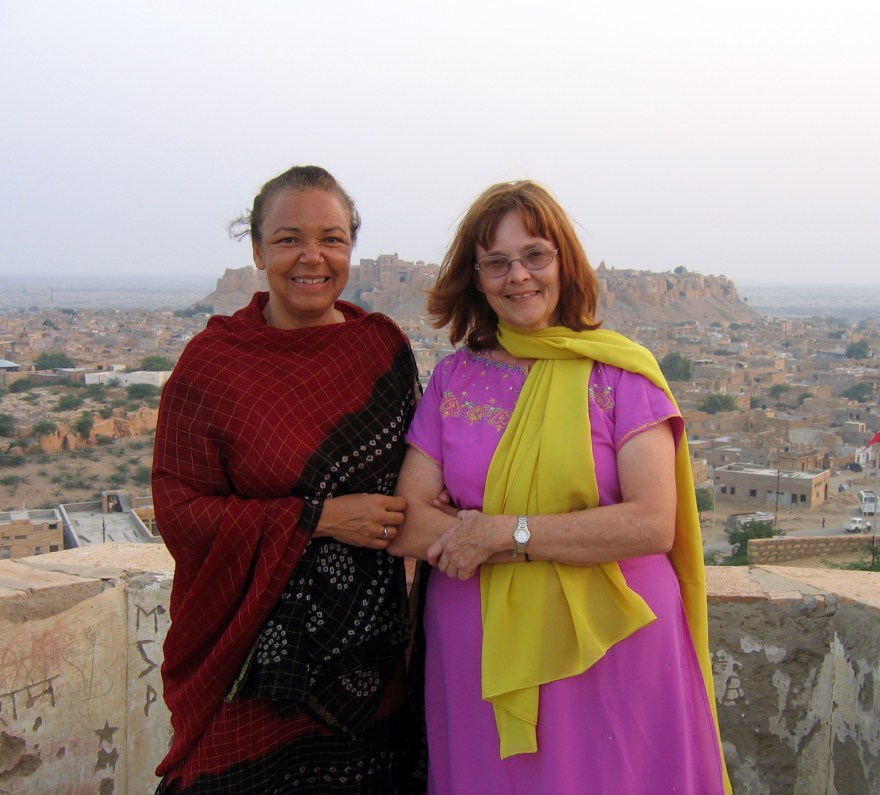 Jaisalmer is around 800 kilometeres from Delhi, and it can be reached by train, an overnight journey. Better still, try a slow journey and stop along the way. Rajasthan is wonderful and the people are warm and friendly, who are justifiably proud of their heritage.
A week ago I left you standing outside the church remember? Let’s have a peep inside today, in we go and turn around.

See the walls? they aren’t painted, they’re azulejos, traditional blue and white Portuguese tiles, and they were created in the 18th century. The Igreja da Misericordia is a 16th century Renaissance building, with an 18th century Baroque interior. On the walls the azulejos depict the Corporal and Spiritual Works of Mercy. There are seven on each side.


and the right. Here they are in situ.


When you visit the Igreja you are greeted warmly by a local lady. She gives a brief explanation of the inside. There is no entrance fee, but donations are welcome. Earlier that day, she said that very afternoon would be the best possible time to come back. So I’ll be back one last time to show you why.
The morning after I arrived in Tavira I was awake and up way before I heard my friend stirring. I was raring to go, so I went out to try to find my way around the neighbourhood and check out the distance to the bus station, as we planned to use public transport in the Algarve.
I walked over the level crossing and noticed a sign to the Estacao Rodoviaria, the bus station, but decided instead to take the cobbled one way street, Rua Dr Miguel Bombarda, down in the direction of the town.  I can’t stay on a path too long in a new place, and Tavira’s old town has many interesting and distracting little corners.
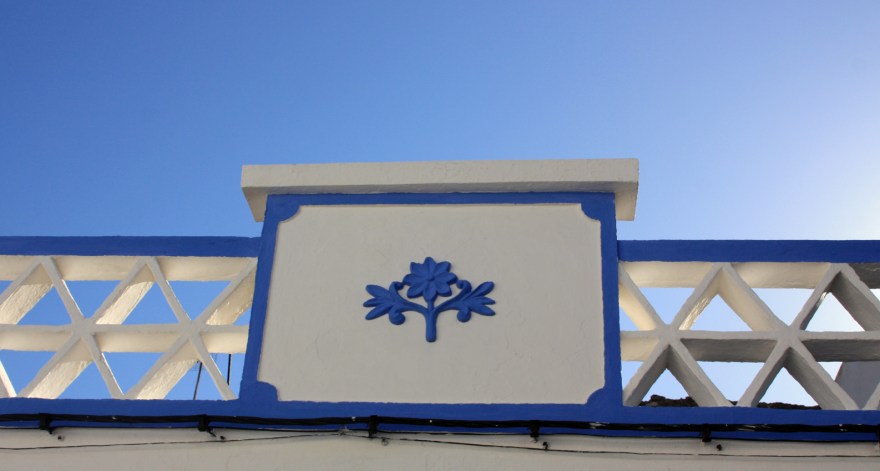
I couldn’t resist a closer look at this blue rooftop. There are many little single storey homes, and in the quiet of the morning, several elderly ladies greeted me as they popped from house to house for their early morning chats.
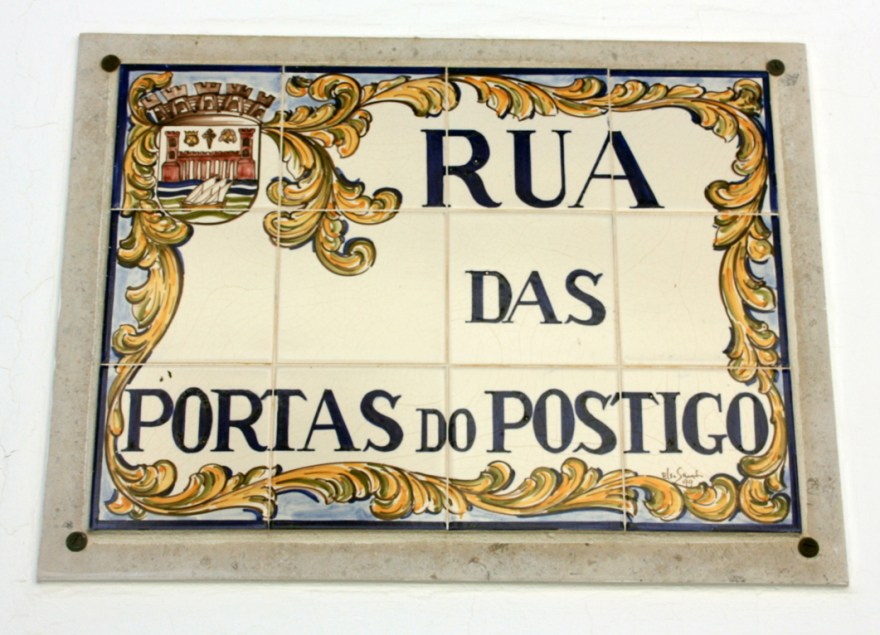
When I saw this street sign I decided to photograph it to help retrace my steps if I got hopelessly lost. That would be rare, but I had said I’d just be just half an hour. Next I went kind of diagonally through some streets that really shouldn’t have cars, but did. I managed to get to a main road which led to the bus station. The way was obvious so I didn’t follow it, but I did get a sneeky peep at the Bombeiros station – that’s where the firemen hang out girls 😉

There are tiled buildings everywhere and this one seemed to have some interesting structures behind it, I found out what they were eventually. Back into the maze and near the bottom end of Do Postigo, I recognise a building from photos I’d seen on the internet.

The Pousada Convento da Graca is now a smart hotel, but originally a convent built in the 16th century. It is supposedly beautifully restored, and has a Renaissance cloister and a Baroque staircase. It would be lovely for a short break, but personally too expensive for any longer. I wish I had remembered to go back for dinner or even just morning coffee, next time maybe.

Here’s a closer shot, I’d like the room with the tiny balcony, it would have a nice view of the public gardens opposite. I chatted to an English lady in the gardens. She was walking one of her three Dalmatians and she told me that the church up the hill was Santa Maria do Castelo, one of my must sees, but that it was shut most of the time. She did direct me to the one I really wanted to see, saying that it was always open. Just behind this one she said. I checked the door of Santa Maria and then looked just behind.
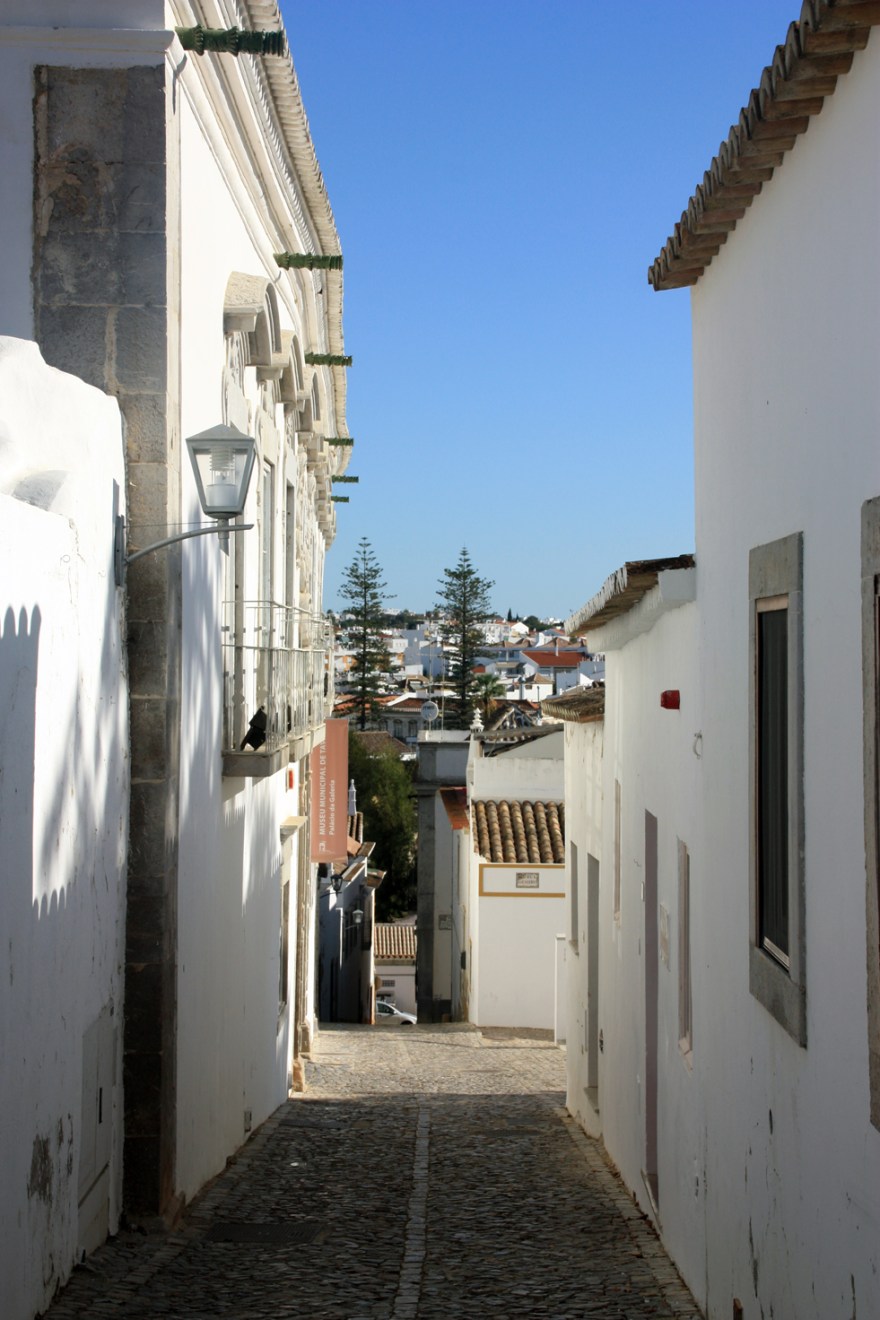
I see no church! but at the first corner the path opened up.
 This silent square with views of the rooftops was scorching even at 9am. The tower had to be where I was heading, although there are around 36 churches in the city, so who knows? I had no doubt about the building facing me, it was the Palacio da Galeria, from the 16th century this handsome building now houses a museum of local history, as well as housing temporary exhibitions. I was an hour too early, so I’m adding it to my list of reasons to return to Tavira.
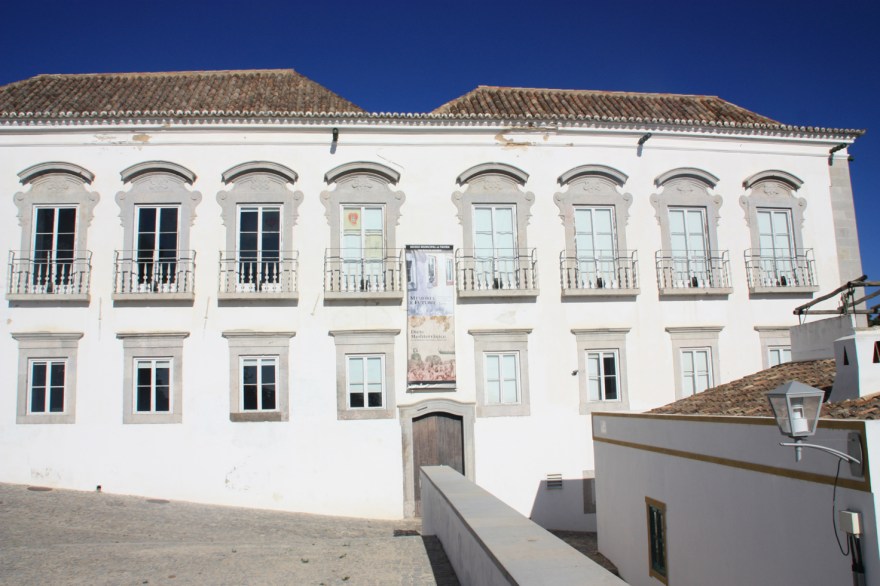

So with the tower in mind, the cobbled hill led me on down.


By now I’m wondering how on earth women wear heels in Tavira, I took four pairs of flat shoes on holiday with me, but already I couldn’t see any use for two of them. At the best my knees would be shot and there was potential for bone breakage!

One more corner and this is it, the Igreja da Misericordia. The exterior doesn’t look especially promising does it, but you’ll see. I took a peep in and got some useful information chatting to a lady at the desk, but then I headed back to the apartment – I’d said I’d be half an hour, my time was up and there was lots more to explore. I went back to the Misericordia later in the day, so I’ll show you the inside in another post.
This post is for Jo’s Monday Walk, I hope you enjoyed it and didn’t get your heels caught in the cobbles. Maybe you have a walk to share this week?
In the south east of Portugal, the river Guadiana forms a boundary between it and Spain. The Portuguese/Spanish border is an open one, so I’d say it’s a soft boundary.
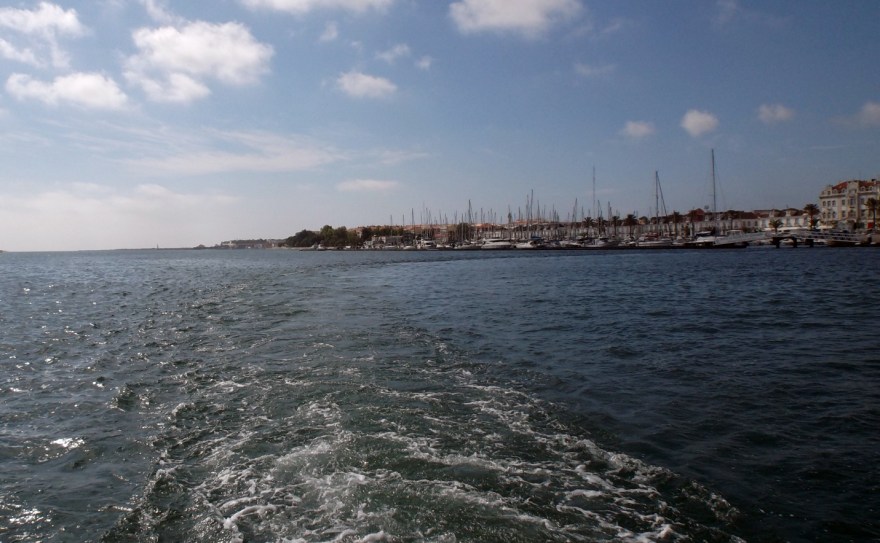
The town of Vila Real de Santo Antonio is in Portugal,and there is a regular ferry to Ayemonte, in Spain.
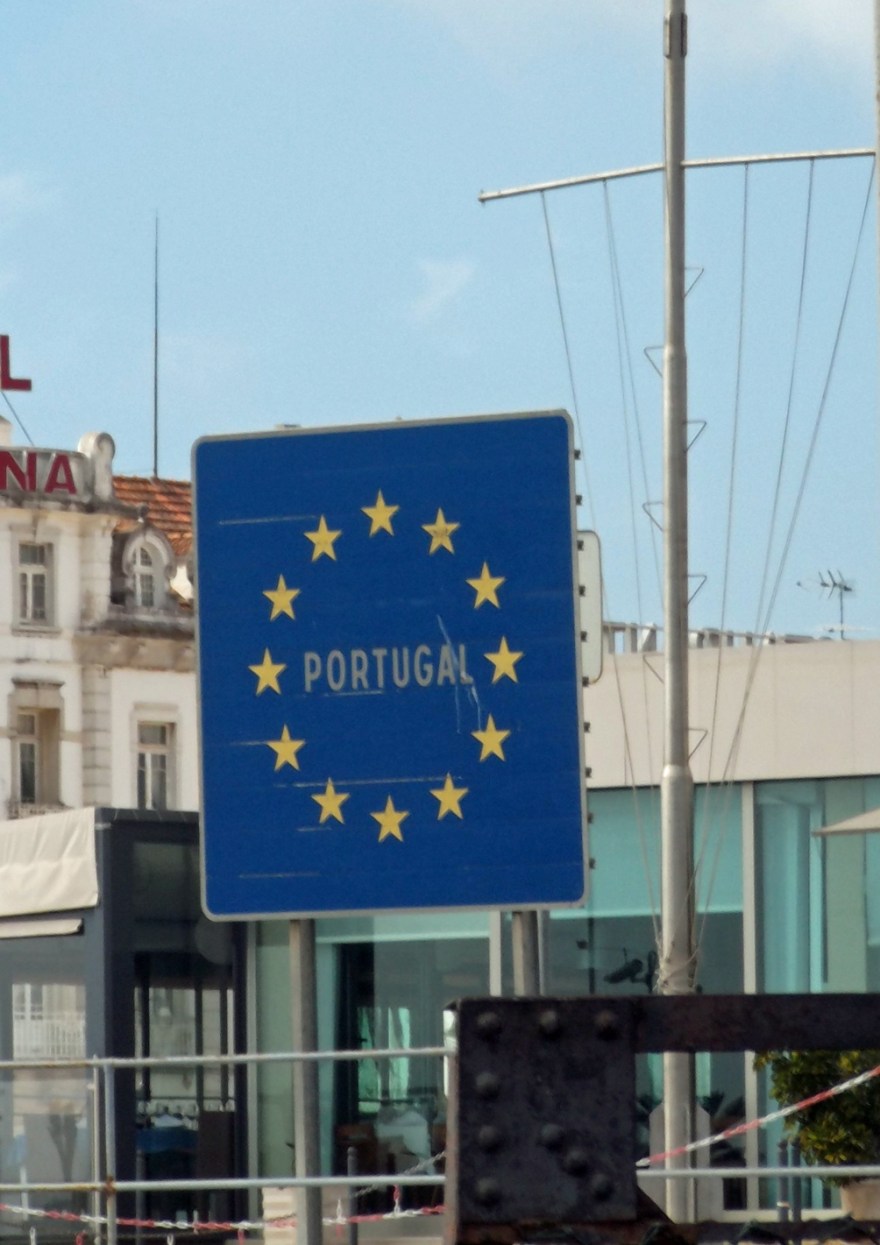
Before you know it, you’re on your way.
Look up the Guadiana and you’ll see the lowest road bridge that crosses the boundary.
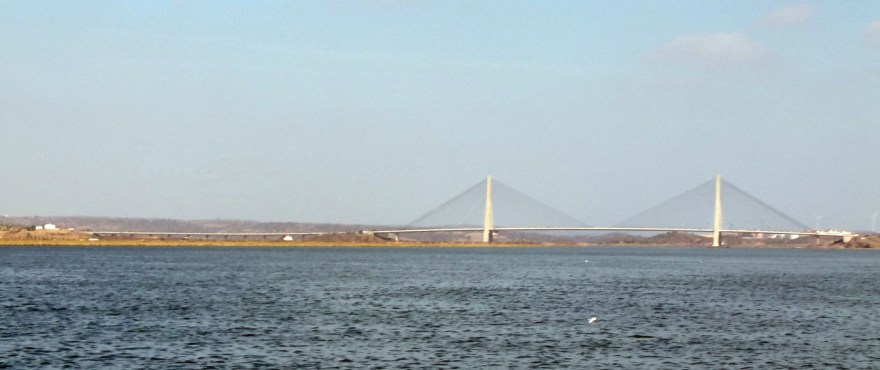
On board the beauty that breaks the boundary.
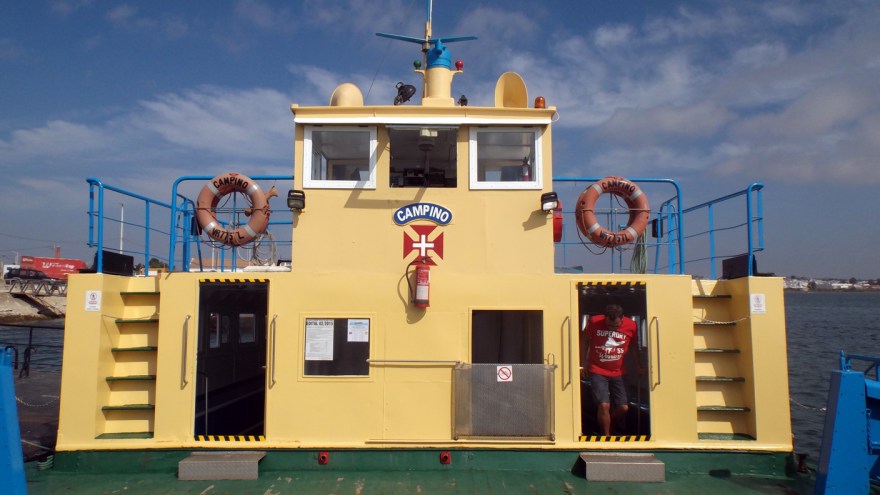

The very pretty town of Ayemonte waits when you leave the ferry. If you’re in the eastern Algarve, for the modest sum of 1 euro 60 each way you can have this day trip to Spain. It has to be one of the loveliest boundary crossings I’ve made for so little money.
Do you have a boundary to share with the Daily Post? Ben Huberman would love to see!
Whenever I get lucky enough to fly into a foreign land, I hope to see the landscape unfold through the plane window. I’ll crane my neck if necessary, around the head of a fellow passenger, known or unknown. I wonder how can you not want to see the colours of the country, the curves and lines, the density of populated areas? I remember flying over the Sahara, in total awe when a homestead was visible with nothing else for what seemed liked a hundred miles. I remember shrunken rainforest and the EastEnders bend in the Thames.
Last weeks flights were not as dramatic, but I still tried to capture what I could, yes I am that sad woman on a perpetual first time flight, with a camera pressed against the window. Here are some of the images from those flights.

Western Spain or perhaps eastern Portugal, in late September, it doesn’t look as if anything could grow there, but the rain will fall when it’s ready and the soil will spring to life.

What’s that coming over the hill, it is an ocean, the Atlantic?
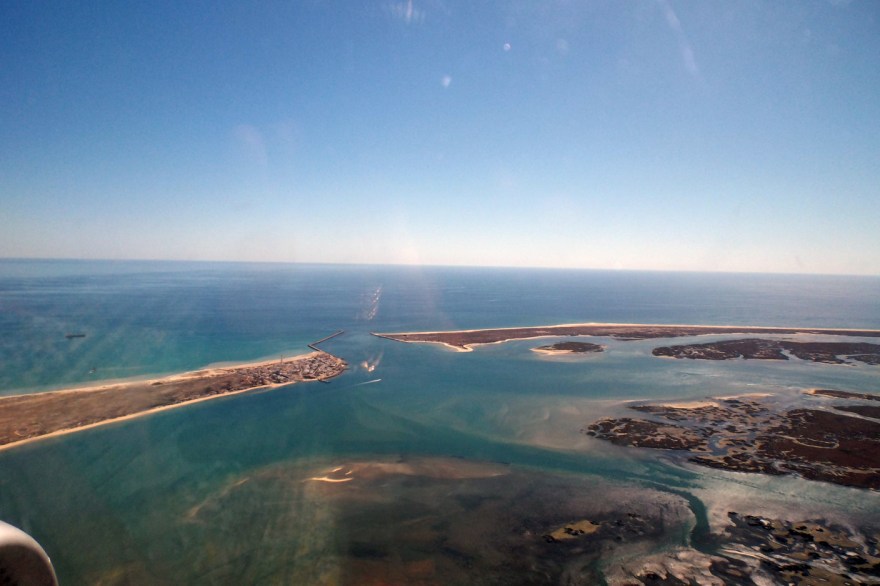
Wait, I recognise this from my obsessive checking-out-the-destination-before-I-go habits, it’s the beginning of the long islands just off the Algarve coast.

Part of the Parque Natural da Ria Formosa, I’m nearly there!

Umm, as it’s my first visit to Portugal I don’t think I’ll hang around Faro above, too long.
Closer to home, there was a lot of cloud cover, with tempting peeps at the south west of England below, and there was a definite change in the landscape. As soon as we crossed the English Channel, I knew exactly where we were.

This is Paignton, a seaside town 25 miles from home, the pier is just visible.

This is the view that got me really excited, and led to me identifying Paignton and Silverton with my daughter’s help. It’s just outside Exeter on the dual carriageway heading west towards Torbay and Plymouth. The circular junction is one I like driving around, it makes you dizzy if you go fast enough – not that I’d break the speed limit of course! If you survive that one, another mile further and you reach the notorious Splatford Split, the place where the tourists get lost, confused and sometimes cause accidents when they realise they’re in the wrong lane.

I was gutted that the cloud cover hid the city centre completely and cleared 8 miles east over Silverton.

The long wide beach at Weston-Super-Mare, in north Somerset, it’s a kite paradise and although I’ve never seen it, on a clear day the Welsh coast is often visible.

This isn’t a very clear shot as far as landscape is concerned but I rather like the layers of sky, cloud and land.
So, this is my entry to this weeks photo challenge, the change I observed in the landscape, from one that was a fresh and lovely experience, to the landscape of my heart.
Hello, how are you? I’ve missed you all and I’ll be round to see what you’ve been doing while I’ve been away. Meanwhile, some of you know I’ve been to Tavira, Jo’s town in Portugal, sadly for me, Jo was in Poland so I didn’t get to meet her.
The day that my friend Lindy and I arrived, we sorted out what we needed for the nice Air b’n’b we stayed in, had a rest after a 5am start and then went to find dinner.
The river Gilao runs through the town, and the river front is a very pretty area, with a garden that is popular with locals and visitors of all ages.  The garden also has the best gelato stand out side of Italy, my favourite was very dark chocolate with forest fruits, unforgettable! There are bars, restaurants and cafes everywhere you look, and being late in the season they are all keen to fill your tummy. We chose a fairly new one, Gilao Restaurante, for our first night. My choice of a simple salad was lovely, Lindys less so and the service was not good. The manager tried his best to make it up to us with a delicious and potent local liqueur, and a promise to do better if we returned.
 We walked through the garden where the cobbles glisten in the light, these decorative paths are everywhere in Tavira and some of the other places we visited in the Algarve.
 The river is lit at night and is really atmospheric, especially the Ponte Romano. It’s believed that the bridge originates from Roman times, but it was rebuilt in the 17th century after an earthquake.
The Praca da Republica is a stunning central meeting place on the south bank of the river, it has an curved and stepped area perfect for watching performances.

Again, beautifully lit at night and buzzing with activity even in late September, the Praca has many places to eat, drink and people watch.
Jo, I don’t want to tread on your toe’s – I don’t think its possible anyway because you are the expert, but I’ll probably do a couple of posts about it. I can’t thank you enough for introducing your second home to me!
These are some of the quaint narrow streets you might find .


 Lucid Gypsy