Losing the Clarence

It isn’t often that Exeter makes the national news, which is a good thing. We’re a small city with mostly well behaved citizens, where bad things rarely happen. Last week though the unthinkable happened, a fire in the very heart of the city. At 5.20 in the morning, the Royal Clarence Hotel in Cathedral Yard caught fire, it’s believed that the fire began two doors down in the upper floors above a prestigious gallery, and the flying debris caused it to spread. More than 100 fire fighters worked to contain the blaze, and were still working three days later.

The Clarence was the first in the country to take call itself a hotel, a term copied from the French, prior to that there were only inns. The hotel was built in 1769, on the site of an earlier tavern and had a reputation for being haunted.

I’ve finally been to Cathedral yard to see the site for my self, here are some photos.

This slideshow requires JavaScript.


There were no injuries and for that we must be thankful. Quite a few shops around the hotel, including on the High street were slightly damaged and remain closed. Demolition work began this week, and owner has pledged a sensitive re-build, we have to hope.

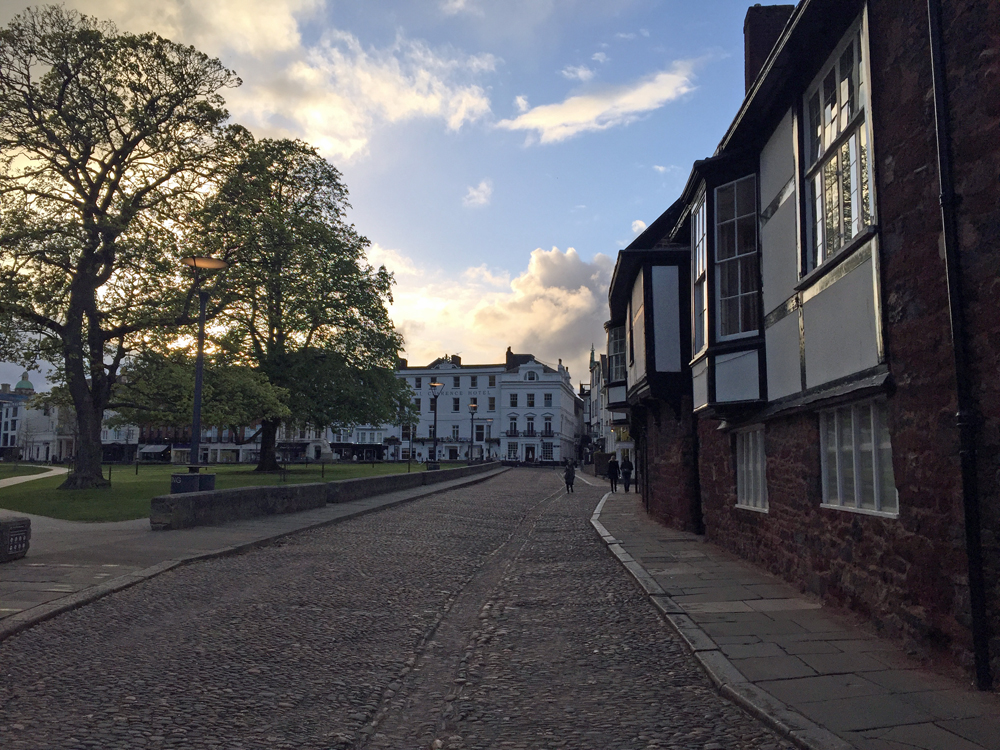
I’ve posted both of these photos before, but first the hotel in the centre, with the cathedral green on the left and the buildings on the right date from 1500.
rc6

The hotel has always looked splendid at night. To the right 15th century St Martins,built on the site of a previous church from 1065, and Mol’s Coffee House, built in 1596 with it’s Dutch style gables.

rc7

Exeter suffered a great deal of damage during the blitz, including to the cathedral, but nearly all the buildings along the Yard survived, it’s desperately sad to see this part of our heritage destroyed.
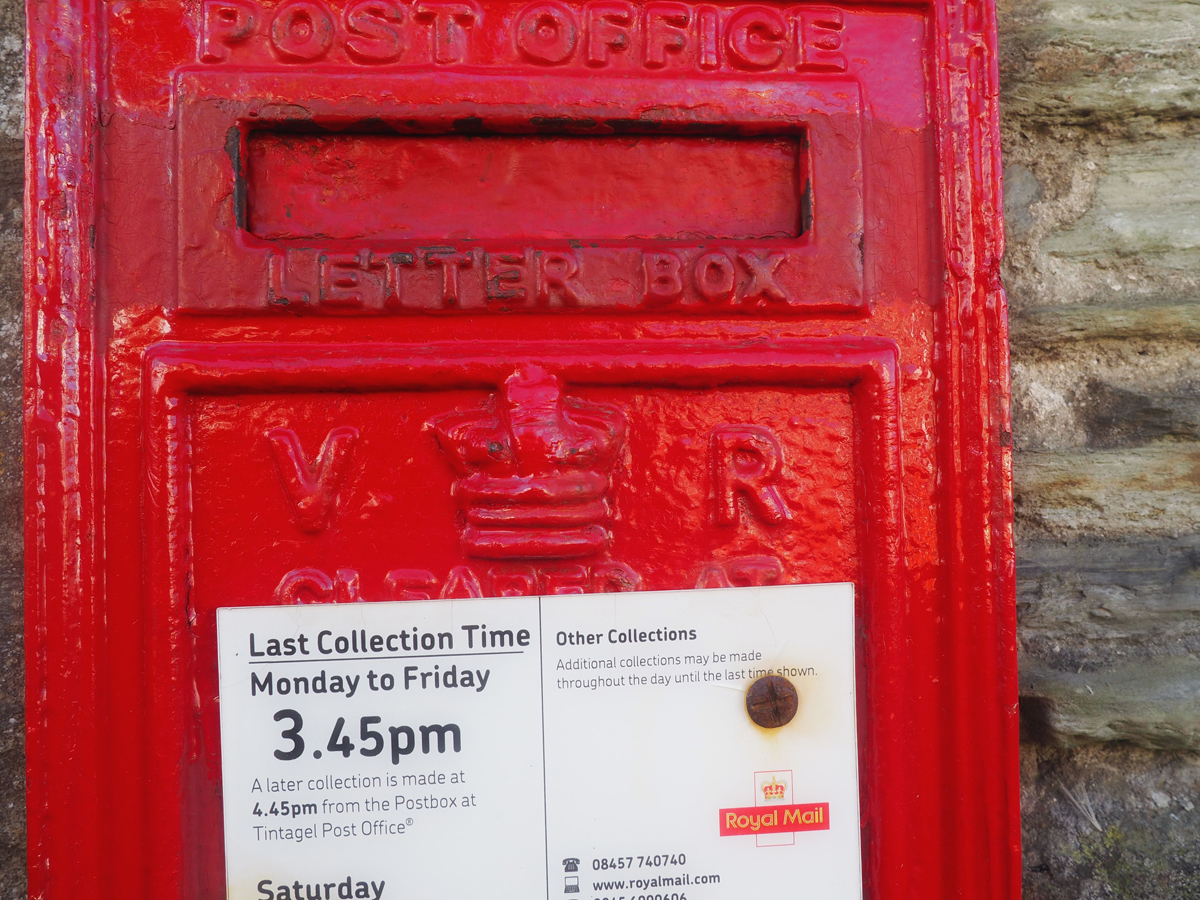
When Victoria reigned . . .

This post box was set into the stone of Tintagel’s Old Post Office, now looked after by the National Trust, and it’s still emptied even now.

Jude, you’ll find the other one on the right hand side of the hill going down to Boscastle. I wasn’t able to pull in to take a photo, but it’s much nicer that this one so if you’re ever up that way . . .

Traces at St Materiana’s

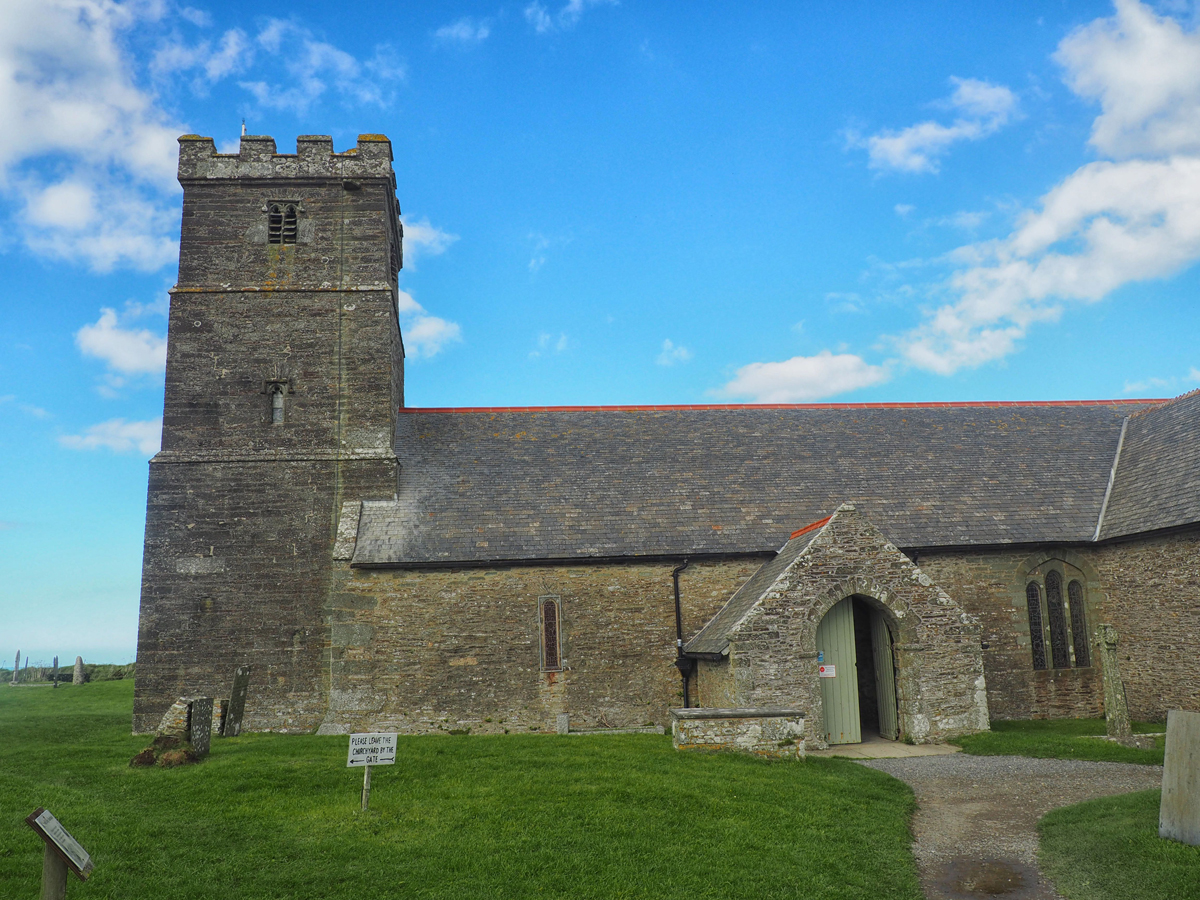
A month ago, I spent a day in north Cornwall, a glorious sunny day in early October, one of those bonus days that has to be made the most of. We headed in to Boscastle, but so did everyone else and with nowhere to park we gave that up as a bad job and went instead to Tintagel. I was already rather poorly by then, and was shocked by how rough I felt after walking just two miles along the cliffs, but finding the gem that is St Materiana’s Church made it worthwhile.

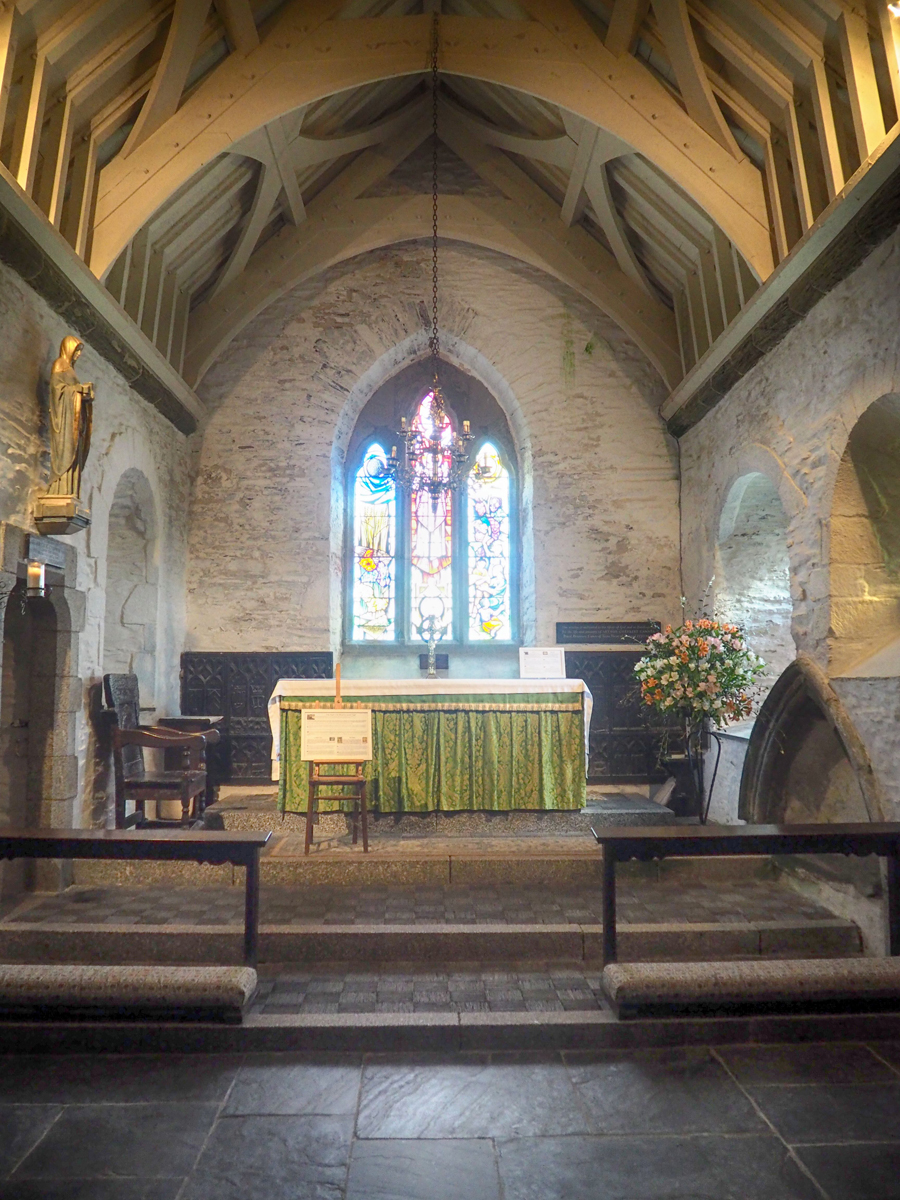
Built between 1080 and 1150, St Materiana’s stands high above the sea on Glebe Cliff.

The church doesn’t look particularly interesting from the outside, a typically dull Saxon building, and a sign warning you to keep off the grass because of adders doesn’t help!

The area around Tintagel is believed to have been evangelised by a princess of Gwent, St Madryn, around 500 AD. It’s likely that Madryn and Materiana are one and the same. It is thought that the church is sited on ground that was previously a Celtic oratory, served by monks. Between the 5th and 7th centuries it was used extensively as a Christian burial ground.

Inside the church there is a pre-Reformation altar and a Tudor bishops seat.

OLYMPUS DIGITAL CAMERA

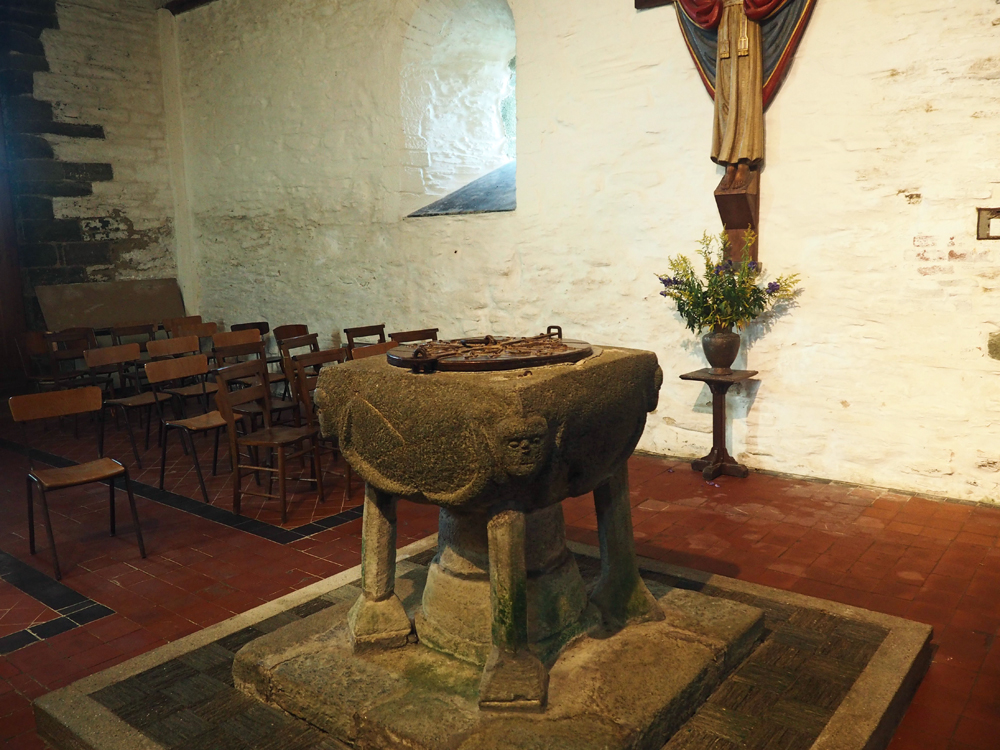
What struck me as most unusual was the font, I’ve never seen one quite like it, have you?

Apparently it’s Norman, and it’s believed to have come from the chapel, St Julietta’s  at Tintagel Castle, across the cliffs. Whatever it’s origins, the font and the church are ancient, a trace from the past, for Paula at Lost in Translation.

Quest

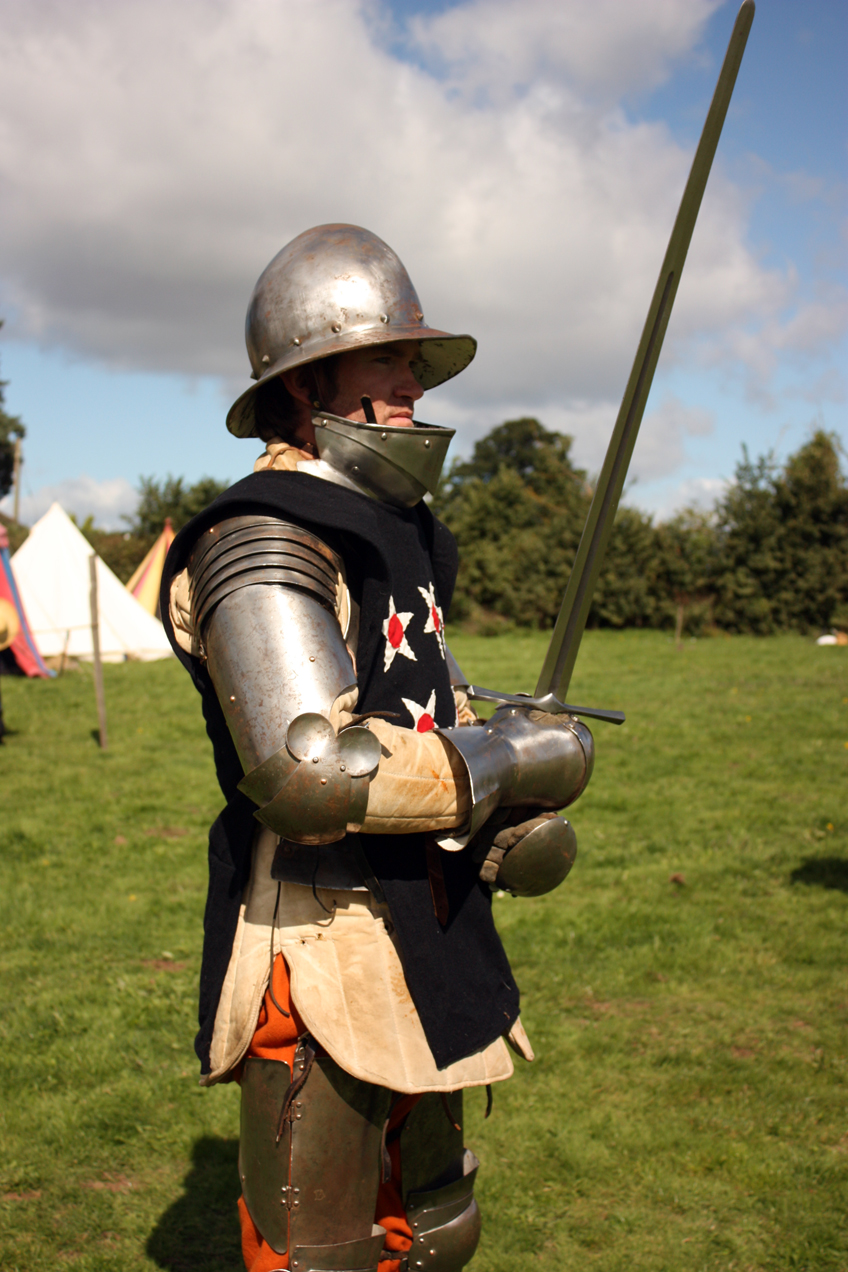
I’m glad the weekly photo challenge is back this week, does anyone know what happened last week? This weeks theme, Quest, seemed tricky at first but then it fell into place when I remembered meeting this knight.

questWhose particular quest was to get me to take photos of him!

And then a song sprung to mind from my infant school days – yes I can still just about recall those dim and distant times.

When a knight won his spurs, in the stories of old,
He was gentle and brave, he was gallant and bold
With a shield on his arm and a lance in his hand,
For God and for valour he rode through the land.

No charger have I, and no sword by my side,
Yet still to adventure and battle I ride,
Though back into storyland giants have fled,
And the knights are no more and the dragons are dead.

Let faith be my shield and let joy be my steed
‘Gainst the dragons of anger, the ogres of greed;
And let me set free with the sword of my youth,
From the castle of darkness, the power of the truth.

By Jan Struther circa 1931

Anyone else sing that song way back when?

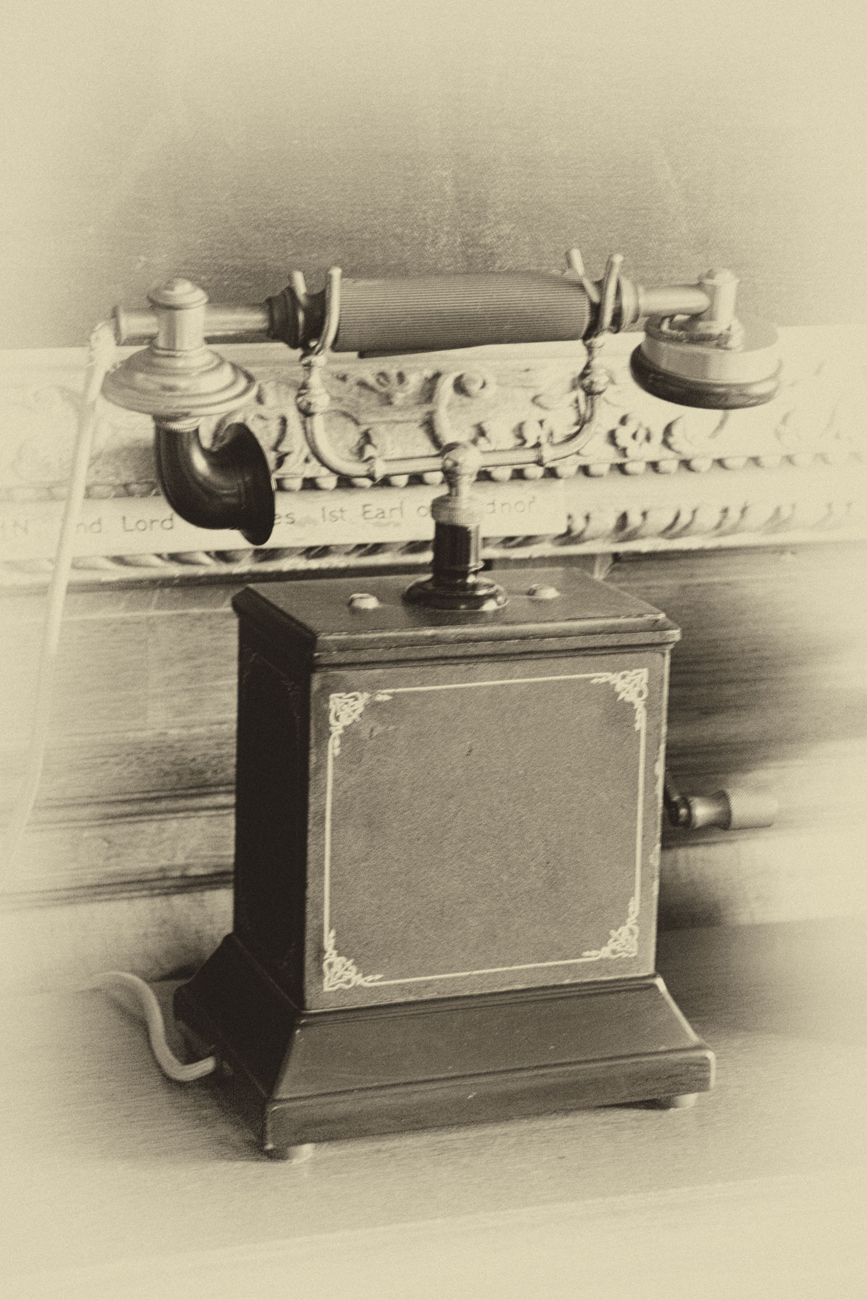
Traces of the past

It’s Traces of the Past at Paula’s black and white Sunday this week, so I thought I’d bring this old weaving loom. I believe it’s from the early 1960’s.
totp189
It can be seen at Coldharbour Mill, in Devon.

The Weavers Song
The loom goes click and the loom goes clack
The shuttle flies forward and the shuttle flies back
The weaver’s so bent that he’s like to crack
Such a wearisome trade is the weaver’s

Now that it’s made into cloth at last
The ends of work they all make quite fast
The weaver’s labours for now have passed
Such a wearisome trade is the weavers.

Anon, circa the Industrial Revolution.

Traces of the past

Paula’s back with her black and white Sunday challenge, and ‘Traces of the past’, will be a regular theme as it’s so popular – I love it!

I found these figures in a little church, St Mary the Virgin, in the village of Uffculme, Devon. The church was probably founded in Saxon times, but first gets mentioned in a charter of 1136. The figures are in 17th century costume.

uffculme-1-01
Paula is always happy to have people join in with her challenge, pop over and see her!

Beside the City Wall

Yesterday I grabbed a little bit of sunshine and walked the dogs in towards town, with no particular plan. They aren’t very keen on the High Street, so I took a right and headed up Northernhay Street to the park. It was the first time I’ve been there for years and a perfect day for a peaceful stroll. Back in the days when I worked in the Civic Centre, it was a regular lunchtime spot in summer. When I was little and when my own children were, it was a favourite spot, along with the adjoining Rougemont Gardens, for roly-polys, so there I was again.

At the Gate
At the Gate

The first borders on my left were mostly new to me.

This slideshow requires JavaScript.

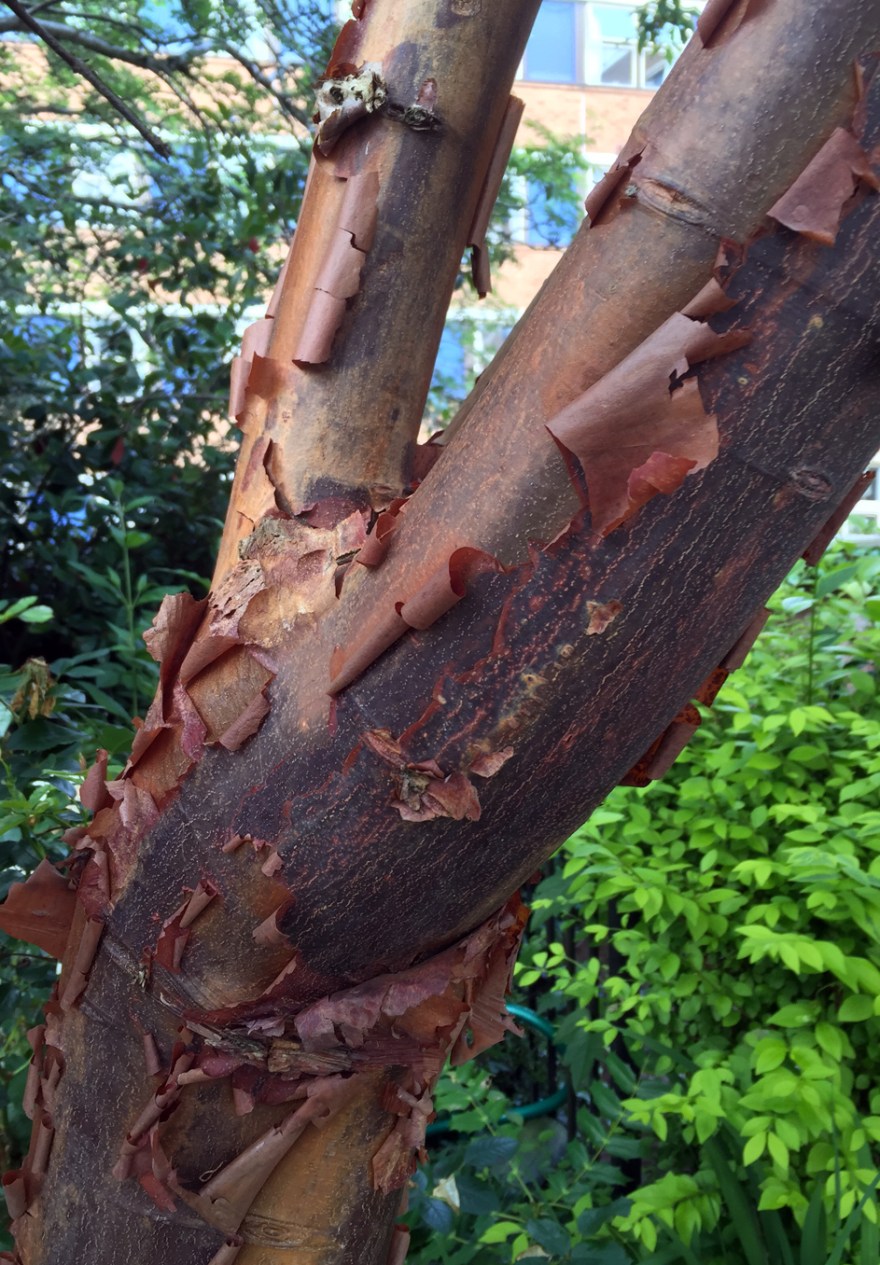
And I don’t remember this Paperbark Maple (Acer Griseum)

mw4
Acer Griseum
Stunning borders
Stunning borders

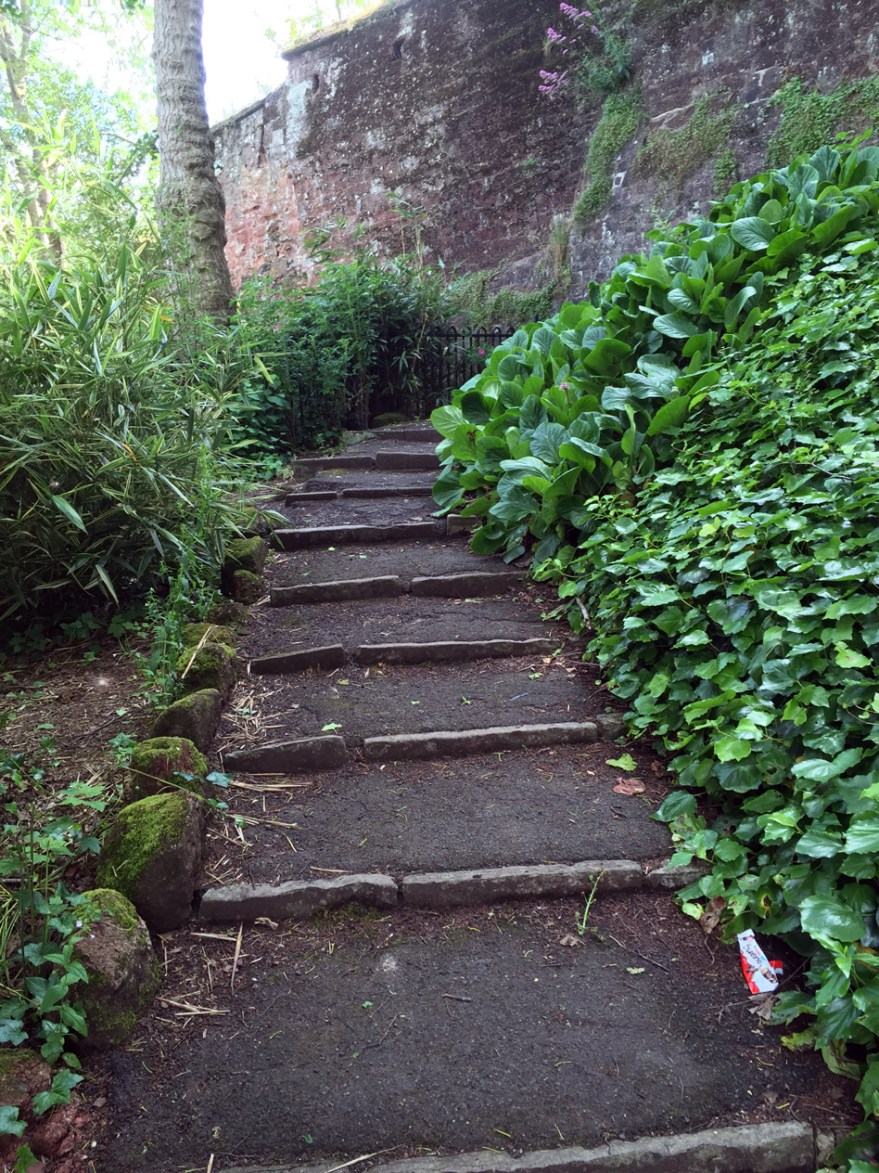
Time to walk up the steps

mw10This is part of the old city wall.

mw11But it feels like I’m walking in the woods.

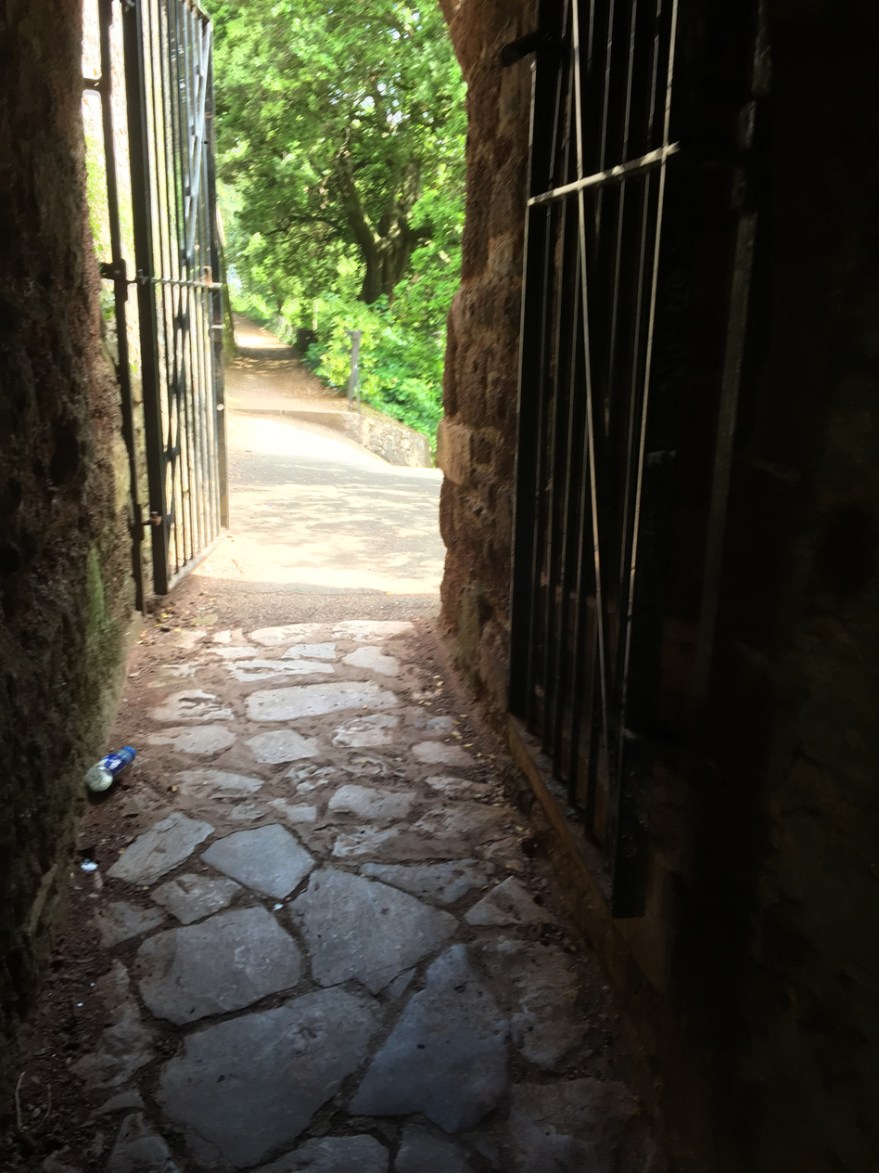
mw12One of the old gates, walking on past there are places to peep through.
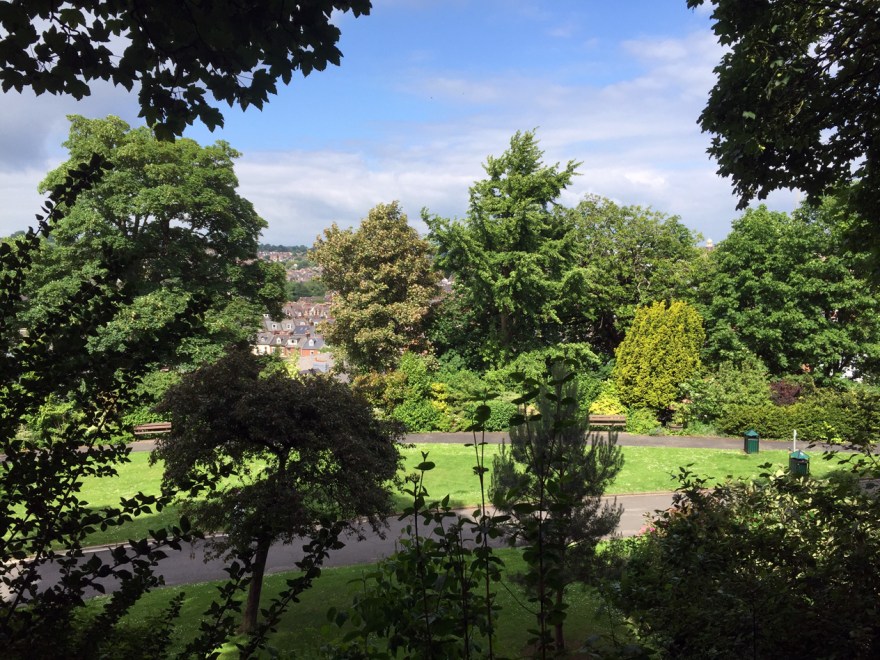
mw13Dido and Daisy prefer the shade and would like to run off into the trees, I like the sun on my face.

mw15
One of the city’s great and good on a nice curvy path

This wall cries out to stroked.

mw14mw17Ahh more steps!

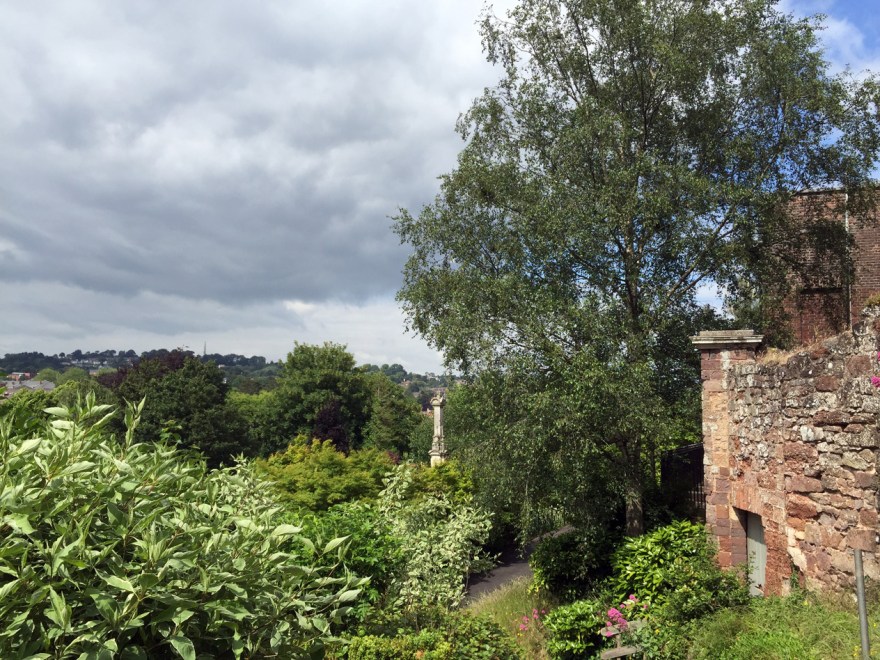
mw18But the view makes it worth it.

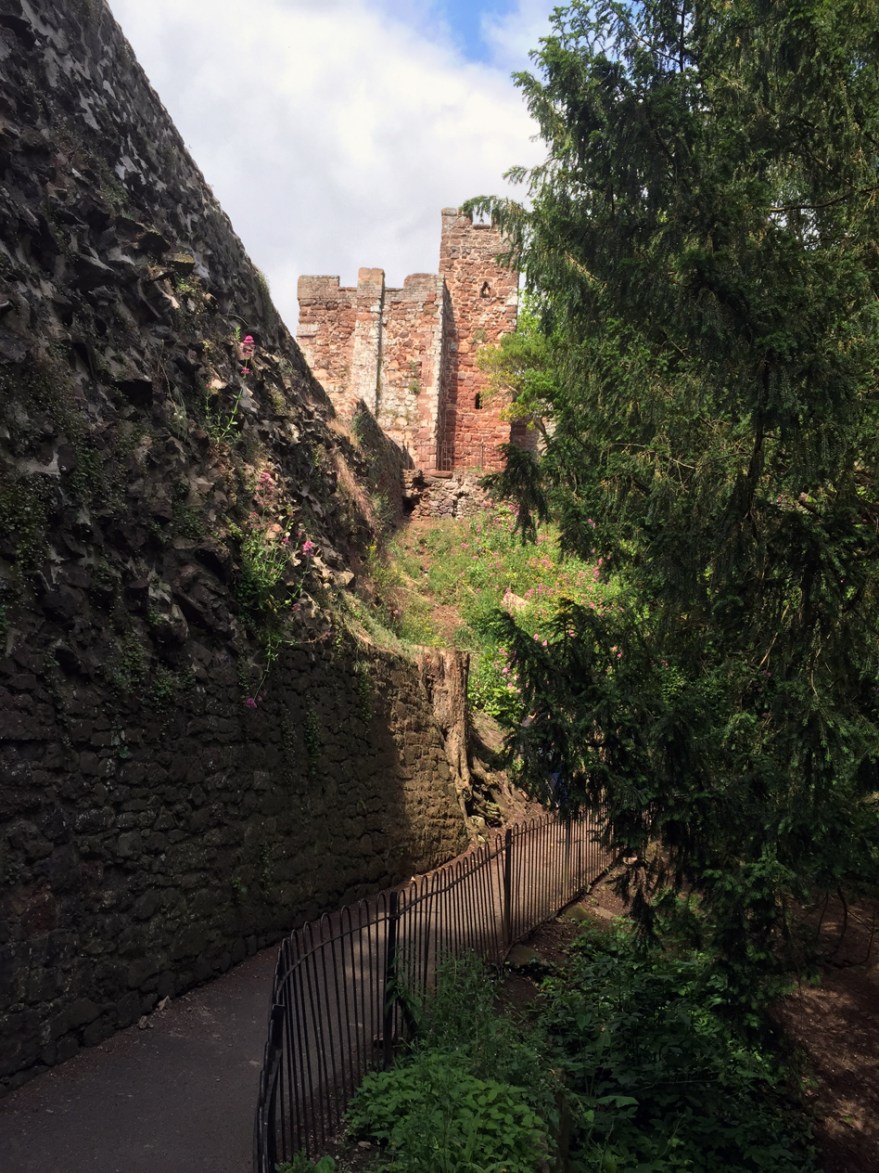
mw19This is the entrance I was looking for. The path through Athelstan’s tower leads to Rougemont garden where you can walk inside the wall.
This slideshow requires JavaScript.

mw24

I didn’t linger in Rougemont, a sign said no dogs, but I ignored it long enough to spot the teenagers through the trees above.
mw25

And to get another angle on the tower.

Okay, time to follow the rules and back through to Northernhay. By the way the ‘hay’ part means field and we have Southernhay as well.

A rather show offy foxglove variety.

mw27
I walked up past the war memorial, to the little pond at the bottom of the slope.

mw28
When I was little there were goldfish that I loved to see, but no-one’s home now.
mw29
mw33
This is a short circular walk, part of the longer City Walk Trail, perhaps I’ll take one of the Redcoat Guide tours one day. For now I’m nearly back to the beginning, with the wall high above me. Northernhay is actually England’s oldest public space, it was created as a pleasure walk for local people in 1612, 400myears and still giving pleasure. I hope you enjoyed it, are you walking with Jo this Monday?

mw32A last little bit of treasure.

mw31

Exeter’s history began nearly 2000 years ago, when the second Augustan Roman legion settled here in 55AD. A fortress was built overlooking the lowest crossing point of the Exe, known as Isca and manned by 6000 soldiers. An earth and timber rampart with a deep ditch in front protected the fortress.
Over the centuries the original grey volcanic rock was repaired using Heavitree Breccia, white Triassic sandstone and a pink Permian sandstone was used in the 17th century.
When the fall of the roman empire the city was pretty much abandoned and the land inside the wall returned to farmland, and little is known until Saxon times and from the 9th century the city grew quickly becoming one of the most prosperous in the country.
King Athelstan is credited with repairing the wall in time to withstand Viking attacks in 1001 AD and William the Conqueror in 1068 AD.
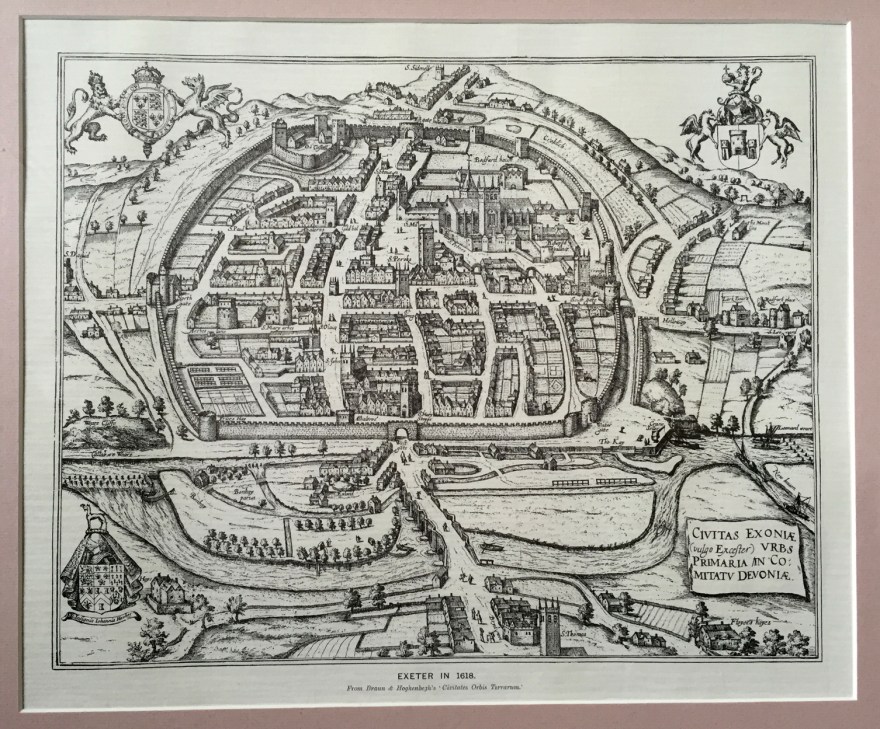
This photo is of a print I have, showing the city in the 17th century with the wall still intact, about seventy percent remains now. You should be able to click for a bigger view.

Exeter, inside the wall 1618

Curves inside and out

Cheri at the Daily Post has chosen the theme of curves for this weeks photo challenge. I have a friend who likes straight lines in imagery, but I’ll always choose the curves and swirls we find in nature, in any design or art.

I took this first photo a few weeks ago at Coldharbour Mill, in east Devon. It was leaning against a wall at the back of a courtyard and I had to capture it.

curvesa1Next, there’s a humpy hedge behind these curvy evergreens. Apparently when it was a baby hedge, there was a very harsh winter and it was weighed down by snow. The gardeners tried to repair it, but failed and knowing they’d lost the battle, they decided to allow it to grow it’s own curvy way.

curve2

A few weeks ago I posted a black and white version of some William Morris wallpaper,

curvy

There were several comments about the original colours, so here it is, colours, curves and even a well placed ceramic plate.