I’d like to be somewhere warm.

Come away with the raggle taggle gypsy-o
I’d like to be somewhere warm.
Jude’s new challenge has begun, and much as I’ll miss her bench challenge, garden photography is something I love. The theme for January is Winter Gardens, not the easiest when so much is dormant in damp, grey England. She doesn’t mind if we use photos from our archives and luckily I have a few from a visit to Rosemoor a few years ago.

Every winter they have a sculpture exhibition with fascinating pieces displayed throughout the garden, Jude if you’ve never been in winter I recommend it.

Interesting bark like the Acer Griseum in the first photo, and bright golden bamboo adds an extra element when flowers are scarce.

Brightly coloured conifer is a bonus too.

Silver birch always glow beautifully, especially when planted in groups.

Rosemoor is an RHS garden, so of course they know what they’re doing, and good hard landscaping stands out in winter.

This summerhouse is a nice spot, for a bit of a sit down.

Aren’t these doves a delight, perfectly placed, they could almost be real.

This isn’t the first time I’ve posted about Rosemoor in Winter, but in case you’ve known me a long time, I’ve used different photos.
It was a friends birthday back in September and we always have a day out for hers and mine. Busyness tends to delay our trips for a few weeks and this year was no exception. Finally we picked October 30th, but the birthday girl could not think of anywhere to go. Hooray, that meant I was forced to decide! We set off on a damp, grey morning, heading north east from Devon, driving in and out of Somerset, Wiltshire and Dorset, before arriving in Hovis town, that’s Shaftesbury. After a pootle in some very tempting shops we had coffee and toasted tea cake, then hit the road again.
We don’t do things quickly, so it was 2.30 by the time we reached Stourhead with howling tummies. A quick bowl of soup later and we were ready to roll.
Despite several visits to Stourhead, I’ve never seen the 18th Palladian century mansion that is surrounded by the world famous Henry Hoare designed garden. I’m sure it must be beautiful, but the grounds win every time. The centrepiece of the garden is the lake, with Gothic buildings, and classical temples dotted around the paths.
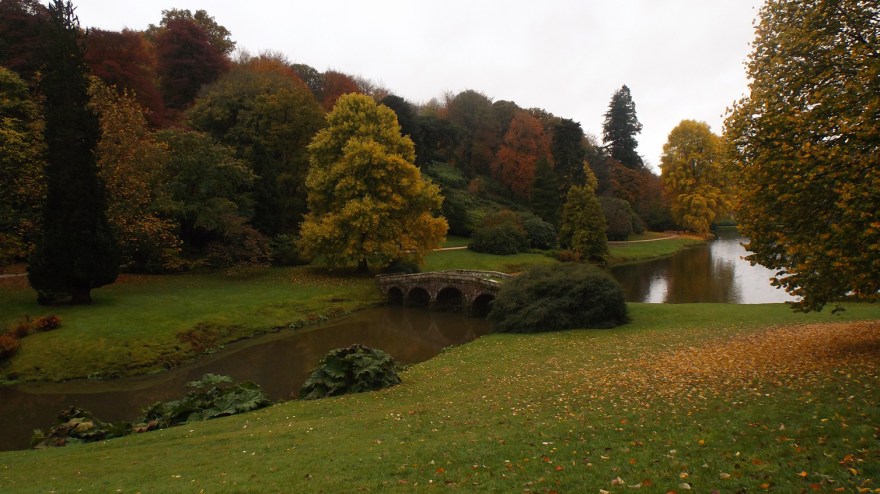
A first glimpse of the lake.

and we take the path on the right towards the summerhouse.

The sky was too grey for good reflections, but never mind.
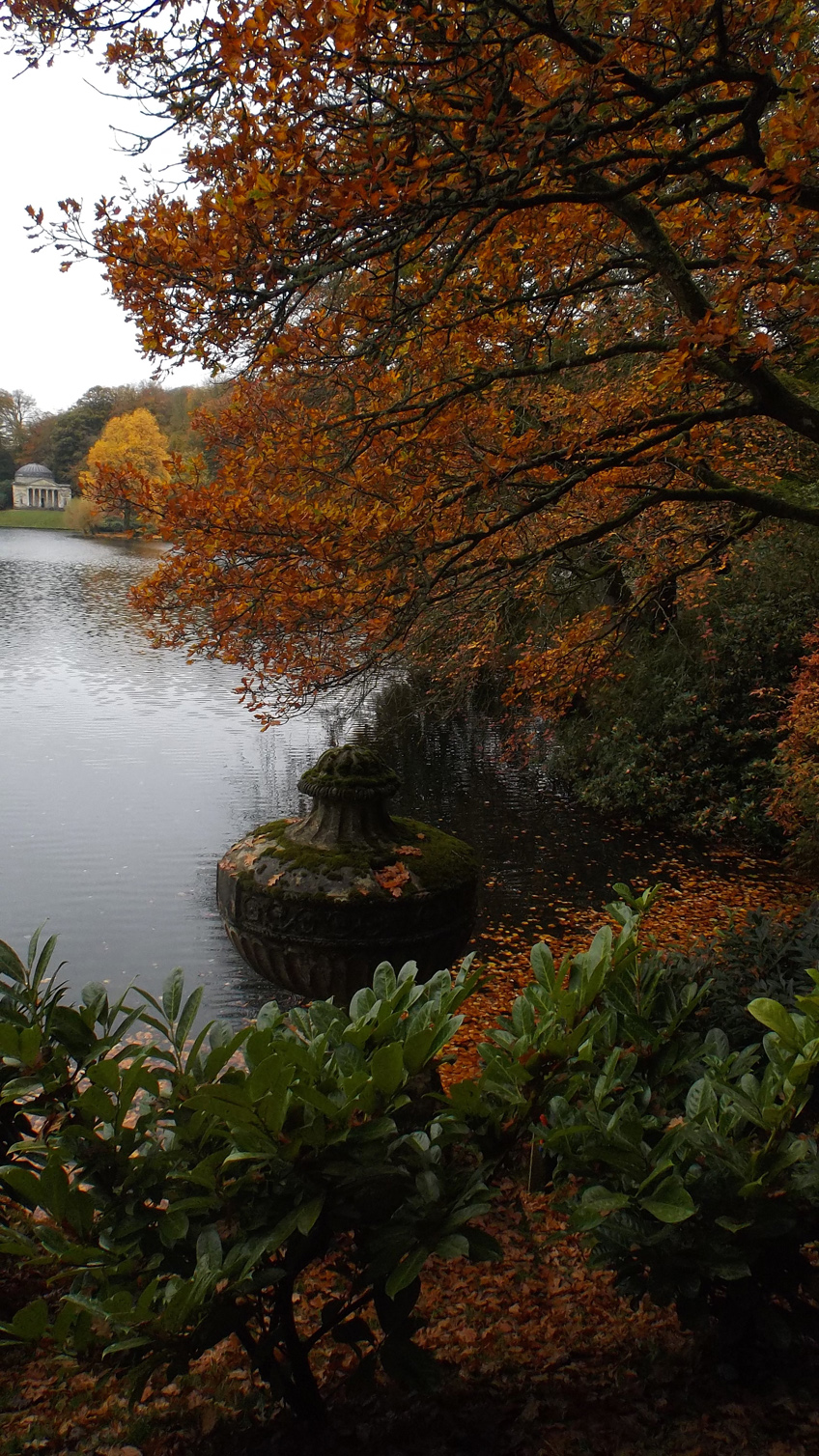
The Pantheon across the water looks closer already.
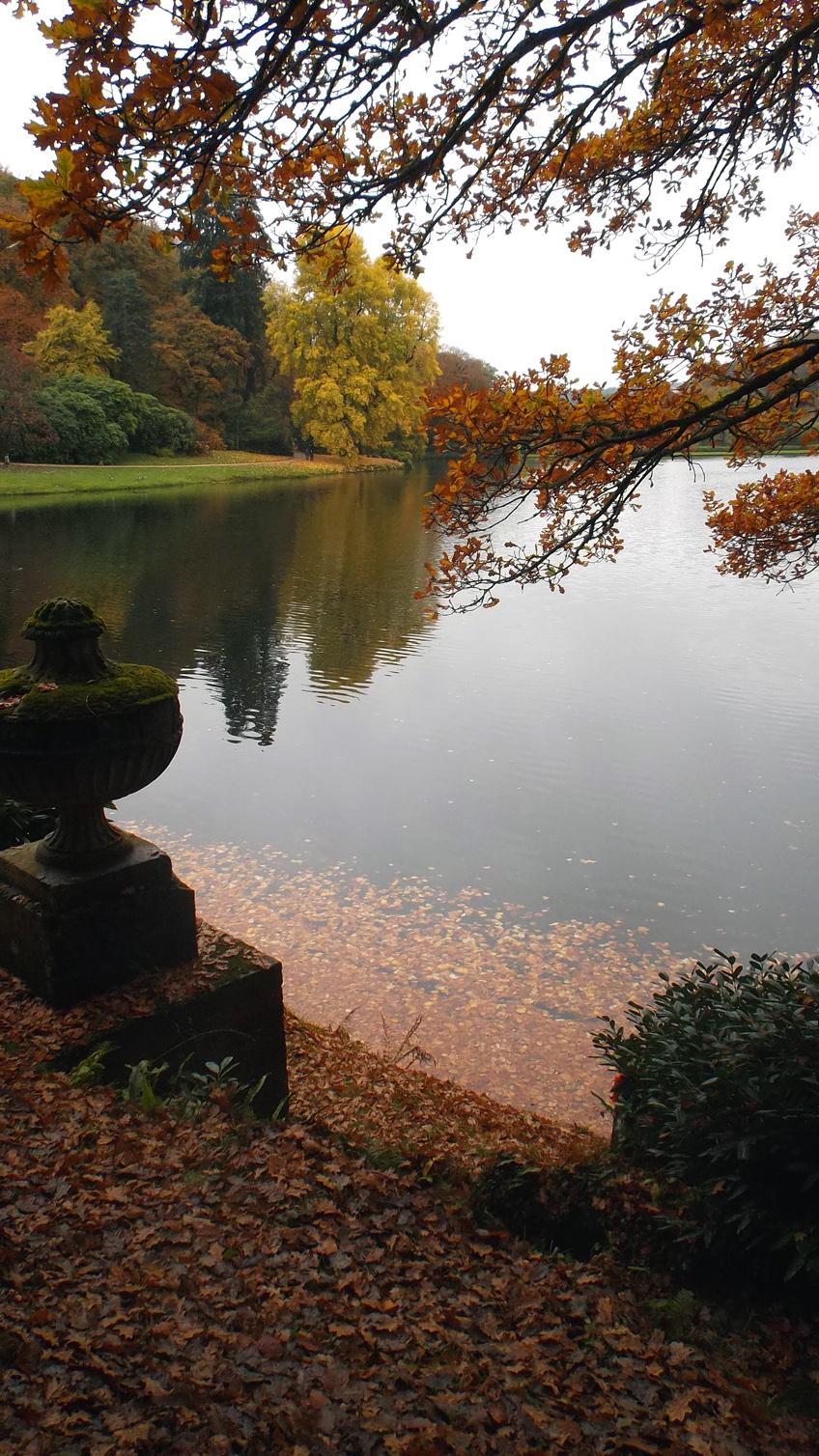
I wish I’d been able to capture the shimmer of the leaves beneath the water.
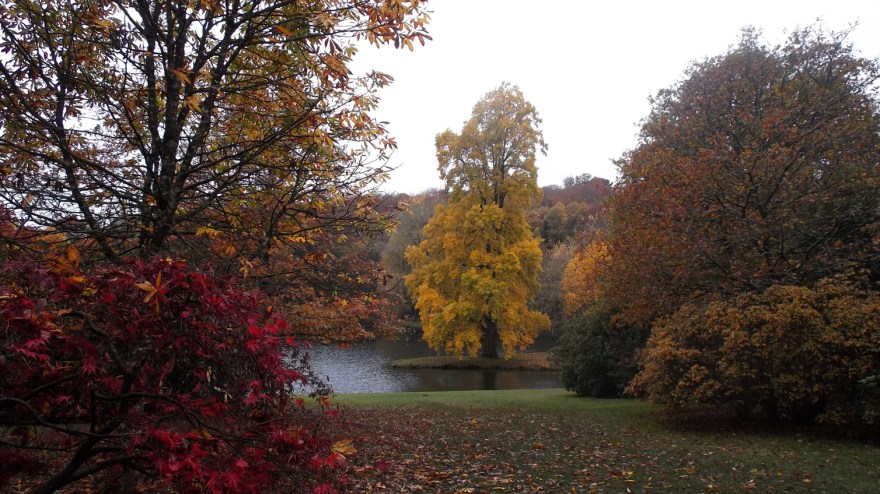
We’ve crossed a little part of the dam and there was the little island with it’s tulip tree, Liripdendron Tulipifera, in all its golden splendour.
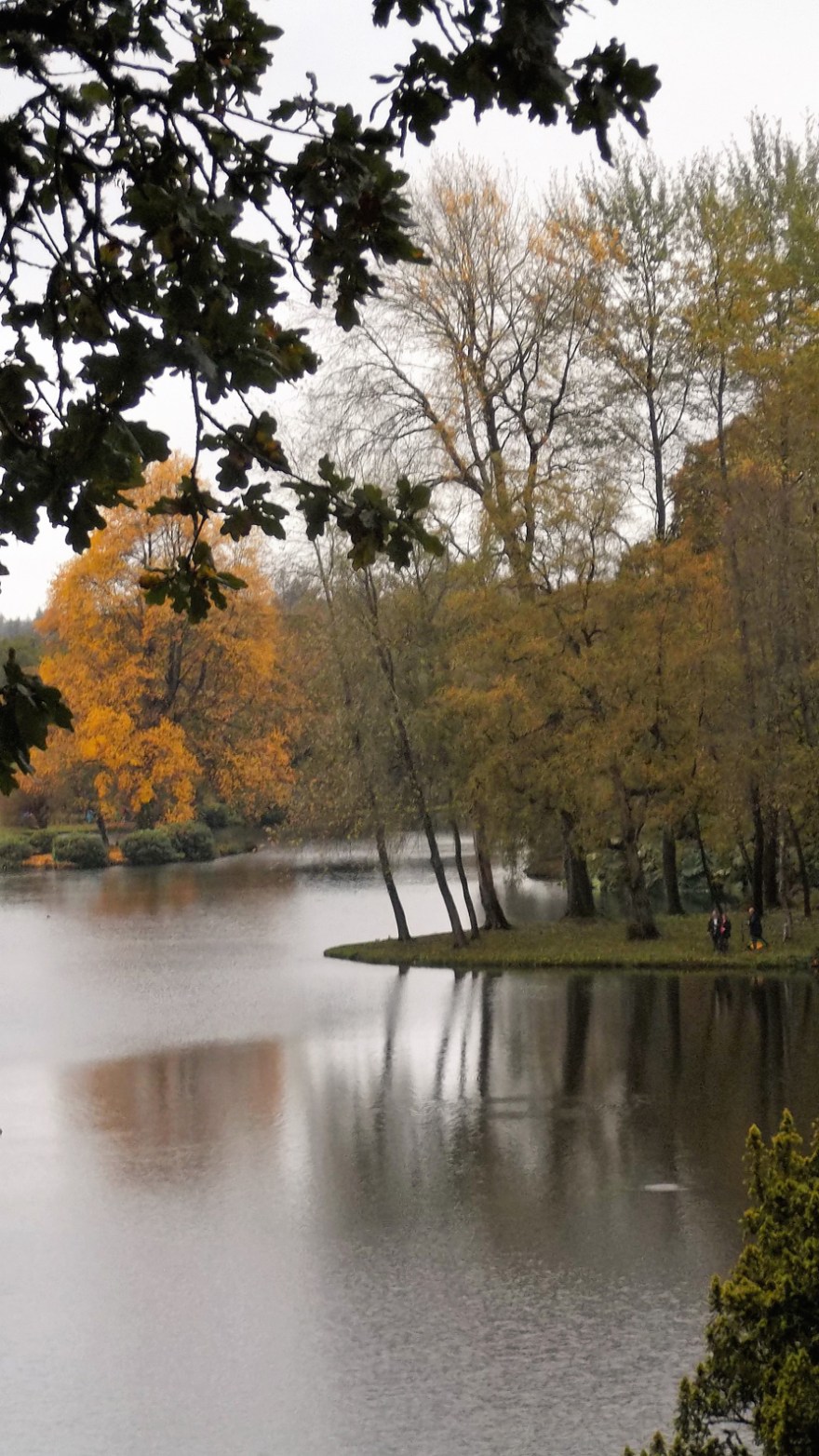
I like the gentle tilt of these trees.

These still had plenty of scrunch!
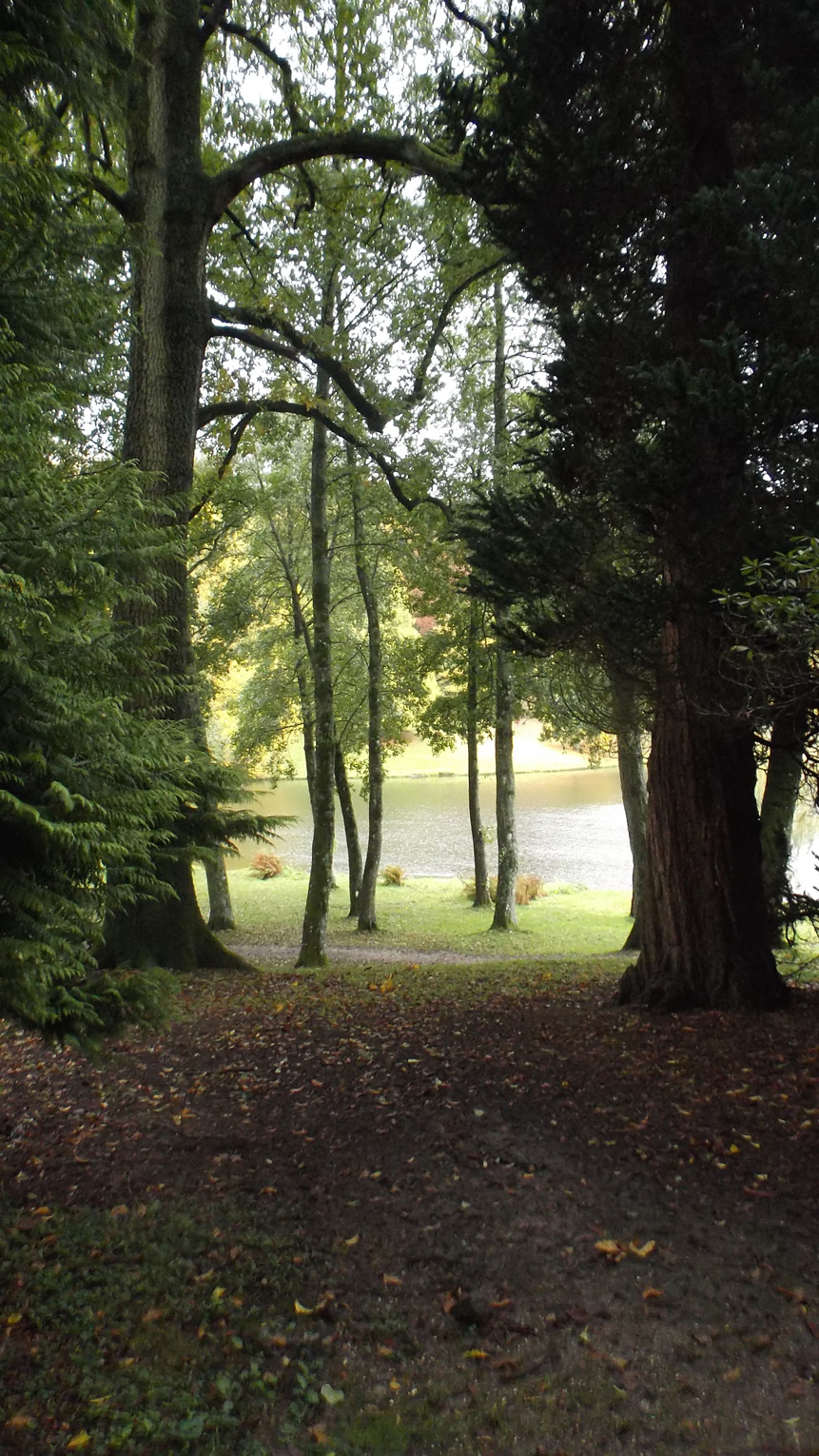
Some subtle shade,
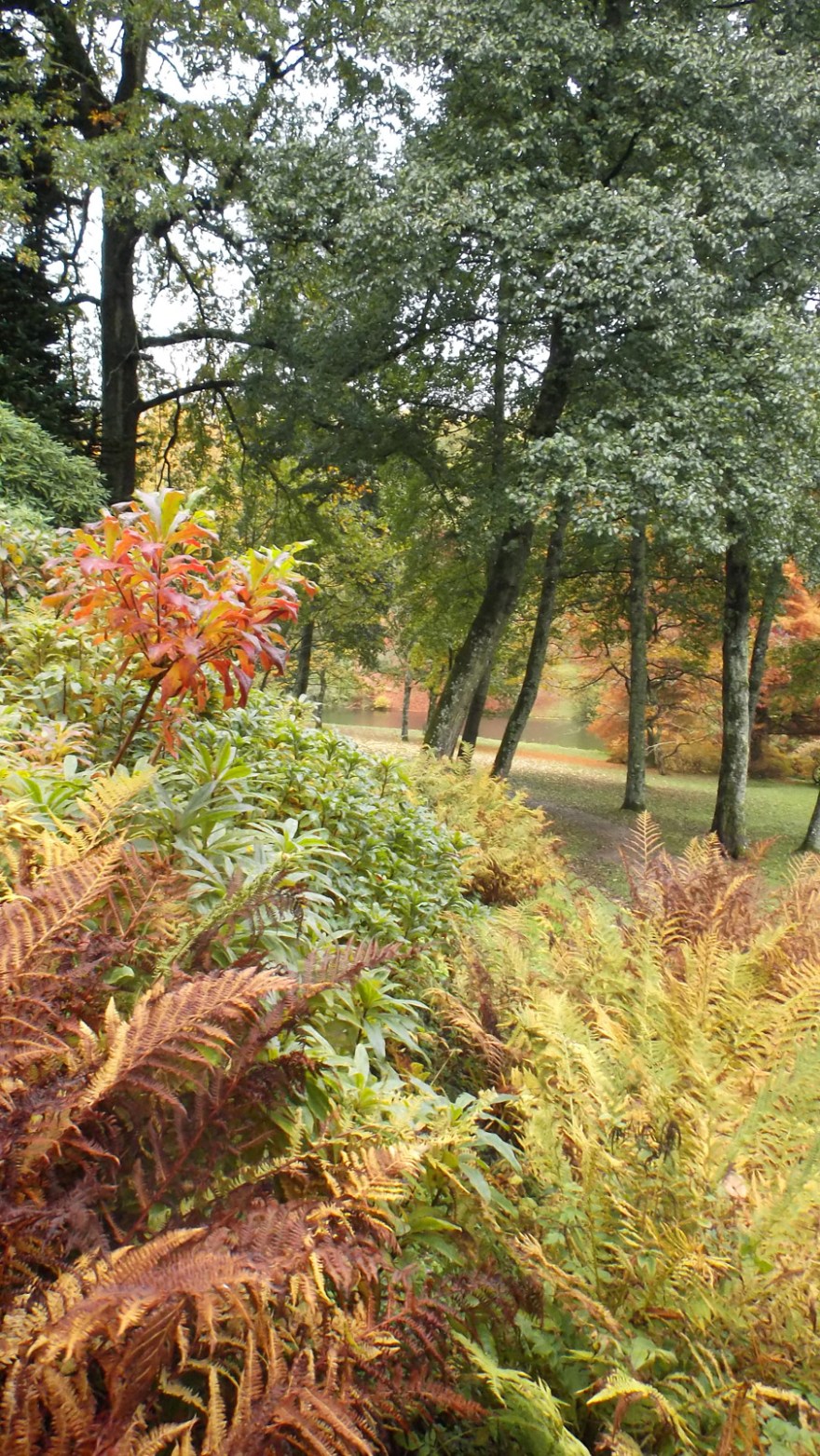
and an assortment of hues.

Then the Tulip tree from a different angle.
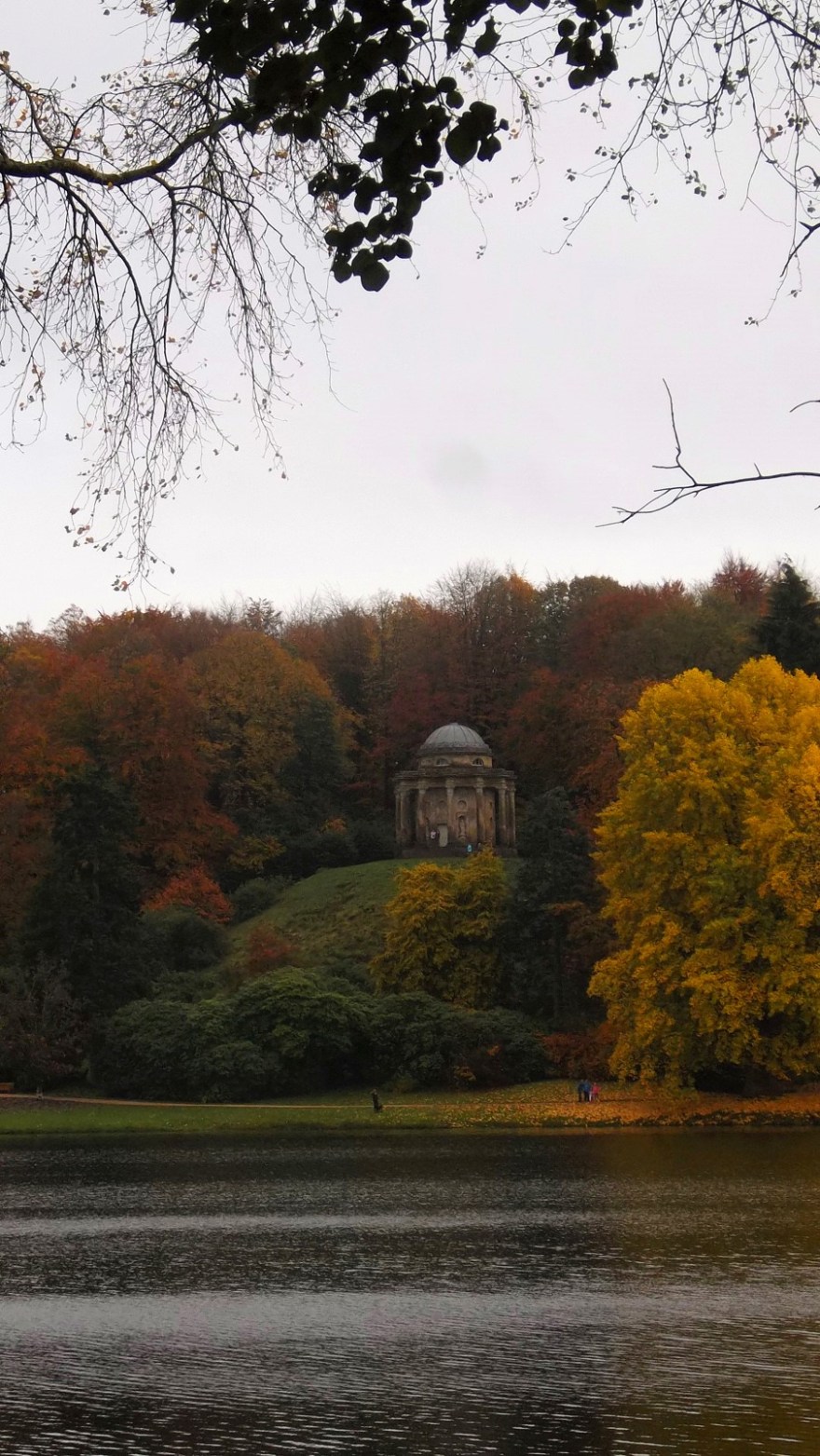
The temple of Apollo.

Stourhead even has a grotto, here I’m looking out from it towards the bridge, where we began our walk.
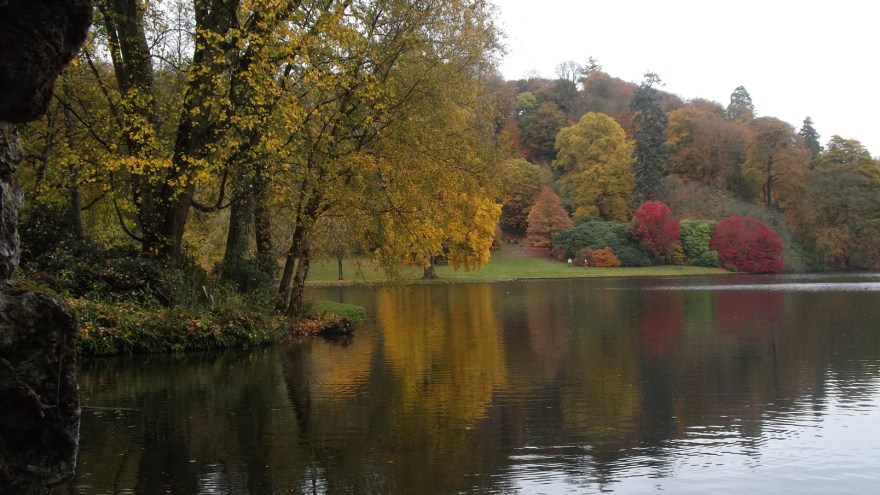
Such tranquillity.
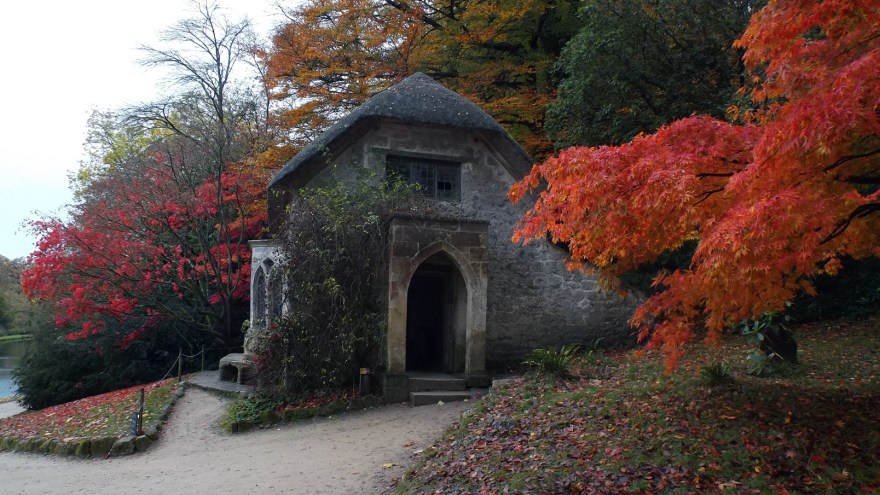
You may remember the bench at the front of this pretty little house, the colour was spectacular here.
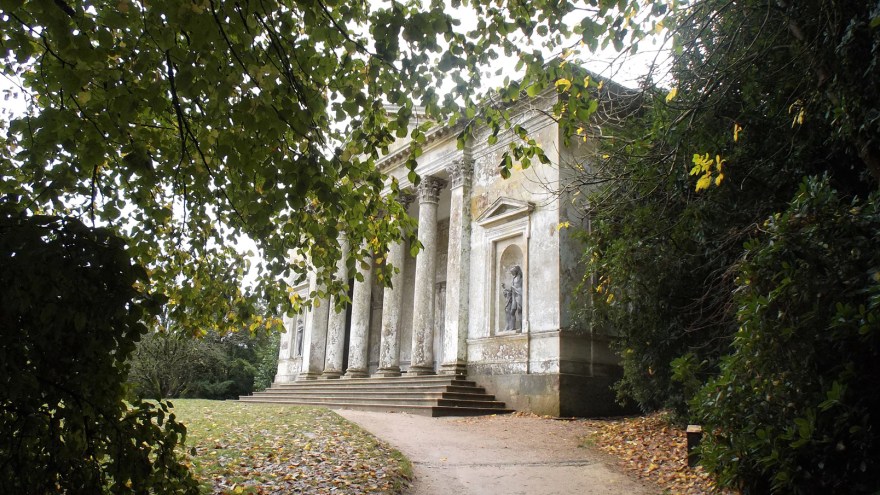
This is the Pantheon. In 2014 some major restoration work took place, ensuring its future for another couple of hundred years, and it looks magnificent.
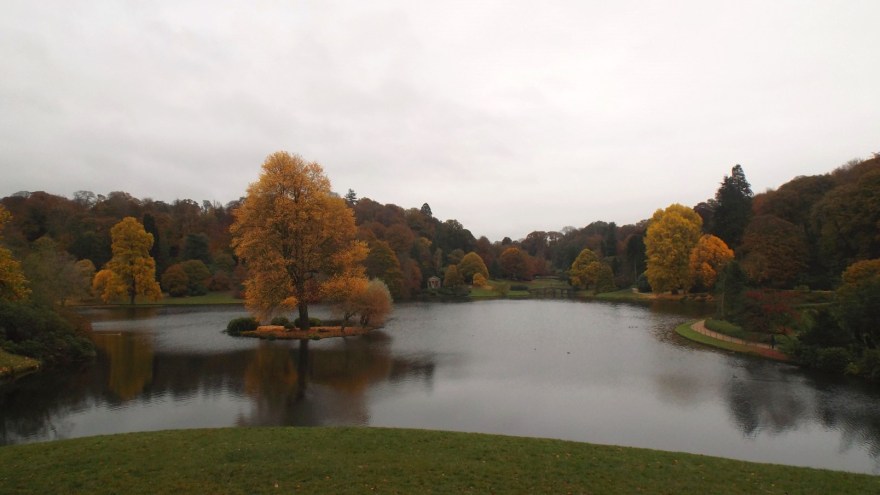
I really love that Tulip tree!

But just look at this beauty.
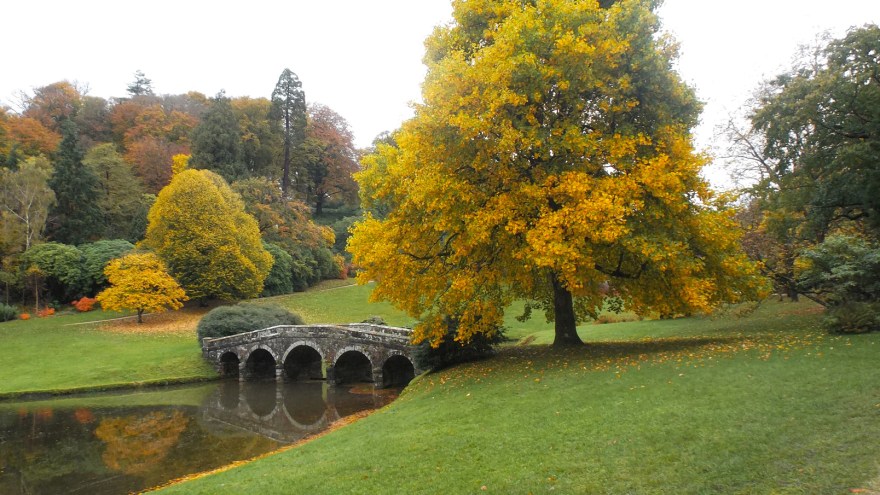
Now we’ve come full circle. The cloud had lifted slightly and it was time for tea and cake in the National Trust café, much deserved even though it wasn’t a long walk. Did you have a good time? I hope Jo did and I wonder where her Monday walk will take us.
Krista’s challenge this week is . . .
Have you ever felt like the world was being a bit too rowdy? Where things and people were pushing in, crowding out your quiet thoughts — the ones that need time and space to surface?
Whenever I feel like an away day it’s invariably to the moor, the coast or a beautiful garden. Luckily there are many, many choices of each in wonderful Devon.
For total escapism there is Dartmoor. There are busy places there, Haytor on a summer weekend has a great many visitors, some of whom do not even get out of their cars. Even there, if you’re prepared to walk and scramble a little way, you will find some peace.
For those in the know there are still places where you might not meet a soul, this is one of them.

Not a lot of rowdiness going on.
For a bit of a stroll and some invigorating sea air, try this Bristol Channel view.
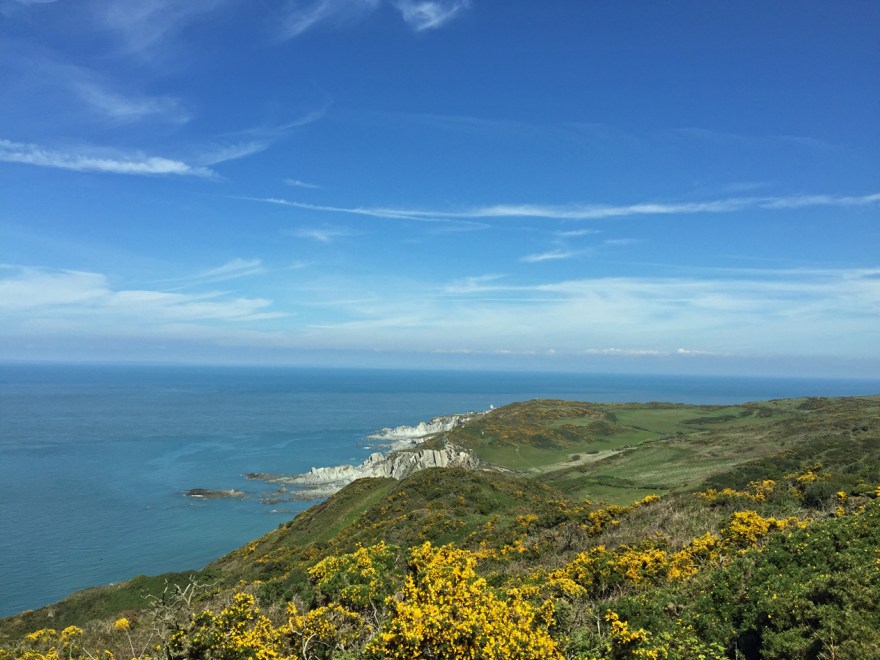
Some of the path can be a bit hard on the knees though!
If a pootle, with lunch or tea and cake is called for – and it often is,

nothing on earth beats an English garden for beauty, peacefulness, fragrance and colour.
Where is your happy place?
 Yesterday I asked if you could guess what these Alliums were hiding. I think that a couple of you guessed what I meant.
 Here’s the house, beautiful isn’t it?
 Here’s the hedge behind the alliums.
 Fabulous reflections?

Perhaps if we get a little closer.
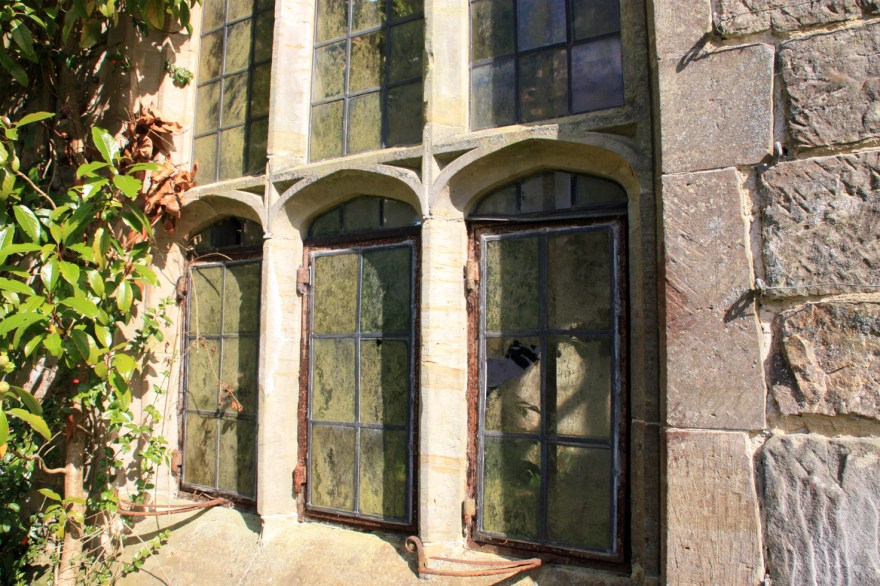 Some attention needed?
Here are some more alliums, and the very sad and hauntingly beautiful façade of the house.

And another view.
 Where you can clearly see that there are very few glazed windows and no reflections . In 1947 Messel’s eldest son Lennie was at home, recuperating from surgery in one of England coldest winters. When the pipes were frozen, a plumber used a blow torch in an attempt to defrost them and a fire broke out. By the time the fire brigade arrived the house was engulfed and those same frozen pipes prevented access to the water needed. Most of the house was lost, as well as several generations of the families treasured collections, including art, horticultural books and irreplaceable items. Just a few rooms and the garden remained intact.
In 1987, Nyman’s fell victim to another disaster. When the great storm hit the country, 486 trees, many rare and very old were lost. By then the National Trust owned the garden and rather than see it as a total disaster, the hurricane damage was seen as an opportunity for regeneration. A garden is never finished and the work at Nyman’s, as in any garden, continues into the future.
 If you’re quick, you can see a BBC4 programme, British Gardens in Time, on i player. It tells the history of the garden and the Messel family and is available for about three weeks. Jude, you’ll love the programme if you have time, but otherwise I hope you enjoy your time there. I kind of did these posts on purpose, so that you would visit and photograph it in it’s late summer glory.
For now, I’ll leave you all with the picture of the pretty dove cote.
I’m really glad I discovered Nymans last year, when I was in the south east of England, not somewhere I usually go unless I’m heading for Gatwick. It’s now right up there with my all time favourite gardens to visit. The house and garden, in the Sussex Weald, was built in the late 1800’s, by Ludwig Messel. He wanted to build a dream family home, and he created a stunning garden against the backdrop of the wooded surroundings. He collected unusual plants from around the world and made a romantic paradise.

The long border in June


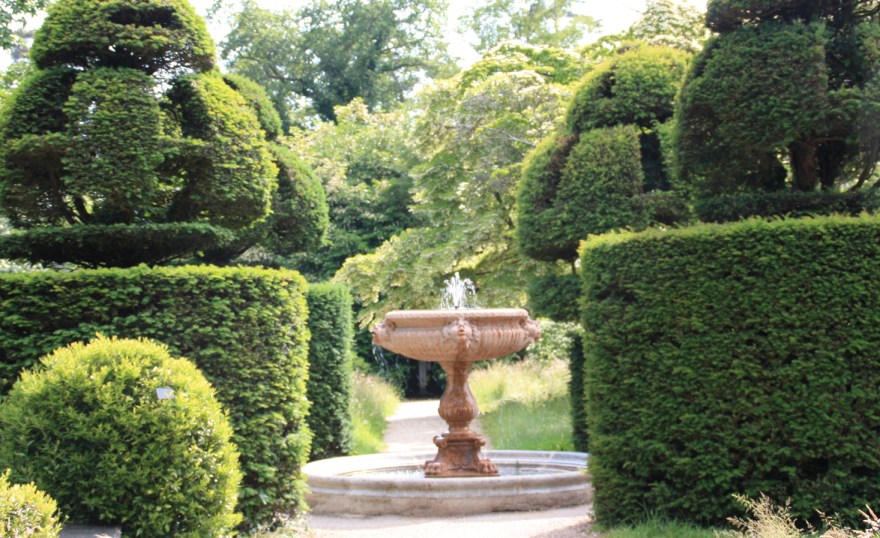
Heading for the fountain
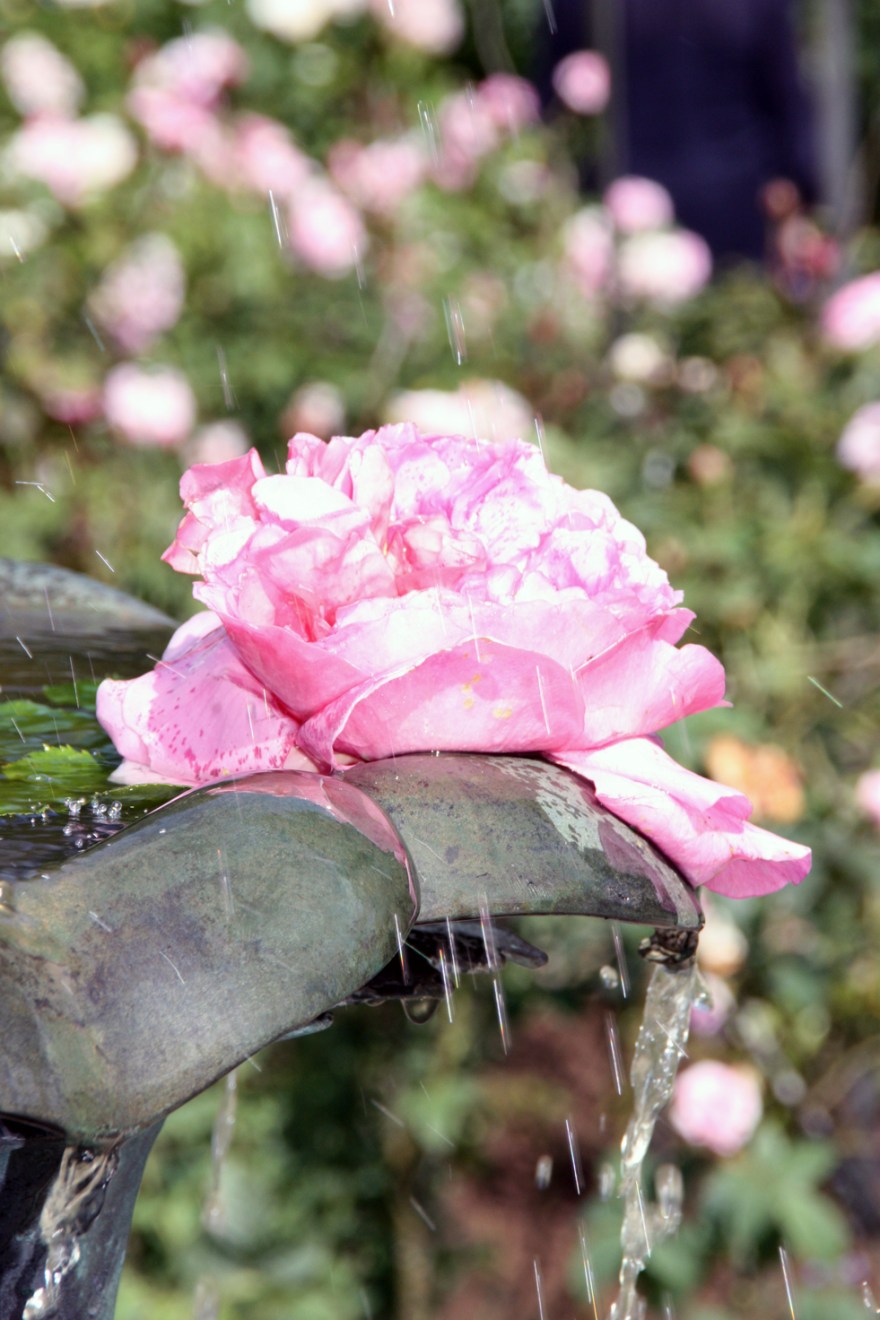
A refreshing sight

Eyes to the sky

Turn a corner


Find your inner child in a magical woodland path
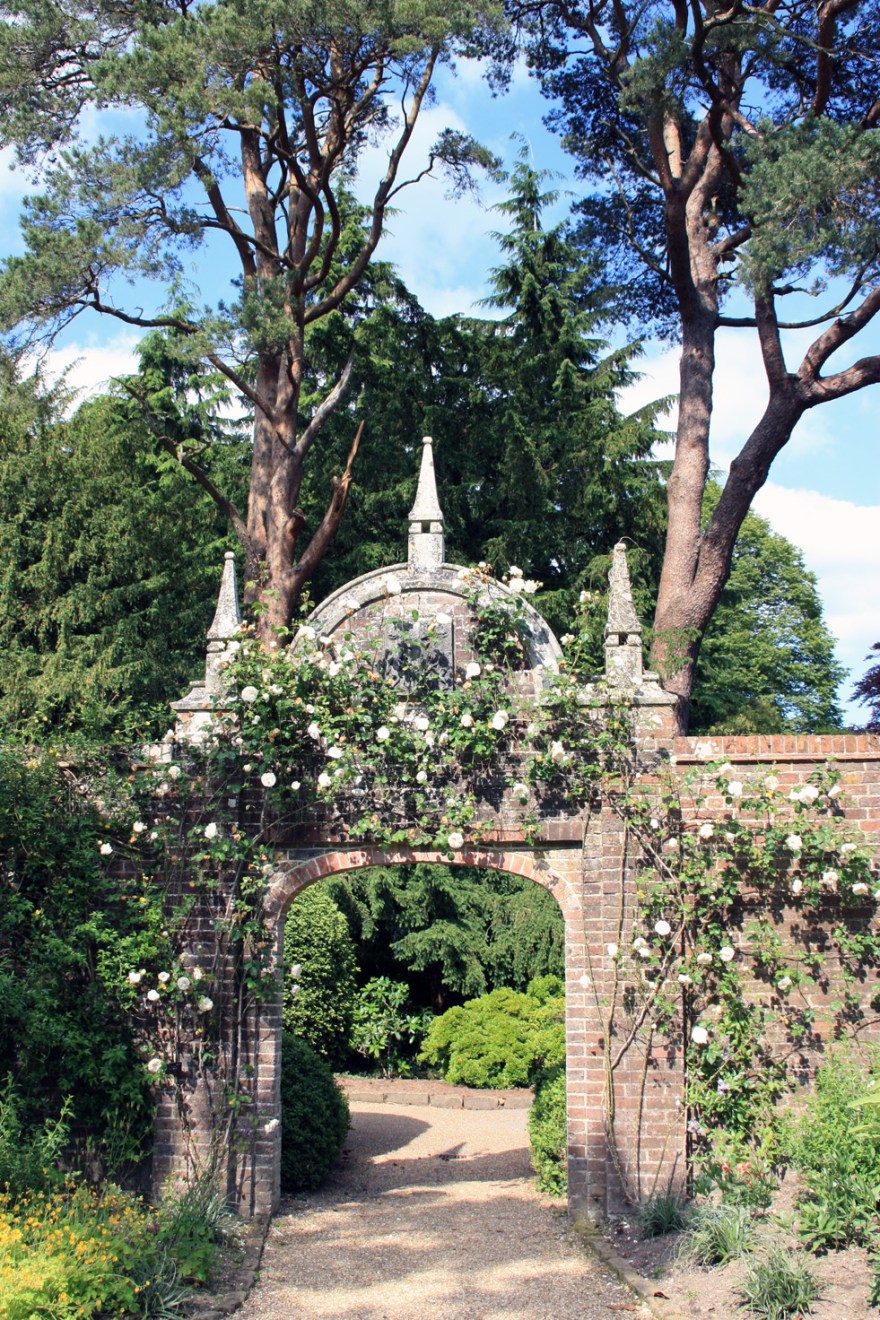
Retrace your steps

The planting is beautiful everywhere you turn

Flat topped pudding trees
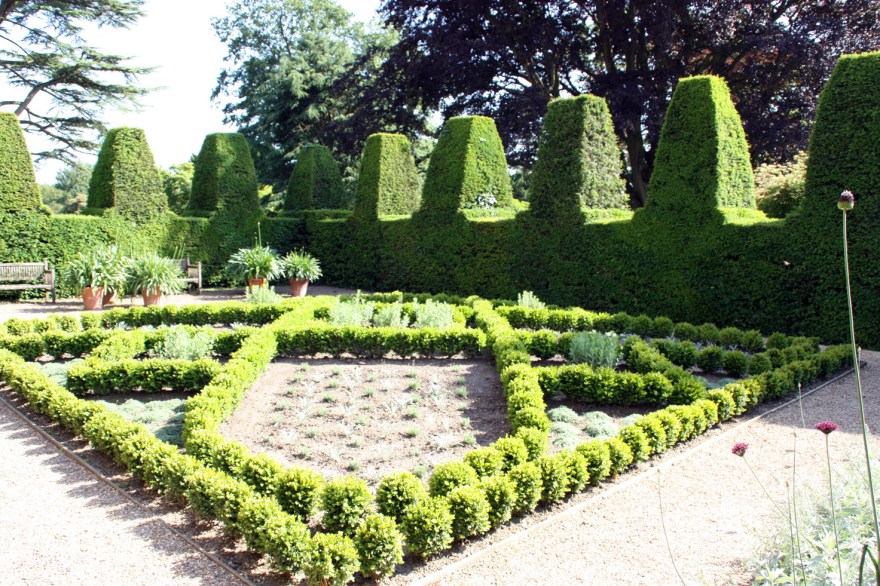
A box garden with crenellated hedges
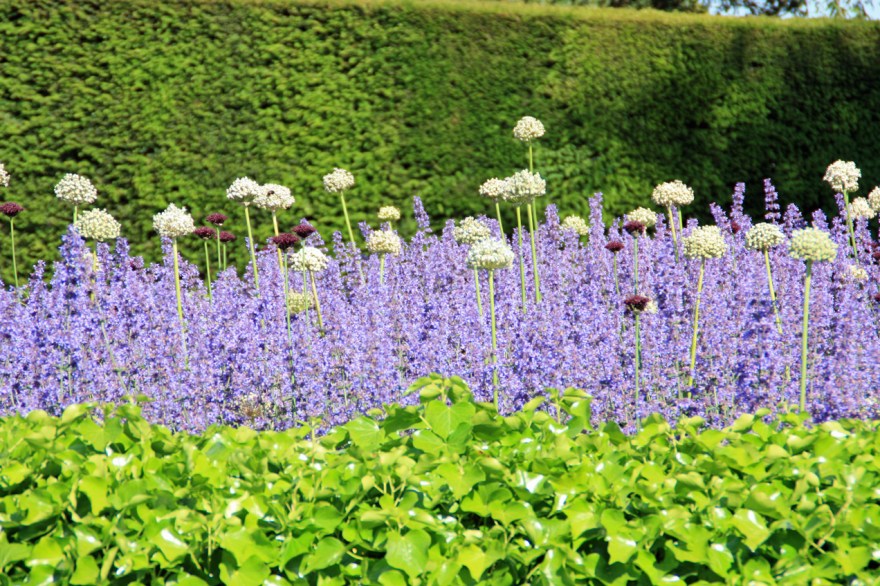
This stunning, but simple planting hides a secret for now. What could it be?
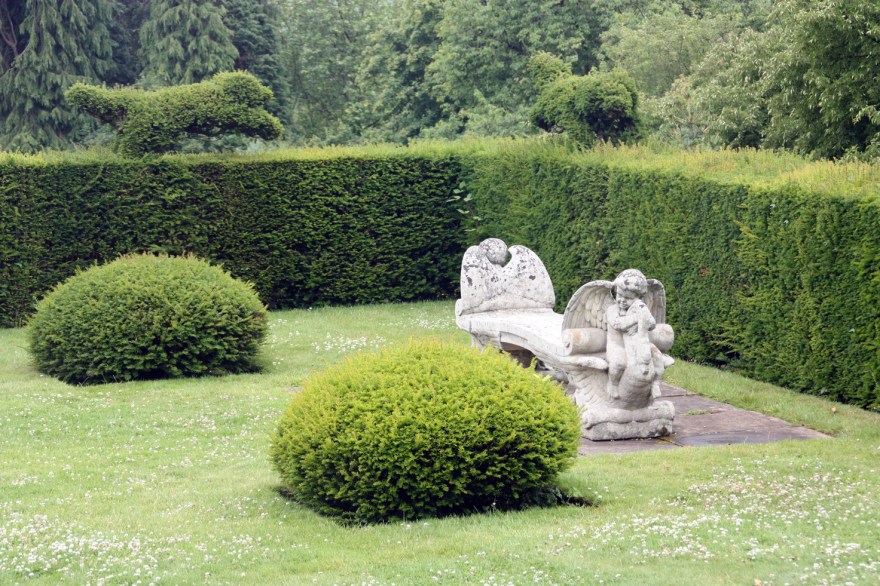
You’re riding to visit Jude for her bench challenge !all the way from Knightshayes
Benches with unusual features for July, do you have one?
Leave Knightshayes house through the smoking room and conservatory café and this vista opens out, 
Wicker deer have appeared at several nation Trust properties recently, I think they are the work of Woody Fox and they make a lovely addition to the lawns and woodland wherever they’re placed.
Turn the corner around the front of the house, then stand back and admire,
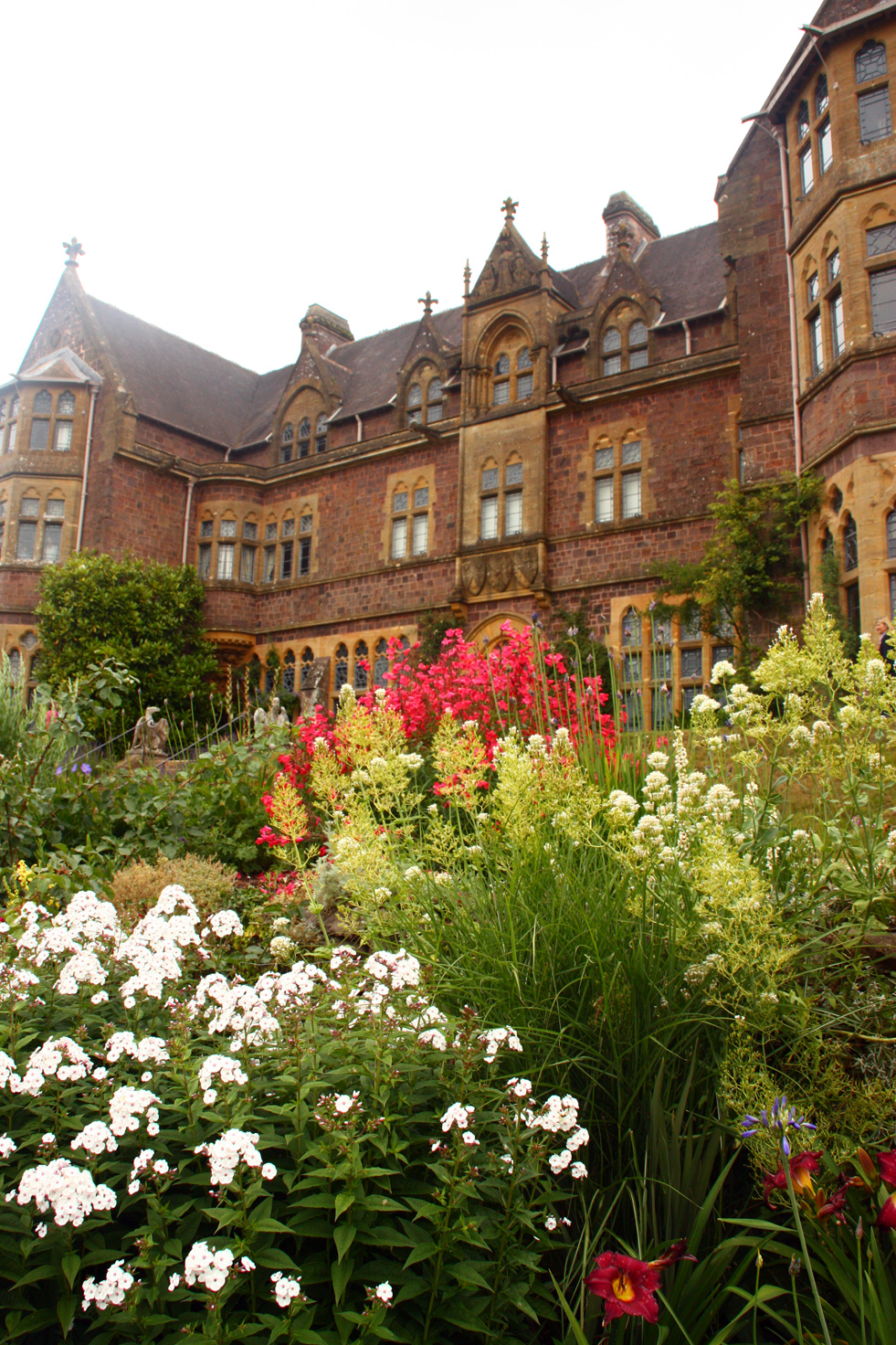
The garden is beautifully planted, and there were quite a few plants that I didn’t recognise.
.
Family sized benches with a view.

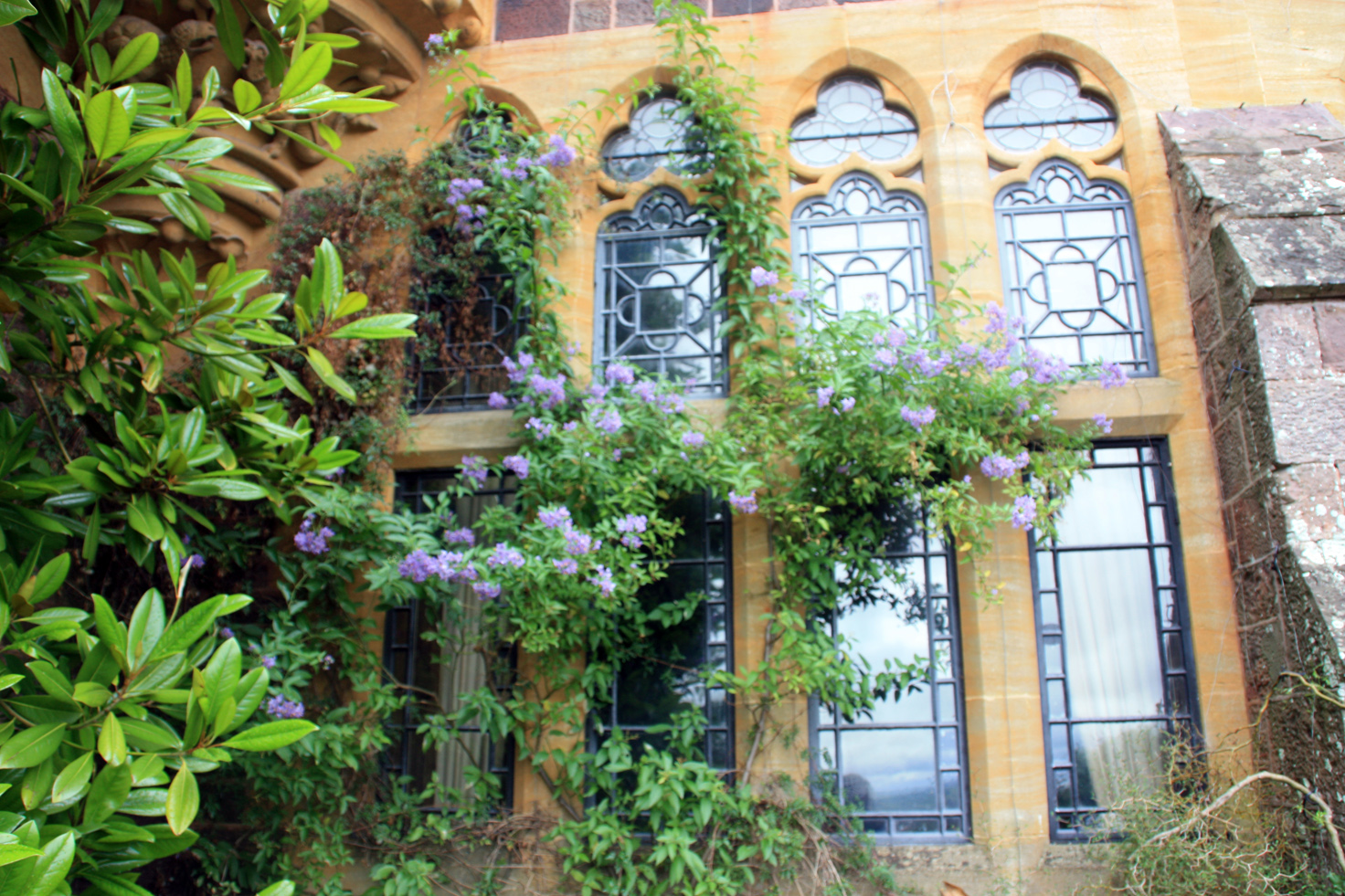
I loved these windows.
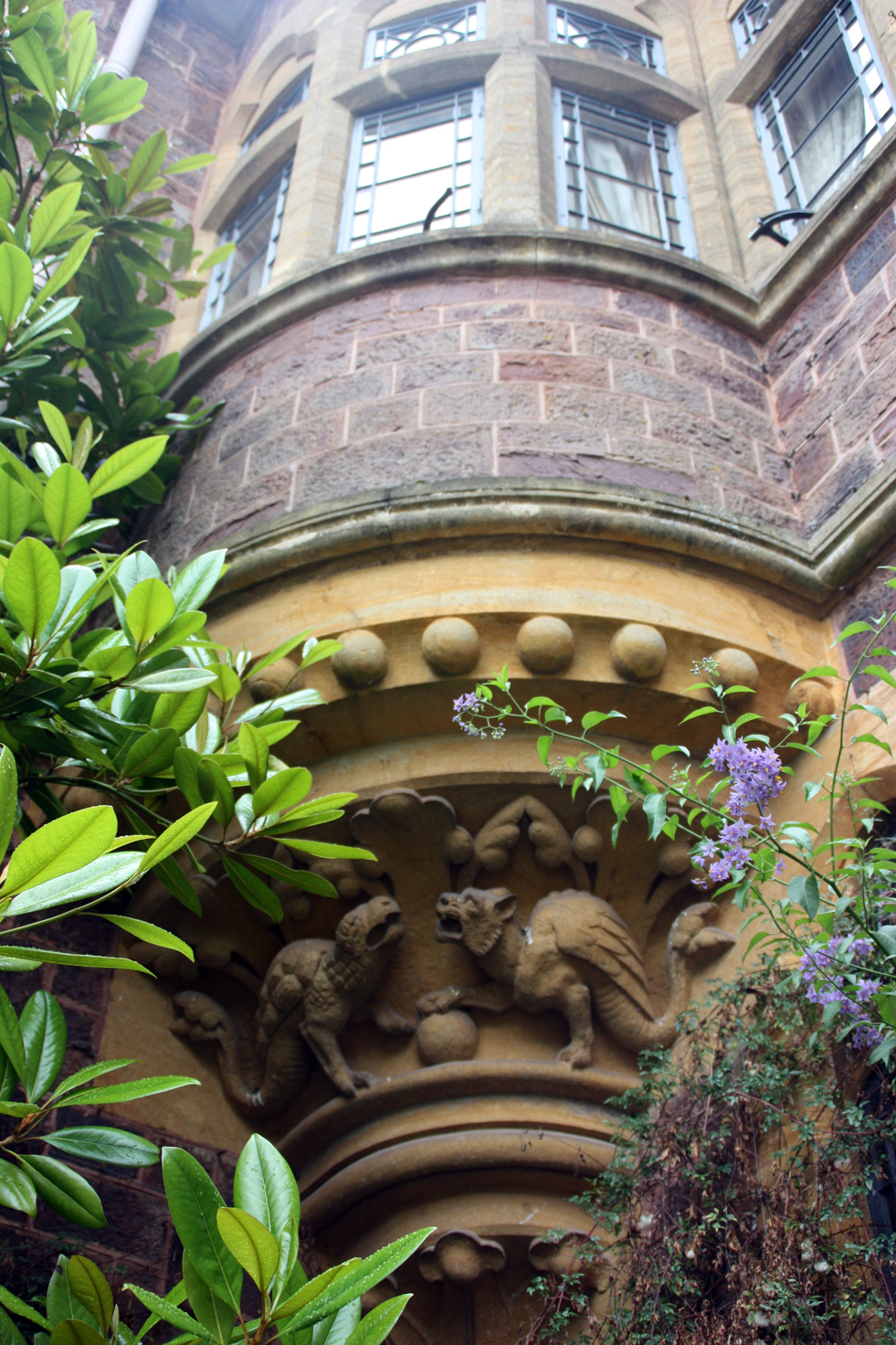
and the creatures supporting this curved one upstairs. But lets stroll around the corner now to the rest of the garden.
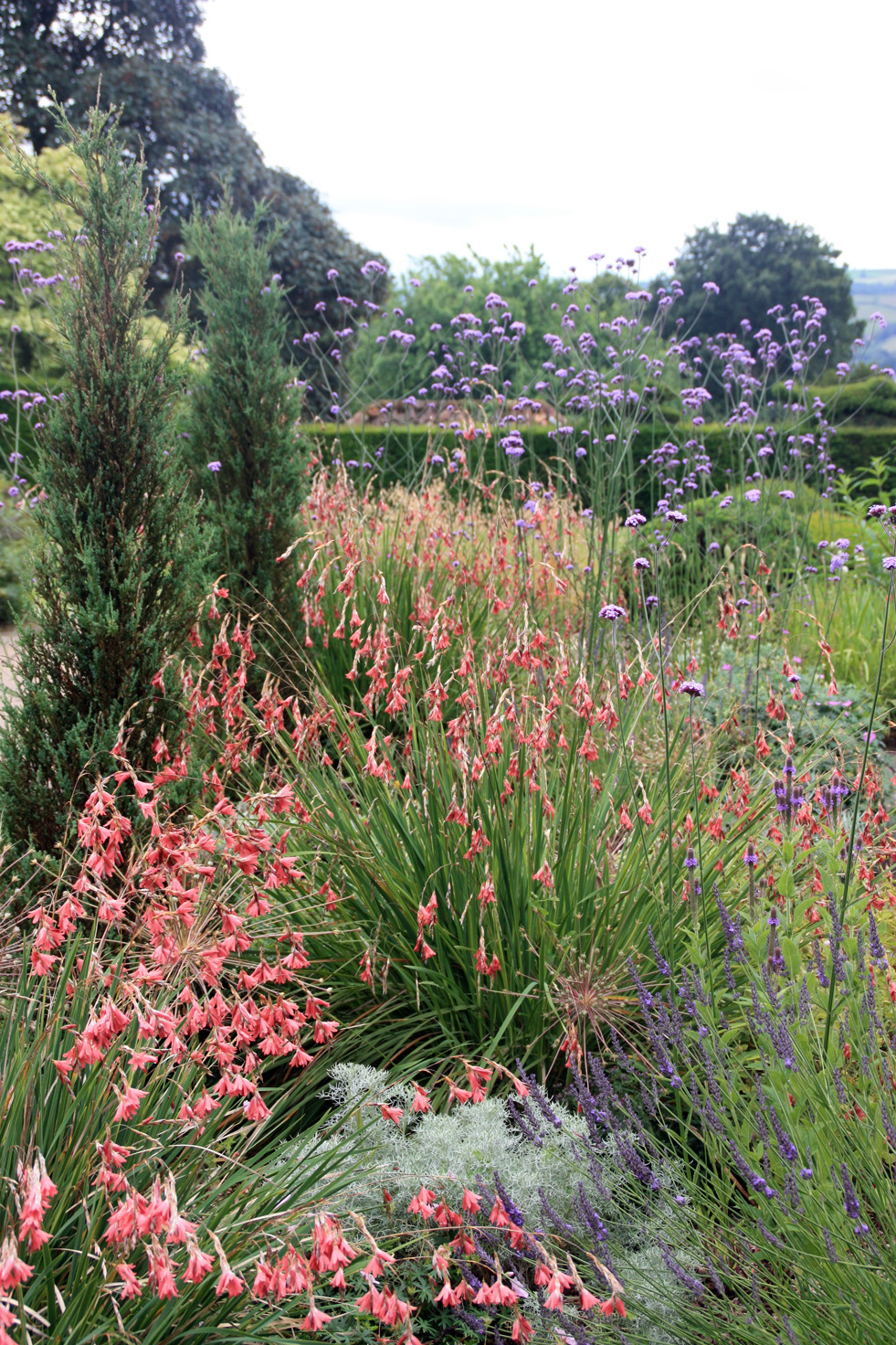

Isn’t this a lovely path? But look behind you,
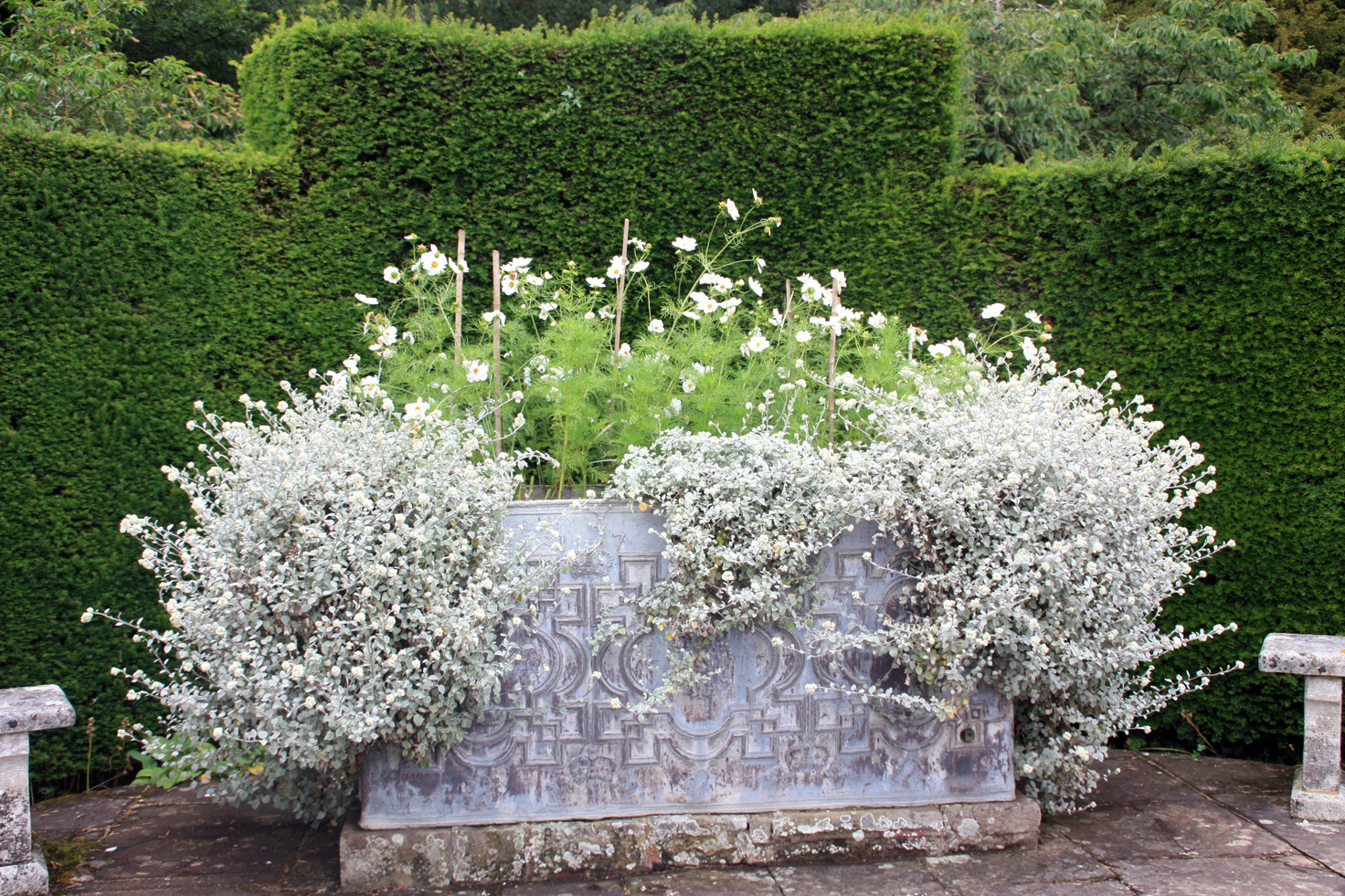
This simple elegant planter was a real delight for the eye.

Years ago, when I first visited Knightshayes I feel in love with this tree. It’s a weeping silver pear, pyrus salicifolia, and it still takes my breathe away. I think that bench is a spot that Jude would enjoy.

From the pond, take these steps down and you can either turn left and go to explore the Garden in the wood, where I took you last weekend and turn this gentle stroll into a Monday walk that Jo would like, or turn right and head back to the from of the house.

Spend a few minutes sitting in the summerhouse house, there are jewels to be seen.

Then linger along the long border, where some of these beauties are planted.

We could see heavy rain clouds coming our way, so we had tea and cake in the conservatory and then made our way out through this pretty gate.

Knightshayes, a Gothic revival house was built in the 1870’s, for the Heathcote-Amory family, who made their fortune in the lace and textile industry. Heathcotes is still in existence to this day, they make high tech materials and have a factory and shop in nearby Tiverton.
National Trust Knightshayes invites you to ‘Discover magic in the woods’. Apparently its garden in the woods, created in the 1950’s, is the only one of its kind in existence. I walked there on Sunday, when I found this little path, leading away from the formal garden. 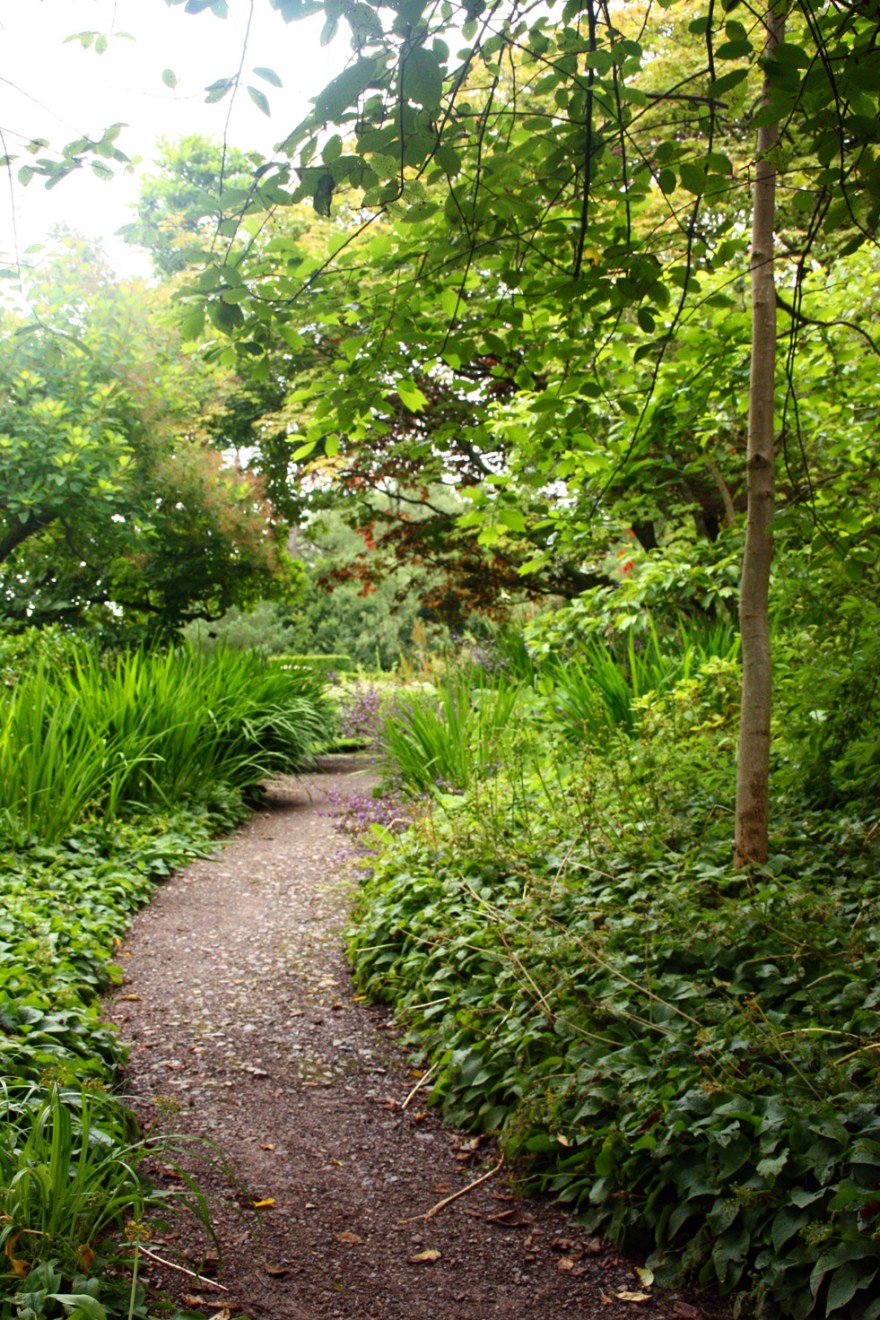
and found myself in a world that was magical indeed, it felt like anything could happen. 
There were ancient giants, 
some with arms outstretched to catch you.

Funky seed heads,


A giant sequoia
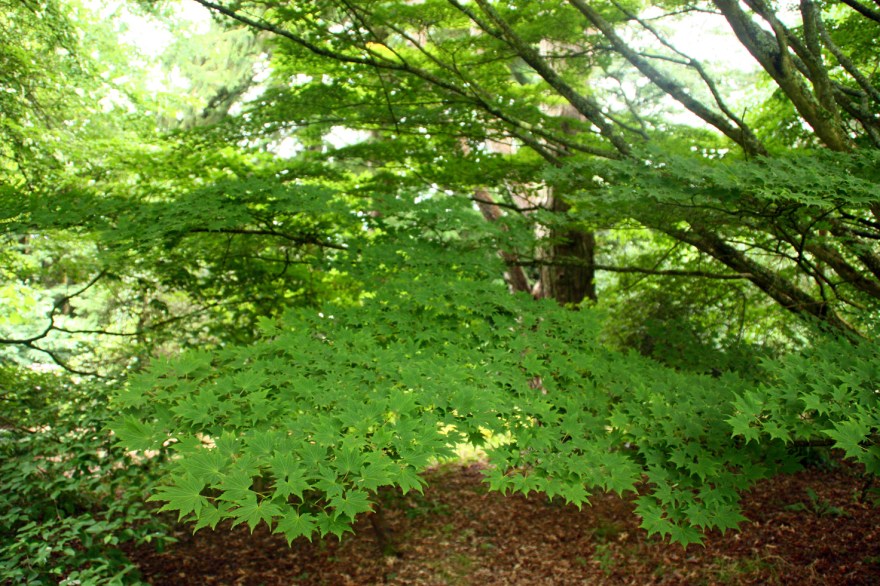
and an elegant maple.
This little walk was enchanting, rich in texture, colour, light and shade. Birdsong filled the air, as did the fragrance of years of fallen leaves on the ground. I hope you enjoyed the garden in the woods, perhaps you’ll go one day. I’m sharing it with Jo, for her Monday walk. Join her here.
A couple of years ago, after being on a waiting list for years, my friend acquired an allotment, ‘Lindy’s Lot’. Since then I have been helping to tend it whenever I can. I grew up knowing about growing plants, from digging and pulling weeds, along with some ‘not weeds’, with my granddad.
Lindy’s lot came with a mini orchard of old apple and pear trees, which have the makings of an abundant crop in a few months time.


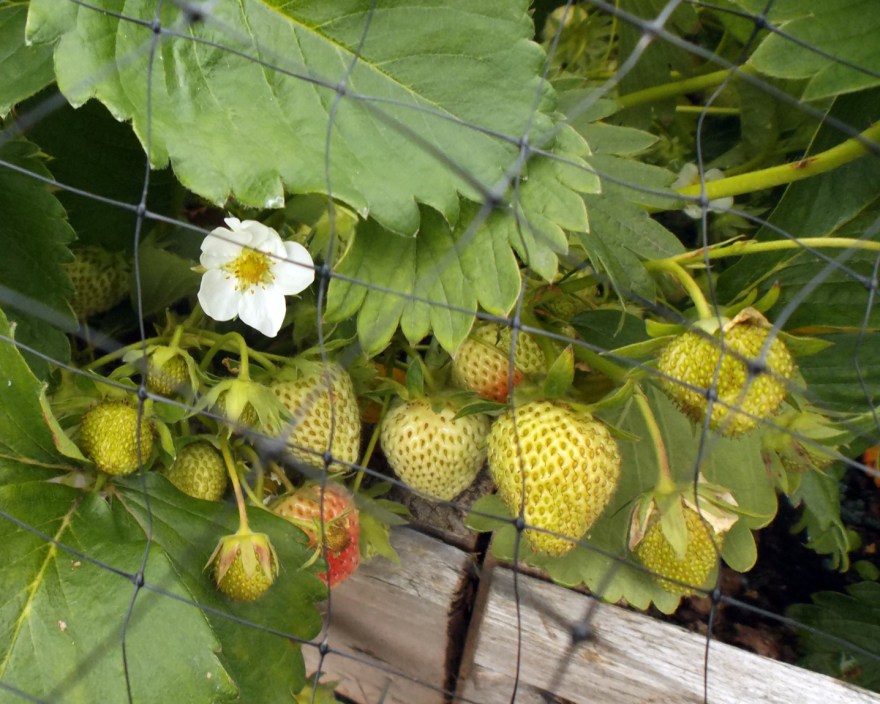
I watered potatoes, onions, beetroot, cabbage, courgettes etc.


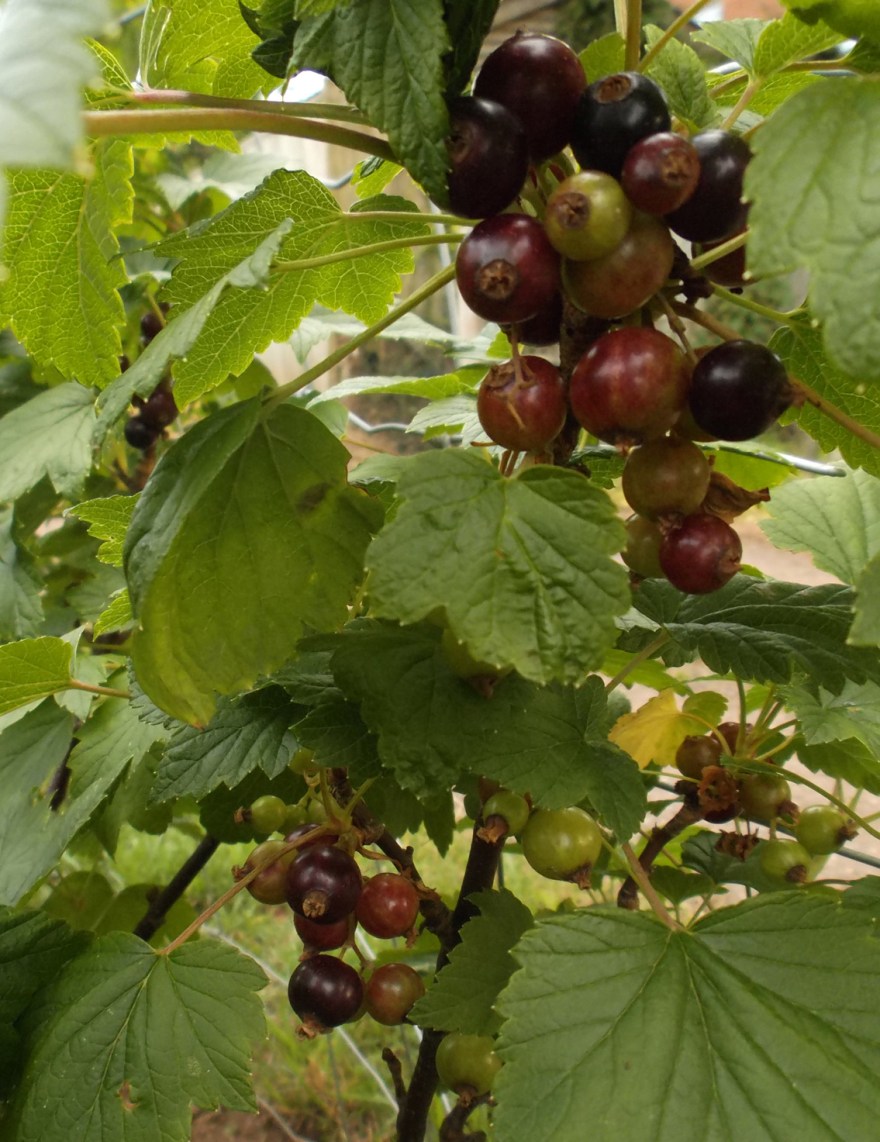
The raspberries have a long way to go.

But the blueberries are looking very good.
“The first supermarket supposedly appeared on the American landscape in 1946. That is not very long ago. Until then, where was all the food? Dear folks, the food was in homes, gardens, local fields, and forests. It was near kitchens, near tables, near bedsides. It was in the pantry, the cellar, the backyard.”
― Joel Salatin
This post was inspired by Tish, who has a very productive allotment and has Obsessive Compulsive Compost Disorder, and Rachel’s Facebook photos of her glorious veggie patch!
 Lucid Gypsy