Buckland and Drake

A few weeks ago I did a series of posts about Buckland Abbey , but I left out it’s most famous owner, Sir Francis Drake.

Buckland was paid for with Drake’s earnings – or plundering on his early voyages. The treasures he brought home to Queen Elizabeth 1 provided him with wealth and his title. Even though he had no children his heirs lived at Buckland for eight generations, until the 1940’s.

The most famous anecdote is of how he supposedly continued a game of bowls on Plymouth Hoe, saying that their was plenty of time to deal with the approaching Spanish Armada afterwards.

Artifacts relating to his journeys can be seen at Buckland, the most important being a late 16th century drum, decorated with Drake’s coat of arms, one of the oldest surviving in Europe, and possibly one of thirteen bought in 1595 for his last voyage. The drum is said to beat if England is in danger, most recently during the Second World War just before Dunkirk was evacuated, spooky eh?

In 1596, as he lay dying of dysentery, he is reputed to have asked to be dressed in his full armor. He was buried at sea in a lead coffin, near Portobelo. Here are a few of Bucklands Drake treasures.

2013 Apr 06_3938 copy

Sir Francis is the knight in this chess set.
2013 Apr 06_3940 copy

Plotting his course.

2013 Apr 06_3948 copy

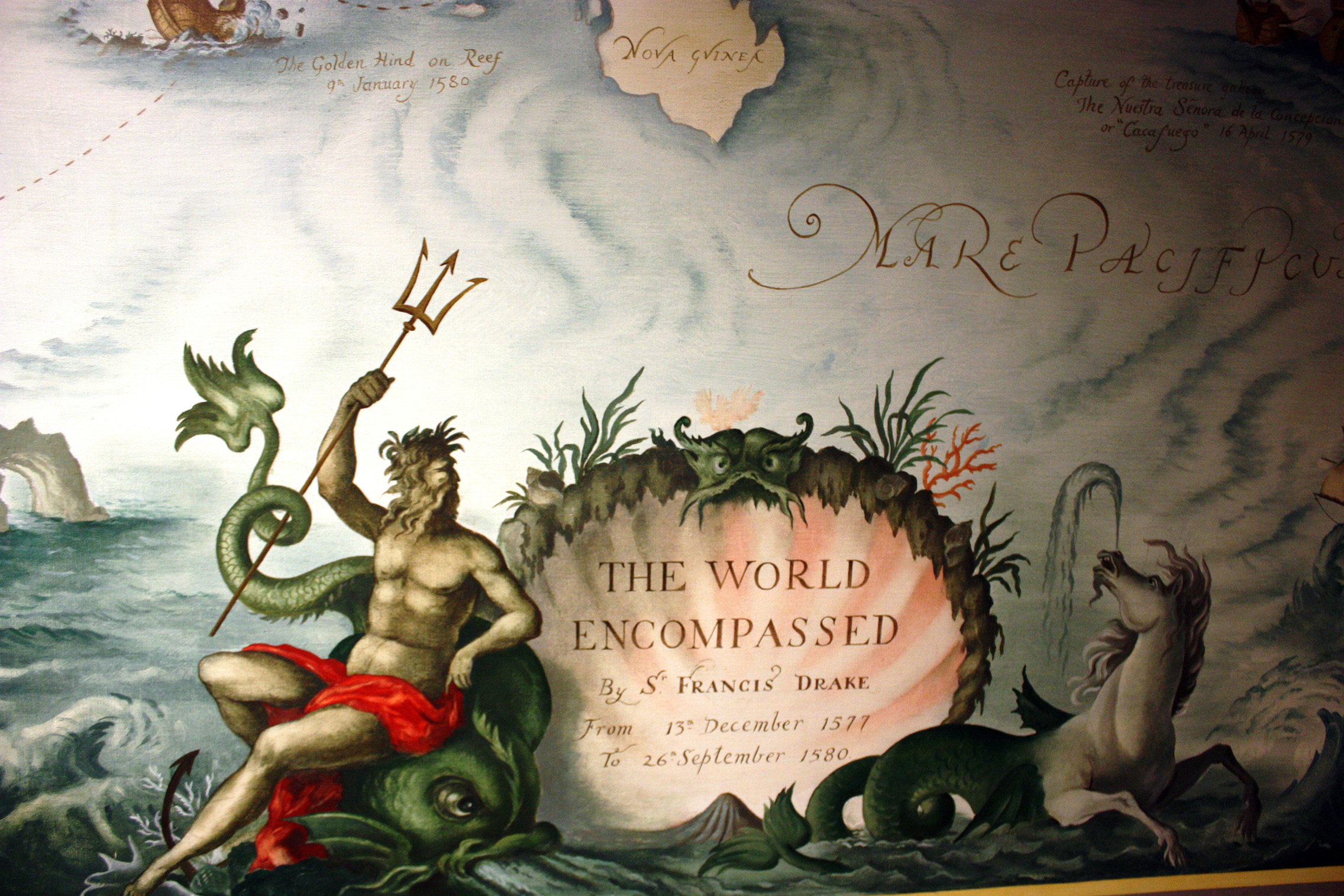
Across the oceans.

2013 Apr 06_3955 copy

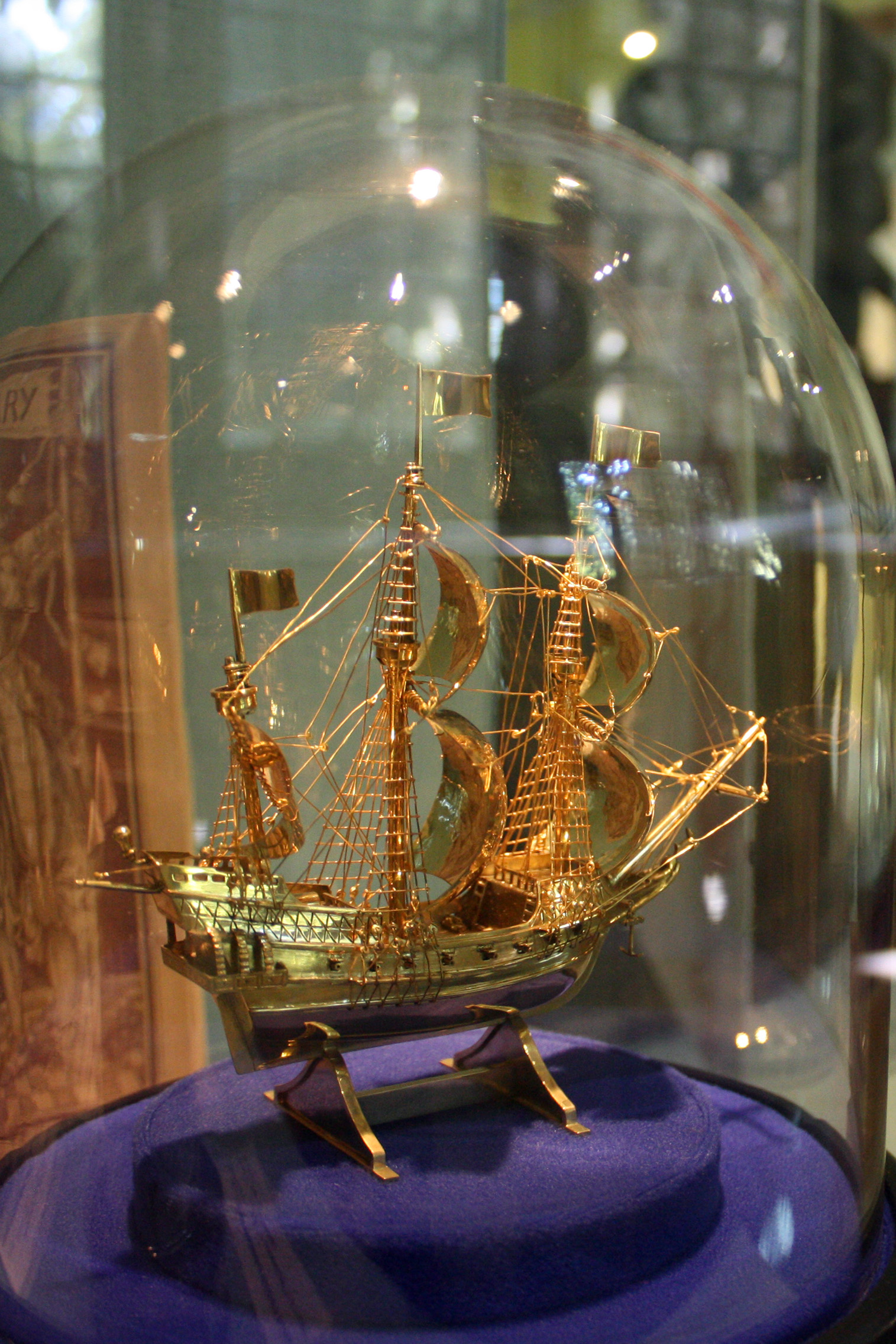
A beautiful golden miniature.

2013 Apr 06_3961 copyThe drum, lets hope it doesn’t sound.

2013 Apr 06_3981 copy

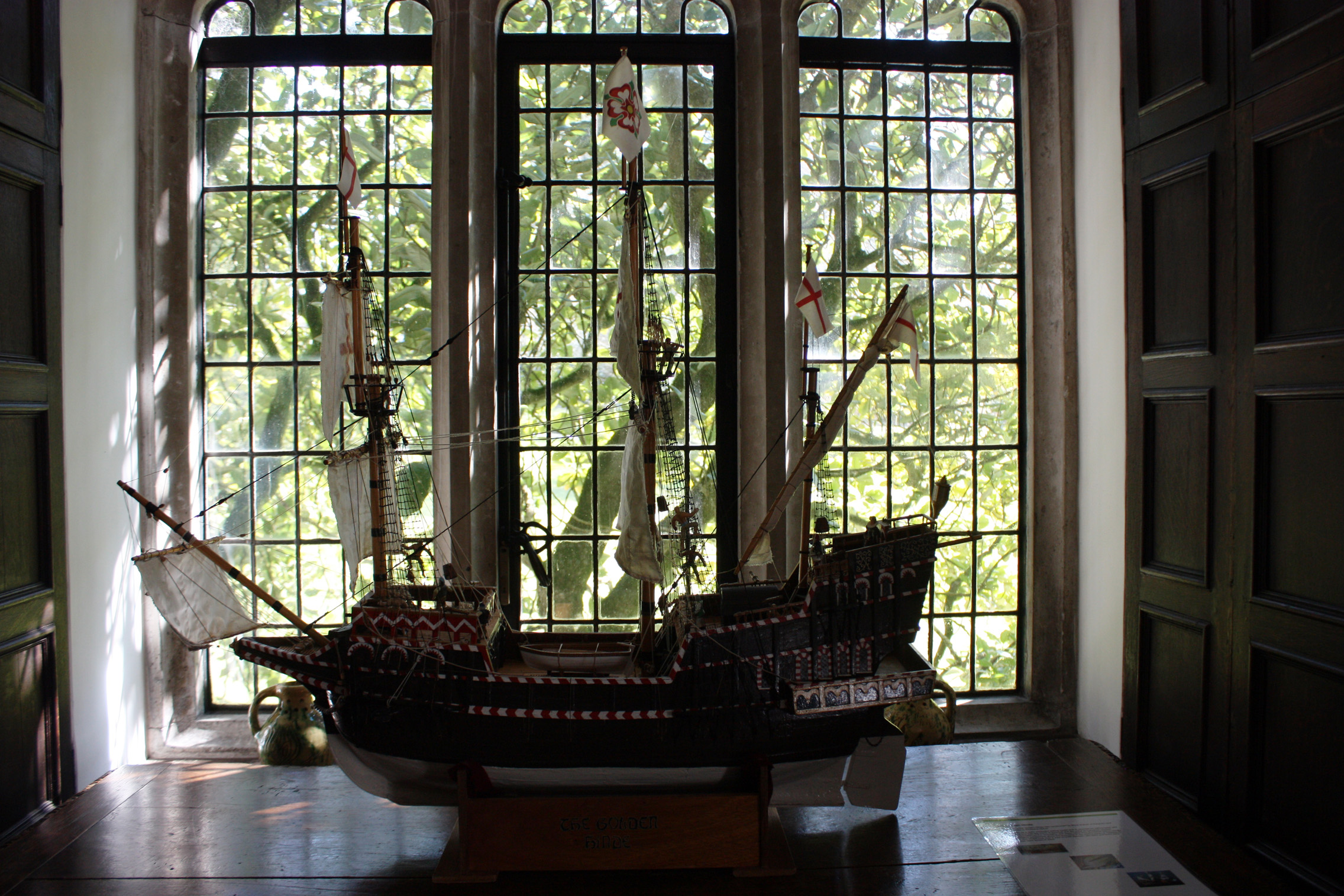
A scaled replica. 2013 Apr 06_4027 copy

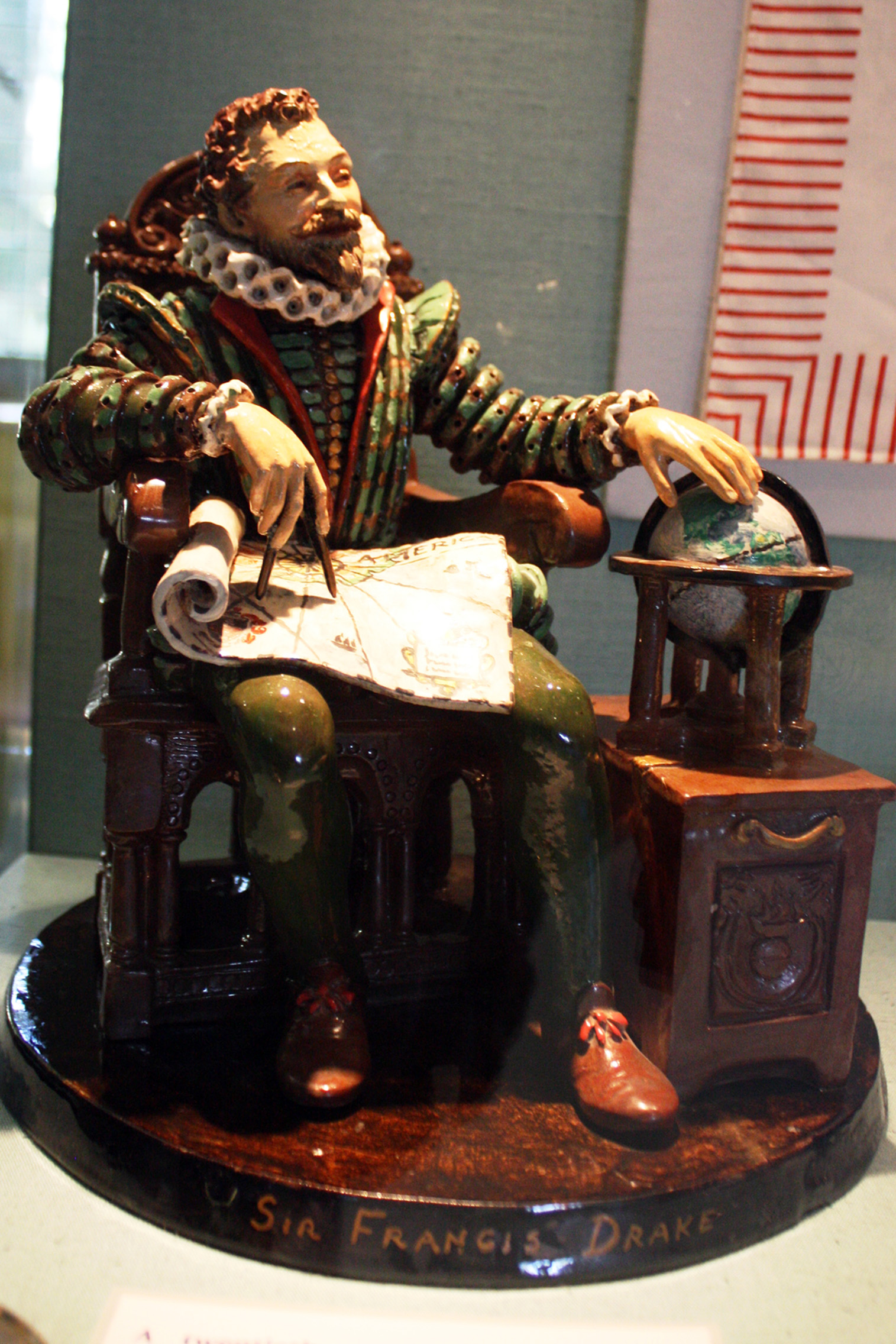
The man himself.

2013 Apr 06_4037 copyDrakes Coat of Arms.

Buckland’s Small Treasures

As you know I was captivated by Buckland Abbey. It isn’t the most grand of National Trust houses but for me it is an interesting one, packed with history and little surprises. Here are a few of the things I enjoyed.
2013 Apr 06_4088 copy

I know, it’s just a chair leg, but imagine all the ankles that have brushed against it.

2013 Apr 06_4062 copy

Time flies indeed.

2013 Apr 06_3973 copy

I loved the little incense boat.

2013 Apr 06_3995 copy

A 17th century sea chest.
2013 Apr 06_3998 copy

Elegant porcelain.

2013 Apr 06_3981 copy

A model of the Golden Hind.

2013 Apr 06_3938 copy

This chess set has Lord Burghley as King, Queen Elizabeth as Queen and Sir Francis Drake as the Knight. Each of the Pawns is a miniature Golden Hind.

Buckland Abbey Costumes

Hand crafted gentleman’s attire

Buttons
Sleeve

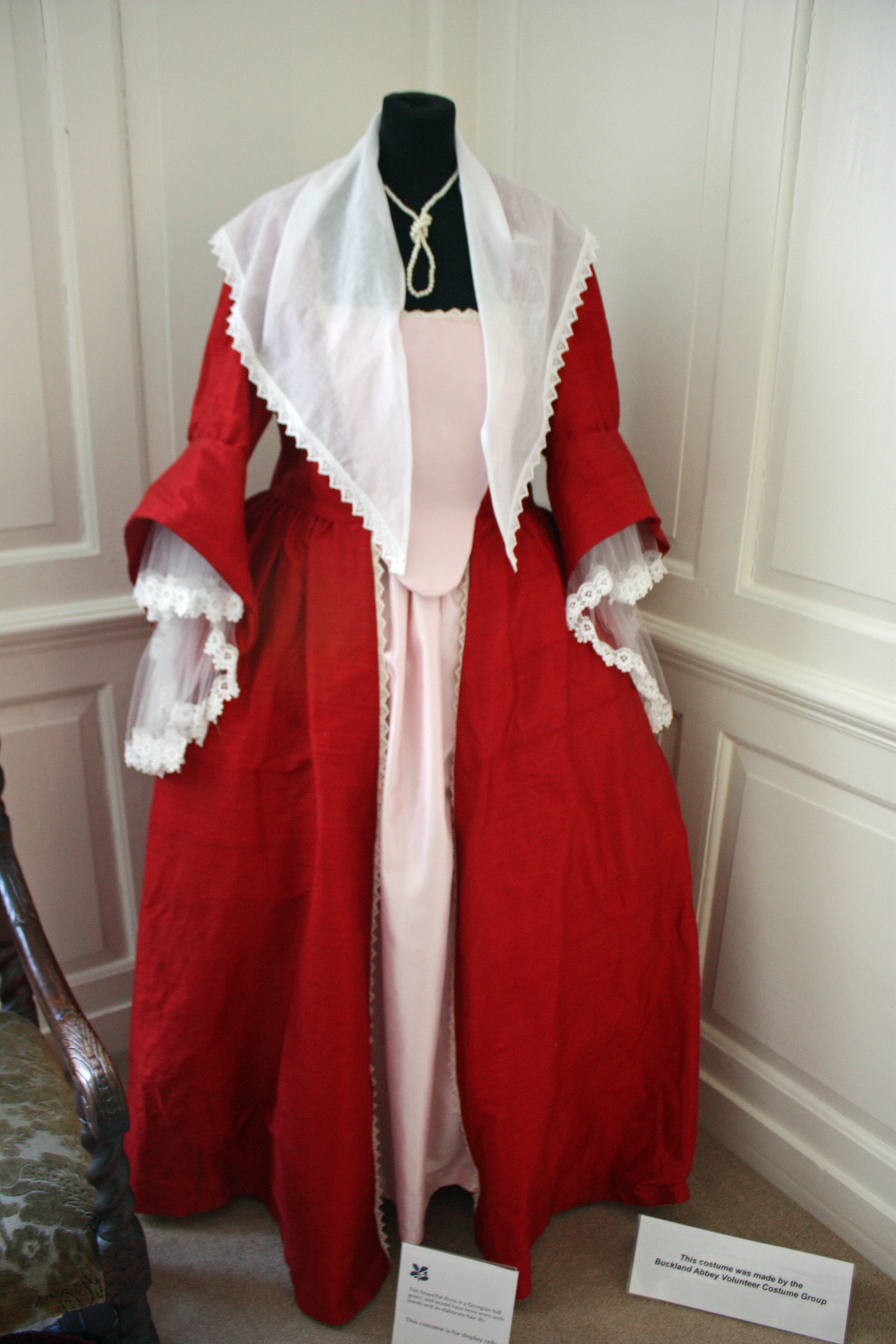
A lovely gown made by the Costume Group

Gown

Lace detail

Sir Francis and his good wife

2013 Apr 06_4090_edited-1

The collar detail

Collar

And lastly, the lady from my poem last week. She was very knowledgeable and when I admired her hat, she told me that Elizabeth 1st ruled that all ladies should wear woollen hats. This apparently was to help promote the growth of the woollen trade.

2013 Apr 06_4086lady

Buckland’s Books

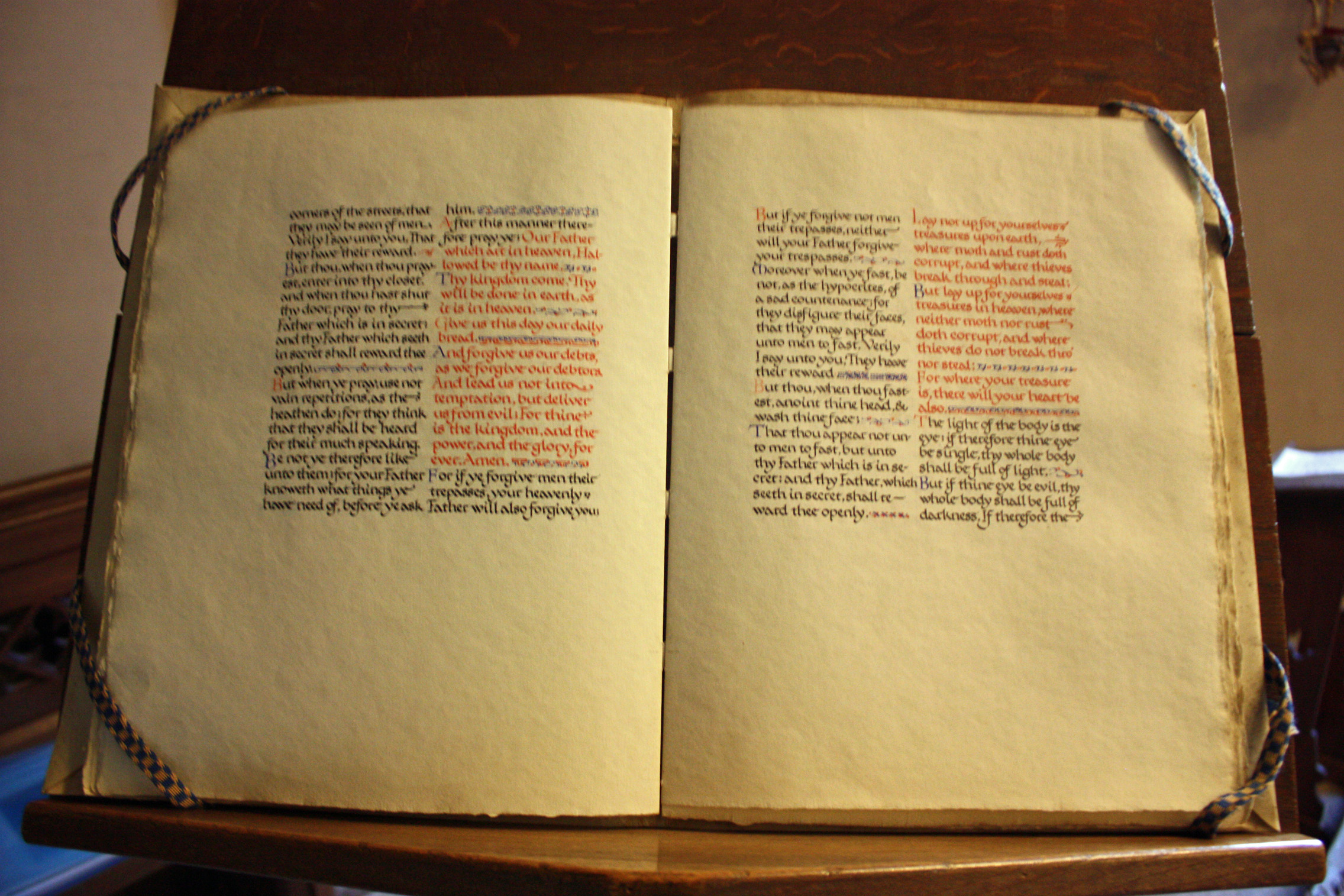
I have just been inspired by a TV program to show you three books that I tried to photograph at Buckland Abbey last week. The program, The Century that Wrote Itself, sets out to trace ‘our modern sense of self back to when ordinary people first took up the quill’. These books were not written by ordinary people, but one at least would have been written with a quill.

2013 Apr 06_40812013 Apr 06_4083

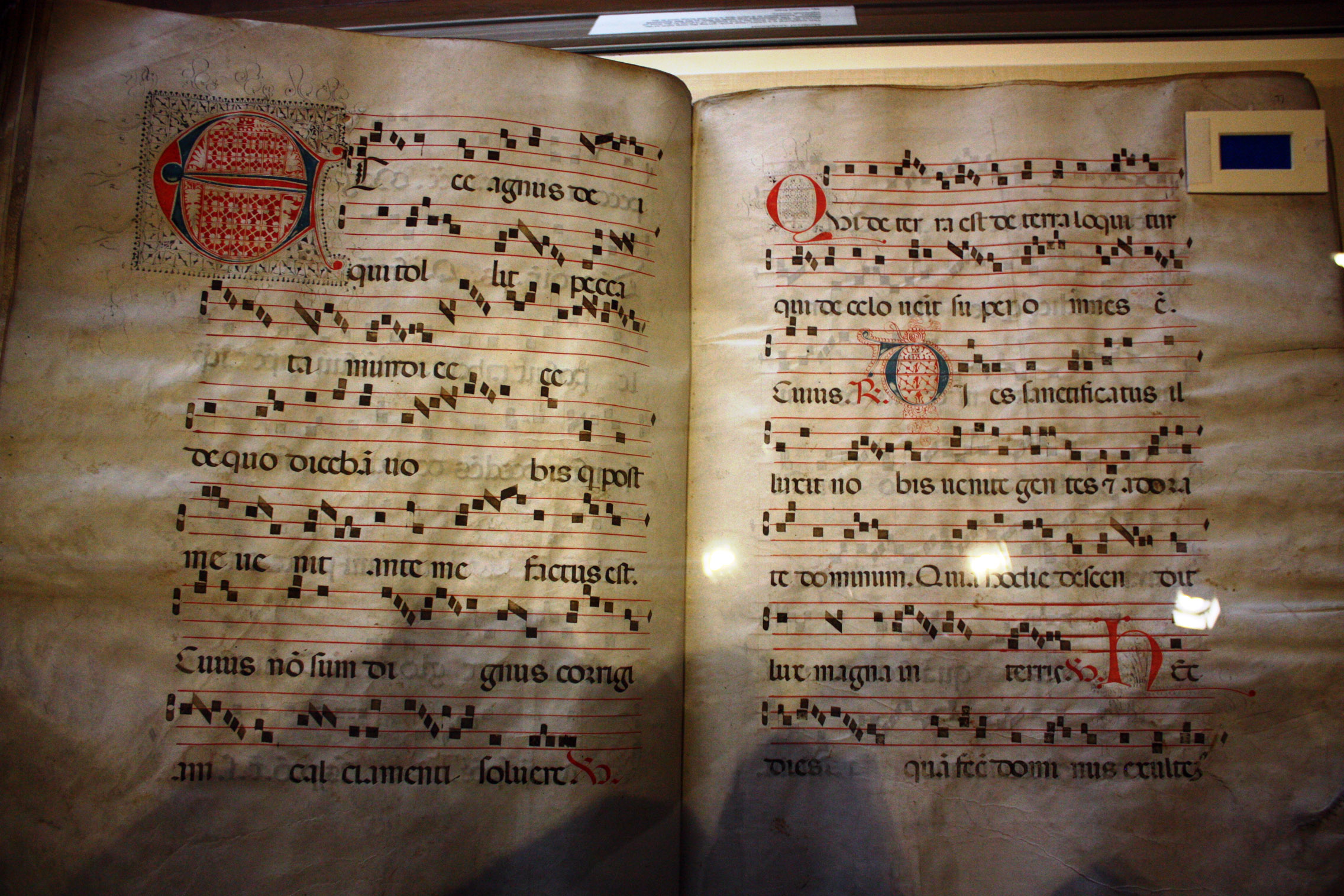
This one is my favourite and its the oldest, a medieval Antiphonal from Italy in the late 14th century. An Antiphonal is a winter choir book giving the sung parts of the service for each day from the first Sunday of Advent to the feast of Pentecost.

2013 Apr 06_3990

Buckland Abbey, a Few Inside Photos

Hampered by not being able to use flash I’m afraid!

Too Early for Gardens

Buckland Abbey is on the far west of Dartmoor and spring is late this year. It isn’t a garden with herbaceous border, more formal and functional elegance and sweeping grounds. There is an Elizabethan garden and although it’s box hedges have been damaged by blight in recent years, it has been replanted. The National trust have been working to establish a flowery mead since 2001 and its wild flowers attract butterflies and moths. Each September the mead is cut and to maintain the low nutrients in the soil that grassland needs the cuttings are rmeoved. In day gone by these cutting would have been animal fodder and also strewn around the floor in the house for its sweet fragrance.

Buckland’s Cistercian Barn

Buckland abbey was founded in 1278 by Cistercian monks on land overlooking the tranquil Tavy valley. The monks were responsible for building the great barn, an impressive building which would have been a treasure store of produce grown on the large estate given to them by the then Countess of Devon, Amicia.

The abbey thrived for two hundred and fifty years until the dissolution of monasteries by Henry 8th and in 1541 the monarch sold Buckland to Sir Richard Grenville who converted it into a home, tearing much of it down, but unusually for the time the church was kept to become the main part of the house. Here is the great barn.

I’ll be back tomorrow with some photos of the garden.