Rambla-ing in Barcelona


We arrived in Barcelona on Wednesday afternoon, and finding our Air BnB apartment was simple, just 100 metres from the Aerobus stop. Carmen, the owner met us, gave us some info and answered our questions and then we were off, three old crones let loose in the city. We had been up since 5am and only had a small bowl of porridge at Bristol airport at 9.30 so as it was now 4pm our tummies were howling! We found café to sit outside, where I had Greek salad and we shared a big jug of Sangria in the sunshine. Now we had arrived. Sated, we headed in the direction that I knew would take us to the Ramblas, criss-crossing through the Raval,

El Raval

an area full of old high-walled buildings, strange cooking smells and a million mobile phone accessory shops, piled high with cheap imports from China. The girls were a bit uneasy, not only do they lack my sense of direction, but some of the characters were a bit suspect and it seemed the Ladies of the Night were starting early. They breathed a sigh of relief when we walked into the light.
La Rambla
The Rambla was bustling with preparations for Sant Jordi, the next day, and flower stalls were everywhere.
Sant Jordi preparations
and then unexpectedly we stumbled on a place I’d hoped to visit but didn’t realise was so close. I’m a real market fan, I must have been a trader in another life, so St Josep, Mercat de La Boqueria was paradise.
St Joseps

Delicious fruit, fresh and dried was piled high, with each stall holder trying to out do the next.

My kind of food

Delicious

More treats

Seafood in abundance,
Seafood
I really don’t know how I managed it, but convinced that we would return, I didn’t spend a penny. I regretted that when I went home empty handed!

Ramblas architecture

Then it was time to enjoy some of the wonderful old buildings in the Rambla.

Rambla people
Often very elegant and ornate.

The next building has a little extra elegance, try clicking to get a bigger view.

Mr Marilyn poses in the Museum of Erotica

Yes, it’s Marilyn Monroe, complete with wind- blown, white frock up on the balcony. ‘She’ was attempting to entice you into what I can only guess is entertaining, the museum of erotica.

We strolled on, eyes open for just the right place for dinner, but  our energy had abandoned us totally. Being too excited to sleep the night before and the early start made the tiredness set in. We were five minutes from home and there was a local supermarket on the corner. Crisps and croissants called, as far as real food was concerned, we’d gone beyond hunger. Even the litre bottle of vodka and cola to mix remained unopened and we went to our rooms. My first impressions of Barcelona were great, it was an exciting city and despite being shattered I didn’t sleep for a  couple of hours. Instead, I made plans for the next day.

Motion and light

You probably haven’t noticed my absence, but I’ve been missing for a few days. When I learnt last night that this weeks photo challenge was motion, I was quite pleased because I was on my way out to see the Font màgica de Montjuïc. Yes, I was in Barcelona!
I haven’t had time to sort out my photos yet, but here are some that I hope you like. The fountain was magical indeed, an atmosphere of happiness and joy as its colours played along to the music.

To see how other people have interpreted the challenge, visit Jen and you might like to join in.

The Challice Well Garden in Glastonbury

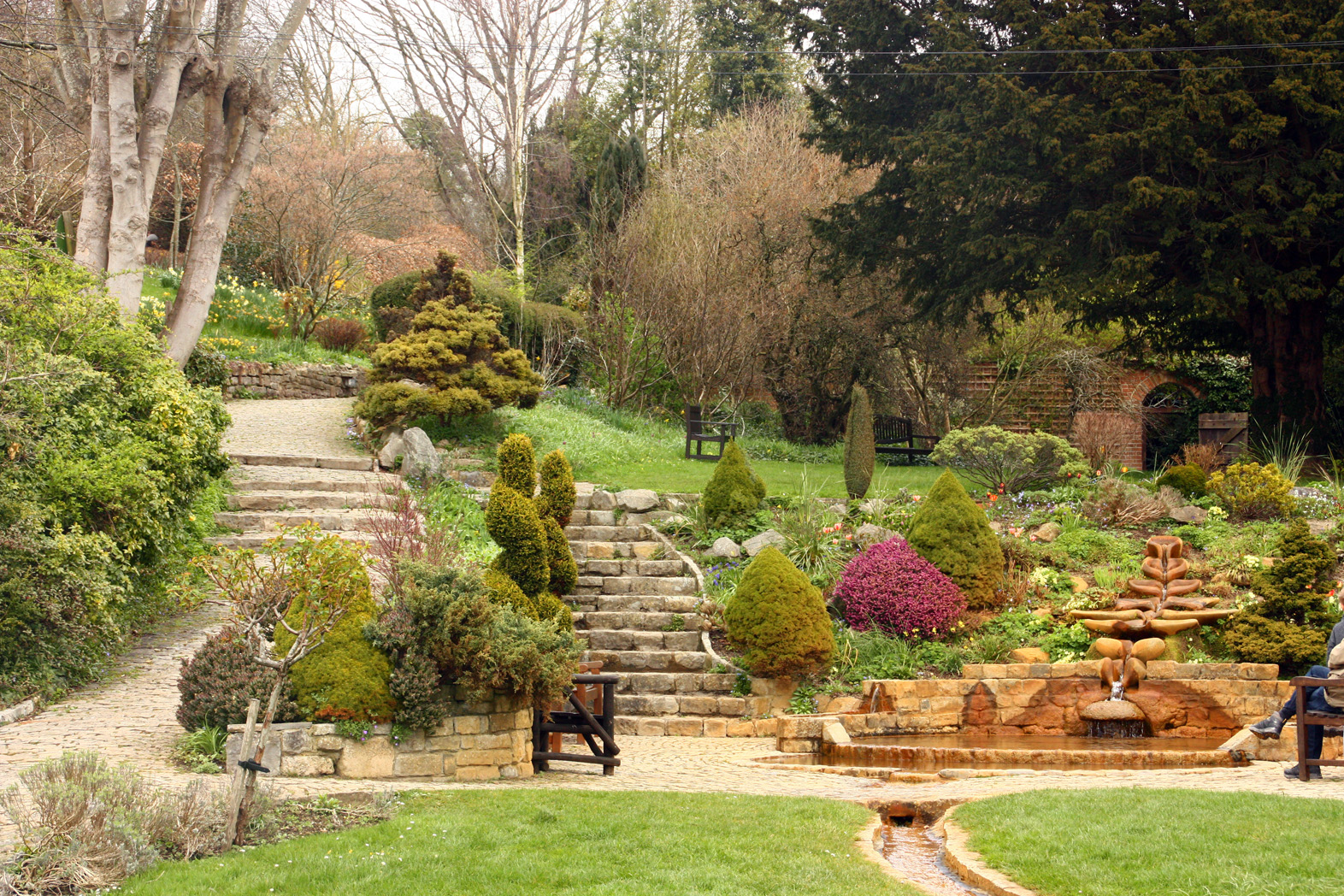
Surrounding one of the best known holy wells in Britain is the Challice Well garden, a tranquil place to soothe the soul.

Not often seen.
Not often seen.

On Good Friday my friend and I spent a peaceful couple of hours wandering there. Spring path

As far as plants are concerned I think I preferred my last visit which was in summer, but there was still plenty to see.

The garden is set on a gentle slope with Glastonbury Tor rising above, and as you walk upwards you eventually reach the well head. The waters have been know in the past as the Red Spring and the Blood Spring and legend tells that it represents the blood of Christ, springing from the ground when Joseph of Arimathea washed the cup used at the last supper. Others see the continuous spring of the life force.

The Lion's head
The Lion’s head

The Lion’s Head fountain is the only place where the water is safe to drink. Even so, just a few drops are recommended for healing, with the homeopathic approach. Even though I’ve tried it before, I still had a sip and it tastes very strongly of iron.


There are lots of little niches, some with seats, to quietly meditate.
ch15
I hope this young man found peace.

The path to the meadow
The Holy Thorn
The Holy Thorn
Thorn buds
Thorn buds

Legend says tha Joseph of Arimathea visited Glastonbury with the Holy Grail and thrust his staff into Wearyall Hill, which then grew into the original thorn tree. The thorn is unusual because it flowers twice a year, at Christmas and again at Easter. Each year a sprig is sent to the Queen.
(source Wikipaedia)

The Vesica Pool

The Vesica Pool

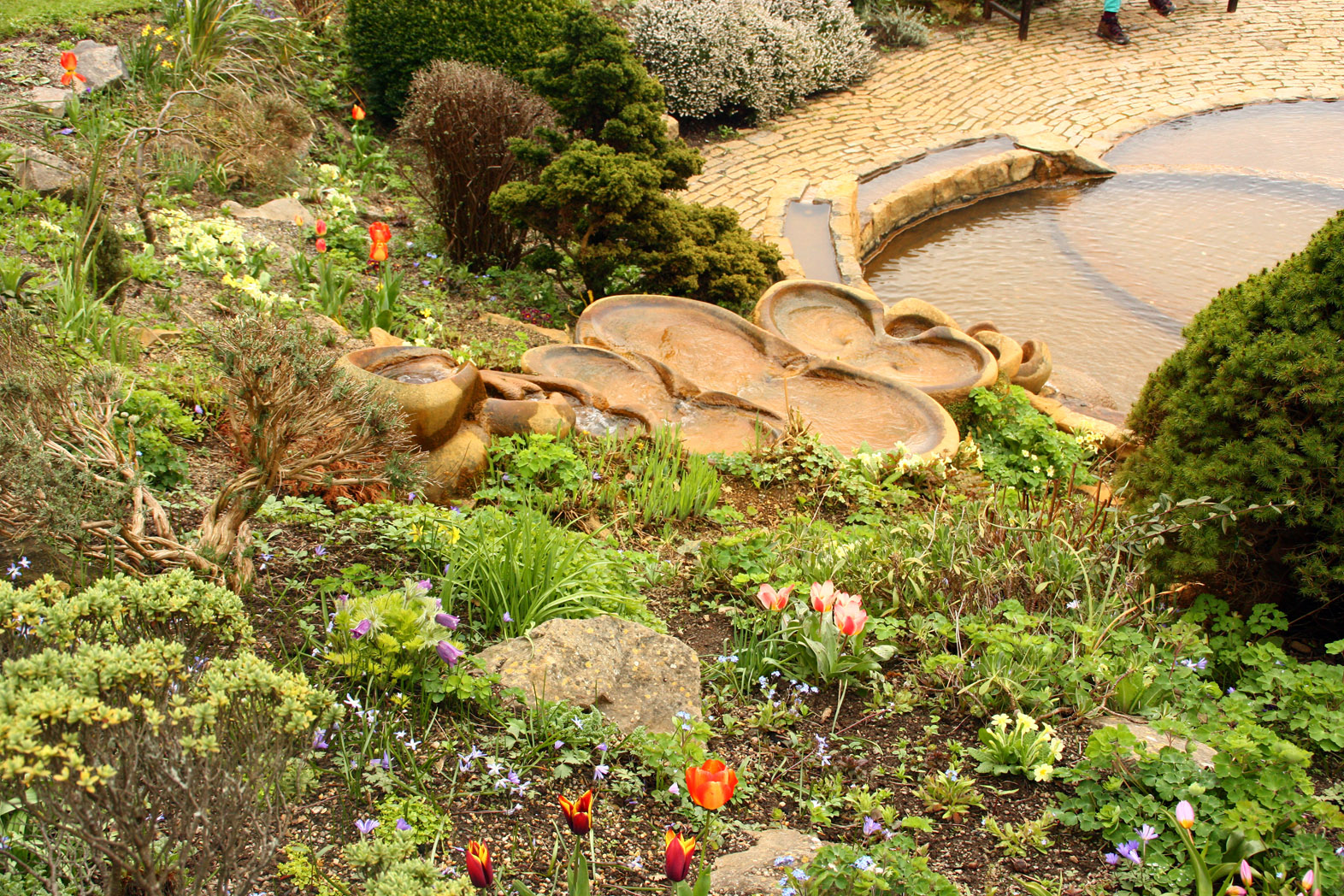
The Vesica pool is shaped as a figure of eight, its seven bowls swirling down like a mountain stream.

A view up through the garden
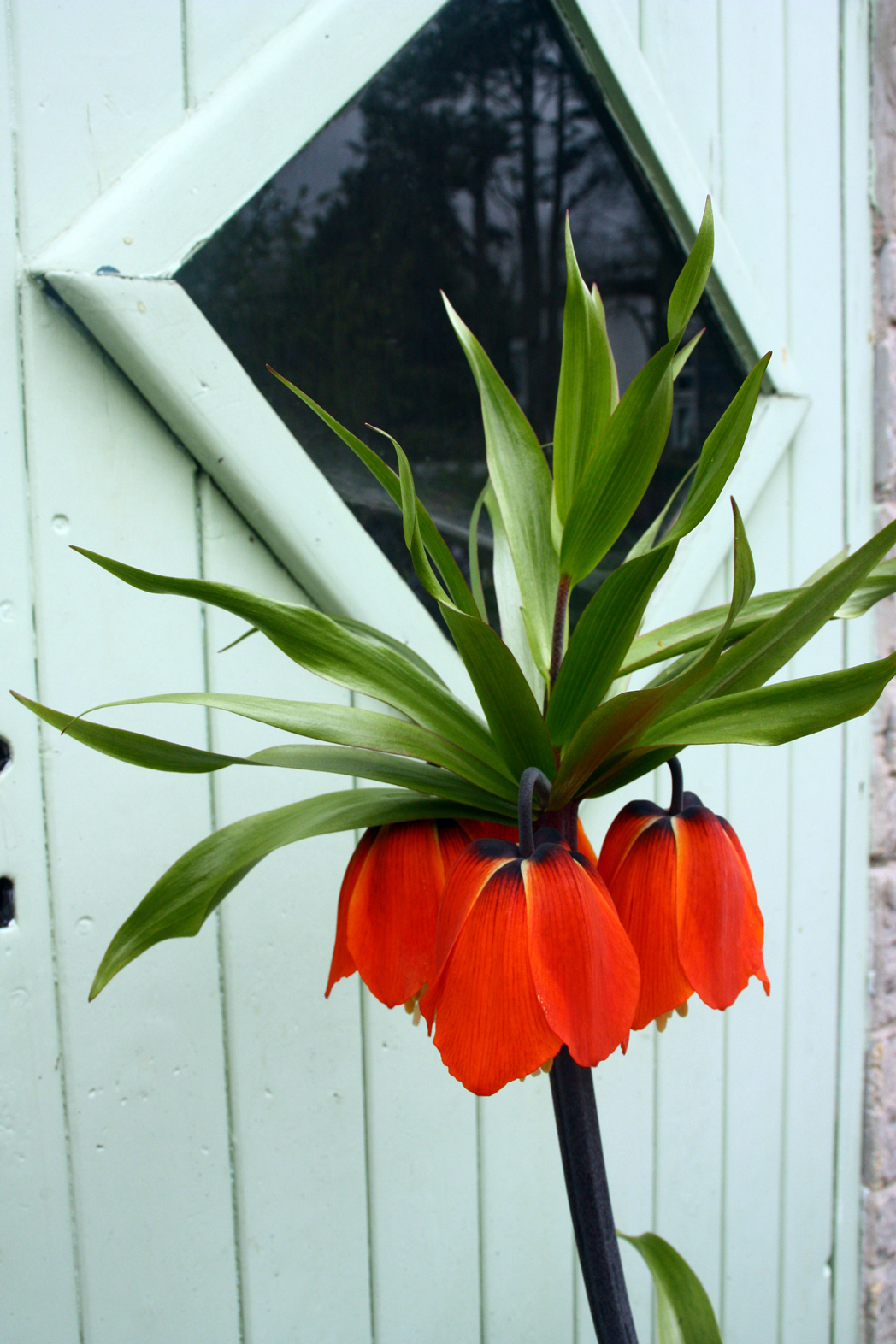
Fritillary
Fritillary

Some bold colour outside of the shop.

The  garden is protected and maintained by the Challice Well Trust, set up by Wellesley Tudor-Pole is 1959 and is open daily throughout the year, should you wish to visit, it is 20 minutes walk from the centre of Glastonbury.

ch10

My post is for Jo’s Monday Walk, if you click the link you will be able to join in and  find lots of interesting walks.

Distant Beaches

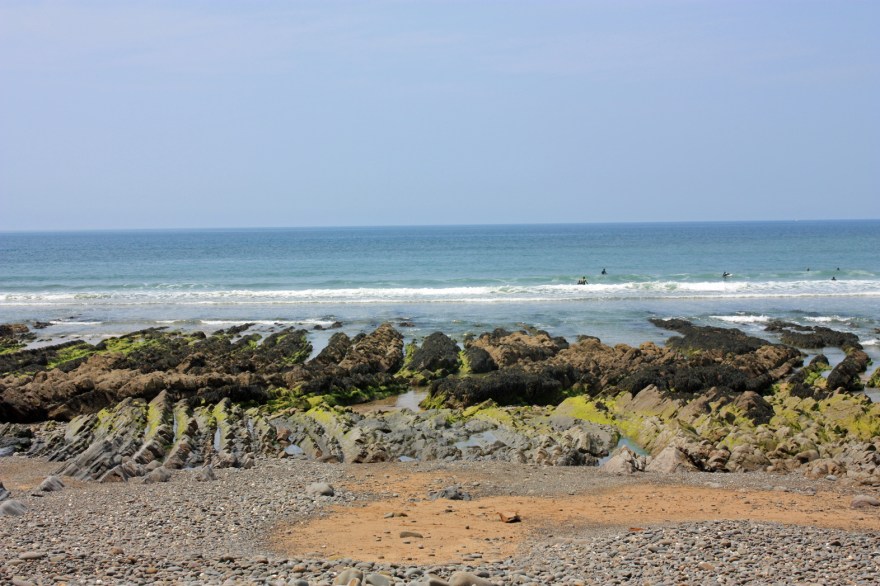
A few days ago I was reading a favourite blog friends post about beaches, and something seemed familiar.  I’ve seen photos of many wonderful places since I’ve been blogging, it’s great to see parts of the world I’ll probably never get to visit in reality. Australia is one of those places and Eurobodalla beach in particular, and yet I feel a connection. So when Meg posted images of Broulee beach I looked through my photos to try to find out why. har1 These rows where Dido and Daisy are paddling remind me of Meg’s beach har4har5As does this crisscrossing in the rock. har2and the view at Hartland is rather like Narooma!
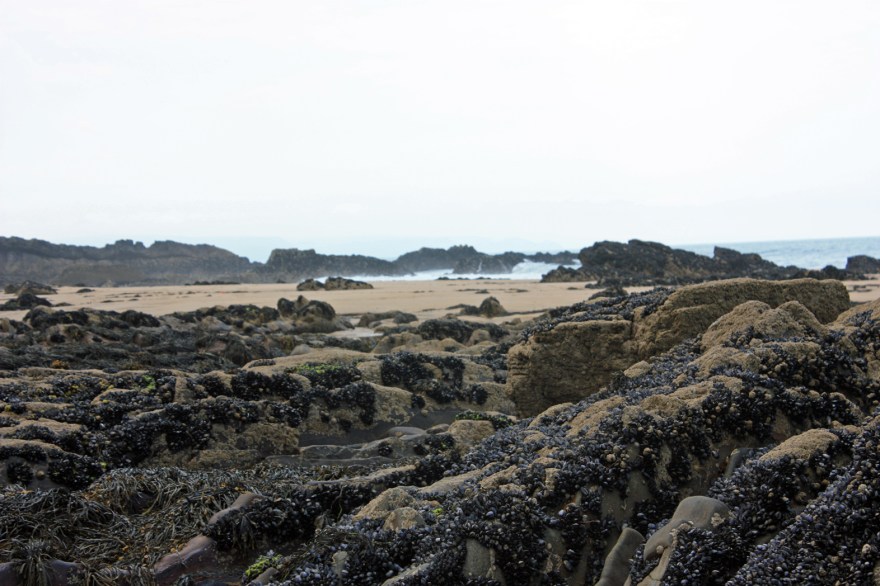
And these are similar to Meg’s Smugglers Cove photos. har3 Craggy rocks with winkles. har8 Crops of determined little flowers har6Even surfers, but I expect they are colder than any near Meg. Pay a visit to Meg and see if you don’t agree with me, Hartland in North Devon has a lot in common with these beaches in New South Wales.  To find Hartland on a map of the UK, first find South Wales, then go due south.

A Warren Walk

When I was child, if you lived in Exeter, to the east of the river Exe, your beach was Exmouth, to the west and it was Dawlish Warren.  Both beaches are around 10 miles from the city. Back then, in the dawn of time, most people didn’t have cars, but there was always the regular train or bus service, and there still is.

Summers were longer and warmer then, and the sunshine was, well, sunnier somehow.  Families would pack up their bags with sandwiches, homemade sausage rolls and cake, kids would take their buckets and spades. Sun lotion didn’t exist, so many would burn and peel a few days later, the lucky ones would just tan.  No-one thought anything of it, other than a touch of calamine lotion if it was sore.

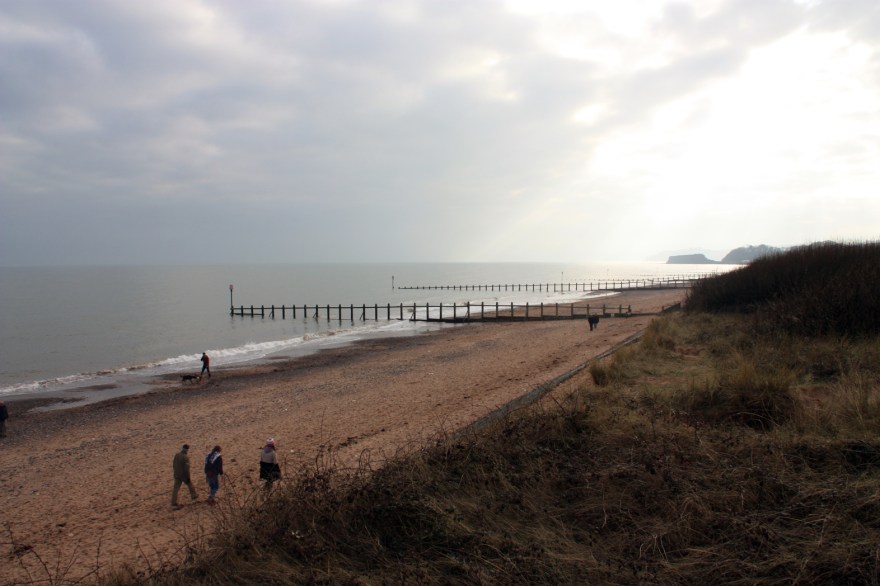
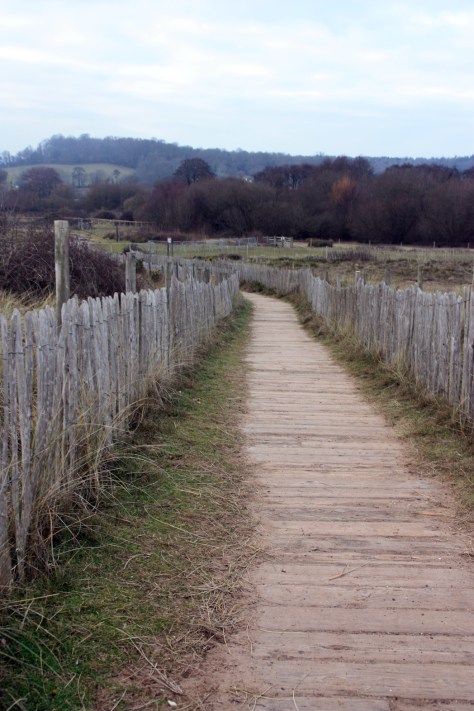
Nowadays the Warren is a National nature Reserve and protected as a Site of Special Scientific Interest (SSSI) and along with the rest of the Exe estuary, a Wetland of International Importance. Last weekend I took advantage of a few dry hours and took my camera for a walk.

In winter Dartmoor ponies are kept on the Warren to help maintain the grassland, I’ve seen some in the past but not on this visit sadly. The wetlands are teeming with wildlife, mostly elusive except to the ears.

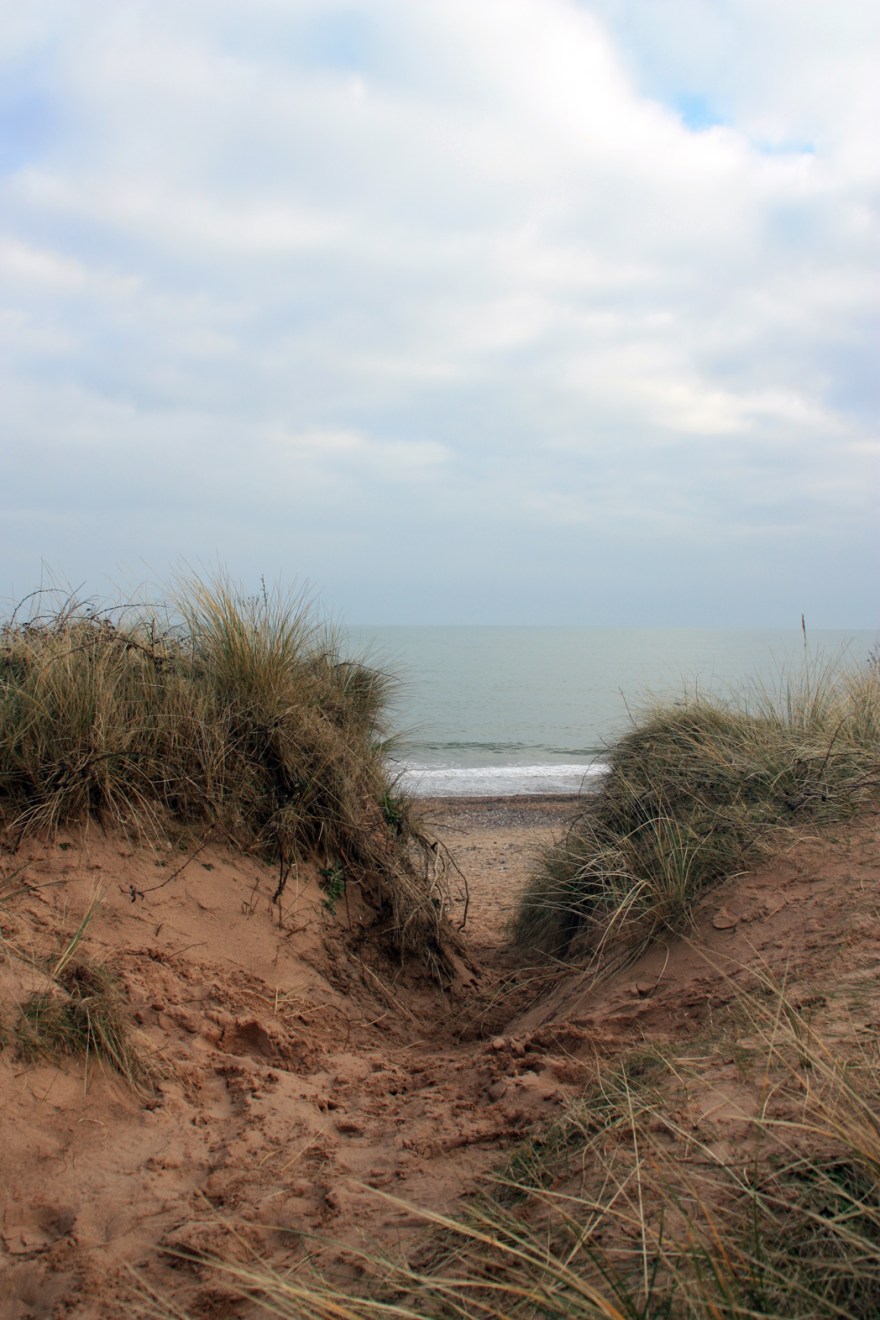
I walked on past and got a glimpse of the beach.

dw7

dw8Before striding on eastwards towards the golf course and a view across the estuary to Exmouth.
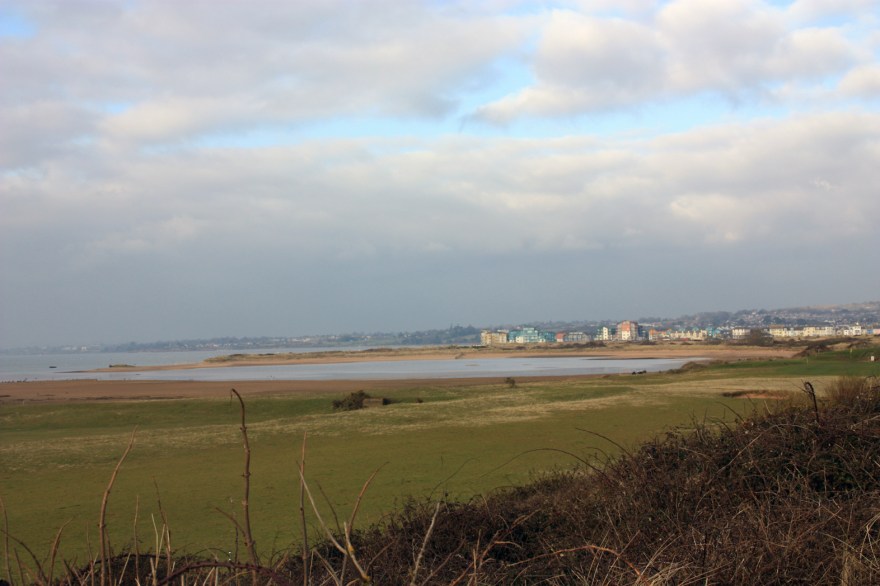
dw9So, I’m on the crest of the dunes surrounded by beauty
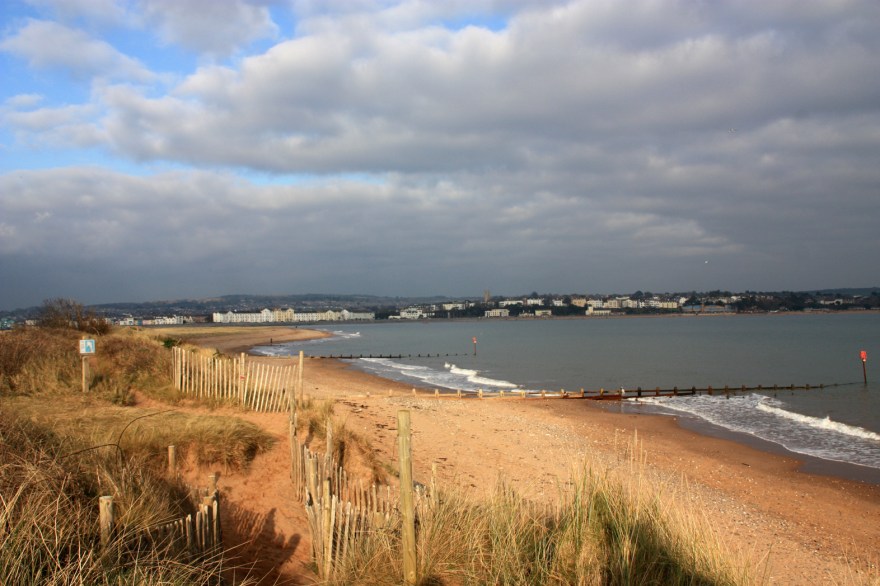
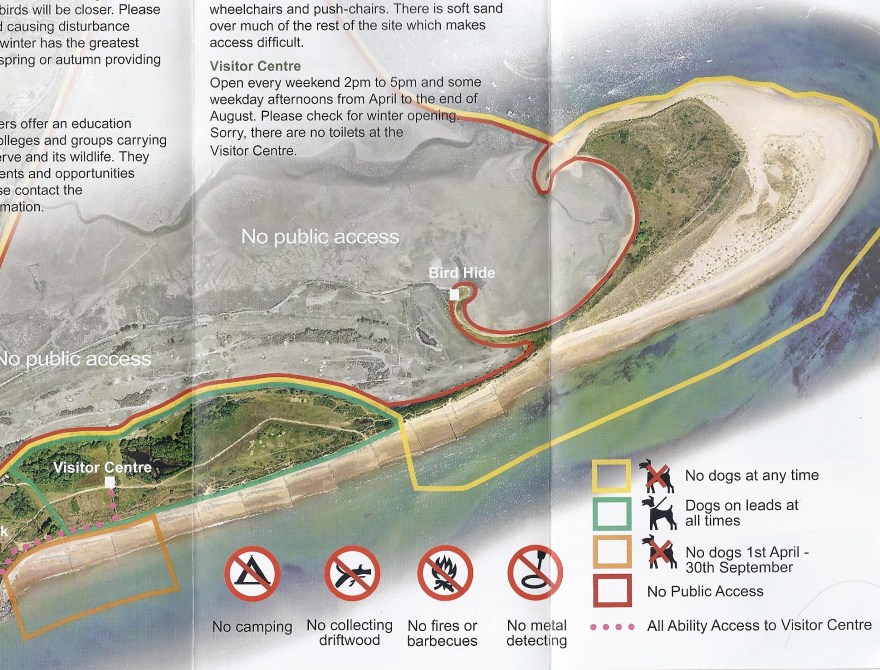
dw10Maybe this will help explain where I was
scan0001

The wide area at the top is the sand spit right opposite Exmouth, but I pretty much stayed on the red path.

There are thousand of wildfowl and wading birds, I saw Oyster catchers, Wigeon, Brent Geese, and others that I don’t know the names of. The visitor centre had recorded far more that week than I was able to see because the tide was low, even though I walked around the curve of the sand spit to the bird hide.

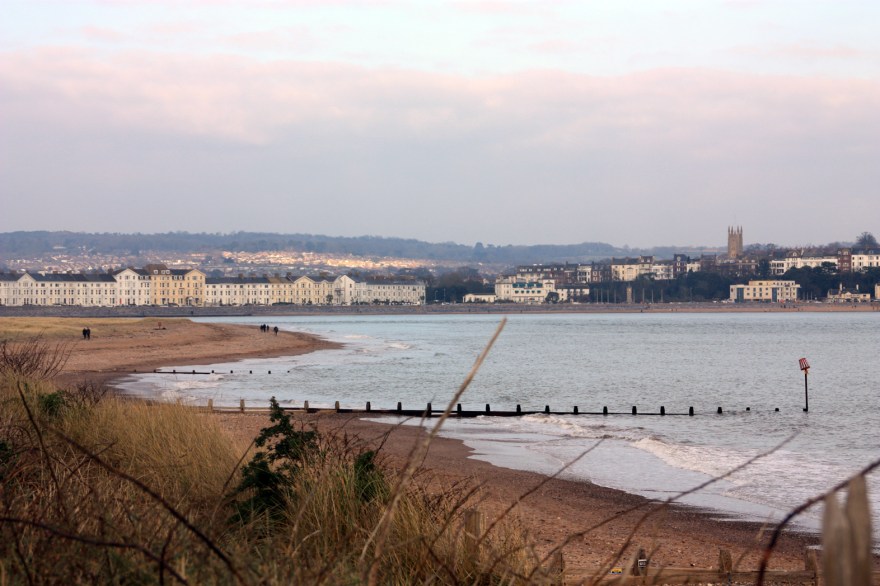
The wind was getting up and the light was changing, so I headed back before the rain came in. So walking west, the beach was on my left. The big old terrace houses at Exmouth were clearly visible behind me

dw17and my path back to the car park

dw18

Looking inwards I could see the grassland again.

The Warren got its name because centuries ago, probably back to the middle ages, rabbits were raised there on a commercial scale, for both food and skin.

dw21

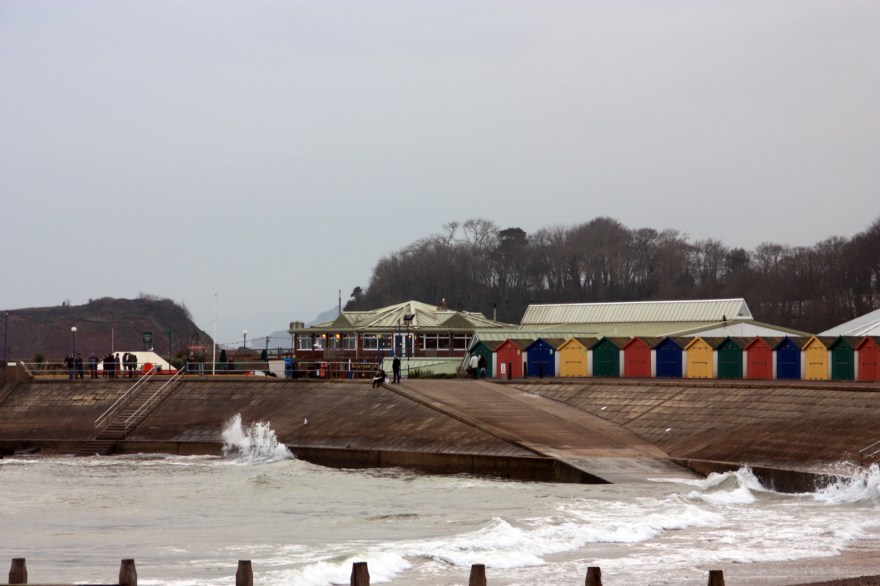
This is part of the holiday makers area, with amusements, cafes, a pub and several caravan parks nearby.The tide was right in, but there is sand under there! The bright beach huts are a fairly recent addition. In the 1970’s there were hundreds of traditional beach huts down here behind the beach.

dw22

I can’t remember them though, I was an east of the Exe girl and still am, you know how much I love Exmouth!

I hope you enjoyed my walk. It’s either one day late or six days early for Jo’s Monday Walk  but I’m never on time!

Everyone’s Journey is Different

Last week I took a four hour train journey home to Devon, longer and more complicated than it should have been because of railway work. I crossed platforms and hopped from train to train, and I couldn’t help wondering about other peoples journeys, where were they all going on a cold Sunday in January? Few people talk to strangers on trains (I talk to anyone as you know!), but one man, also travelling alone, suddenly laughed out loud so I smiled as our eyes met. He was doing a crossword and got an answer he’d been struggling with. The clue was ‘What islander has nothing behind him?’. The answer that he was amused by?’A Manx cat’. We laughed together, it was a nice encounter. The final leg of the trip was beautiful, but few people seemed to look out of the windows at the countryside as I do. One of the things about being a certain age is that to many people you become invisible, often annoying, but if you like to observe others as most writers do, it can be very useful. A lady opposite me was knitting, a bright pink little girls cardigan, and kept counting stitches, and to my right a young man watched a film on his laptop. Giggly teenage girls tried to paint each others fingernails but the movement of the train was making it difficult for them, and soft snores emanated from more than one passenger. Am I the only person who enjoys the beauty of the countryside? I did take out one techy toy, my phone, because I wanted to capture some of that beauty that we take for granted. Please forgive the image quality, fading light, reflections from the windows and a moving train don’t make for the best photos!

This slideshow requires JavaScript.

And I was inspired to try a poem,

Train Landscape

Swiftly the southern line takes me

‘longside pastures and heading west

where pannies flood but folds of dry

give shelter to the Sunday flocks

Winter furrows retreat to hill crest

no conifer plantations lurk here

just naked deciduous petticoats

seeded by natures wise hand

A nonchalant deer raises its head

and a much used murmuration flies

on a thousand dark starling wings

sweet balm to my home going eyes

through Dorset and on to green Devon

I ride the train through my heartland

A tale of a favourite city

Accor Hotels have a competition that invites bloggers to write about one of their favourite cities.   The idea is to show three reasons why you love it and the prize is three-night stay for two, in London, Paris and Amsterdam. They’re including transport by Eurostar and even spending money, doesn’t that sound wonderful?

One of my favourite cities is Marrakech, a passion that began way back in 1969 when Crosby, Stills and Nash released the track Marrakech Express. I was very young, but something in that song intrigued me, from then on Marrakech seemed like a very exotic destination, even though at the time I would have struggled to find it on a map.

A few years ago I finally made it and it didn’t disappoint one bit, in fact I loved it so much I returned for a second visit.  It’s difficult to narrow it down to just three things I love about it, but the first I’ve chosen is Les Jardins Majorelle. Originally created by the artist Jacques Majorelle, who devoted forty years developing it into a lush paradise. The intense ultramarine cobalt colour that he used abundantly through the garden, later came to be known as Majorelle blue.

m5

When Majorelle passed away, the garden became neglected and would have been destroyed and replaced by an hotel, had it not been for the vision of Yves Saint Laurent and Pierre Berge, who bought and began the restoration process.

There is now a memorial to Saint Laurent in the garden and  Berge gifted it to the Foundation Pierre Berge and Yves Saint Laurent.

Bahia Palace – meaning ‘the beautiful’ was built in the 19th century by Grand Vizier Si Moussa. It has two acres of gardens and around 160 rooms, some of which are open to the public. The main attraction for me is the ornate tile work on floors, walls and ceilings. These are multicoloured Zellij mosaic, in Islamic, Andalucian and Moorish style, with green ceramic roof tiles.
b5
There is also some delicate stucco work that reminds me of the jail screens in Rajasthan – used in the womens quarters of major palaces as well as havelis. Naturally the Bahia once had a harem filled with concubines.


The palace can be found in the medina, next to the Jewish quarter and is open daily, unless there are royal visitors. It is one of the cheapest places to visit in Marrakech, about a pound, plus a small tip if you have a guide.
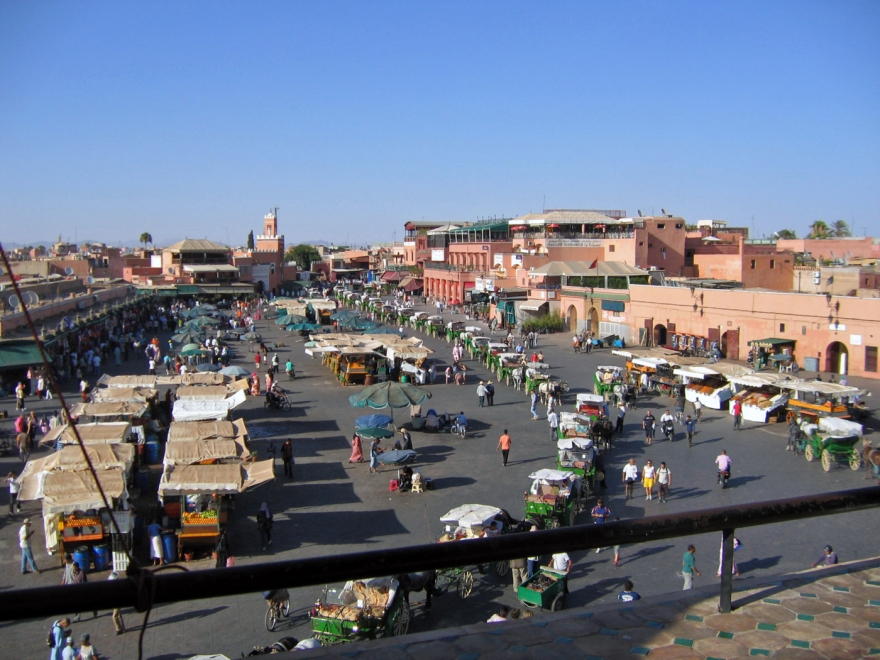
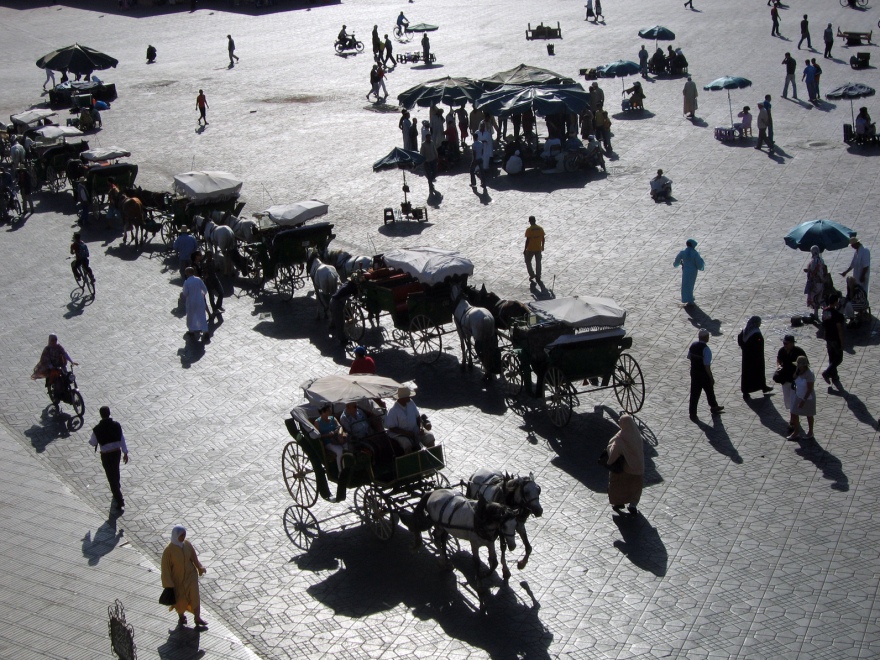
Last but not least on my list, is La Place Jemaa el Fna, a UNESCO world heritage site for ‘the Oral and Intangible Heritage of Humanity’. I think it’s a love it or hate it kind of place, that many would describe as crazy and impossible. By day the vast square is a sun trap, only copious quantities of the best and cheapest orange juice ever will keep you going. Luckily the stalls are everywhere, as are the caleches, ready to take you around the city for a negotiable fee.
j2
As the sun begins to go down, if you want to take it easy, head for one of the roof terrace cafes, and sit back and enjoy the spectacle.
j1
Every night, La Place is transformed into a huge open sea of eating places and it has to be tried at least once during your stay. The food is freshly cooked and the air quickly fills with smoke, but its tasty and authentic. Anything thing you want, and an awful lot of things you didn’t know you wanted, can be bought around the square and the souk. If you show any interest in an item they will do their utmost to get you to part with your money, but I found it to be good natured haggling.


Before you leave the square, have a wander through the crowds. You will find snake charmers, tooth pullers, henna artists, story tellers, fortune tellers and monkey handlers – I’d avoid those if I were you!
I hope you enjoyed visiting Marrakech with me, the competition ends tomorrow but if you’re very quick . . .


Hive Beach Stroll

Friday was the most perfect winter day here and I had an extra day off, so it couldn’t be wasted! My friend and I set off heading east with a vague idea of perhaps Lyme Regis or Charmouth. Leaving the A30 at Honiton and taking the A35, a winding, up hill and down dale road passing through little villages, Wilmington, Kilmington and Raymonds Hill. Enjoying the view, high and wide, of east Devon and west Dorset, Golden Cap, a hill and cliff which is the highest on the south coast of England, waiting for me to climb one day.

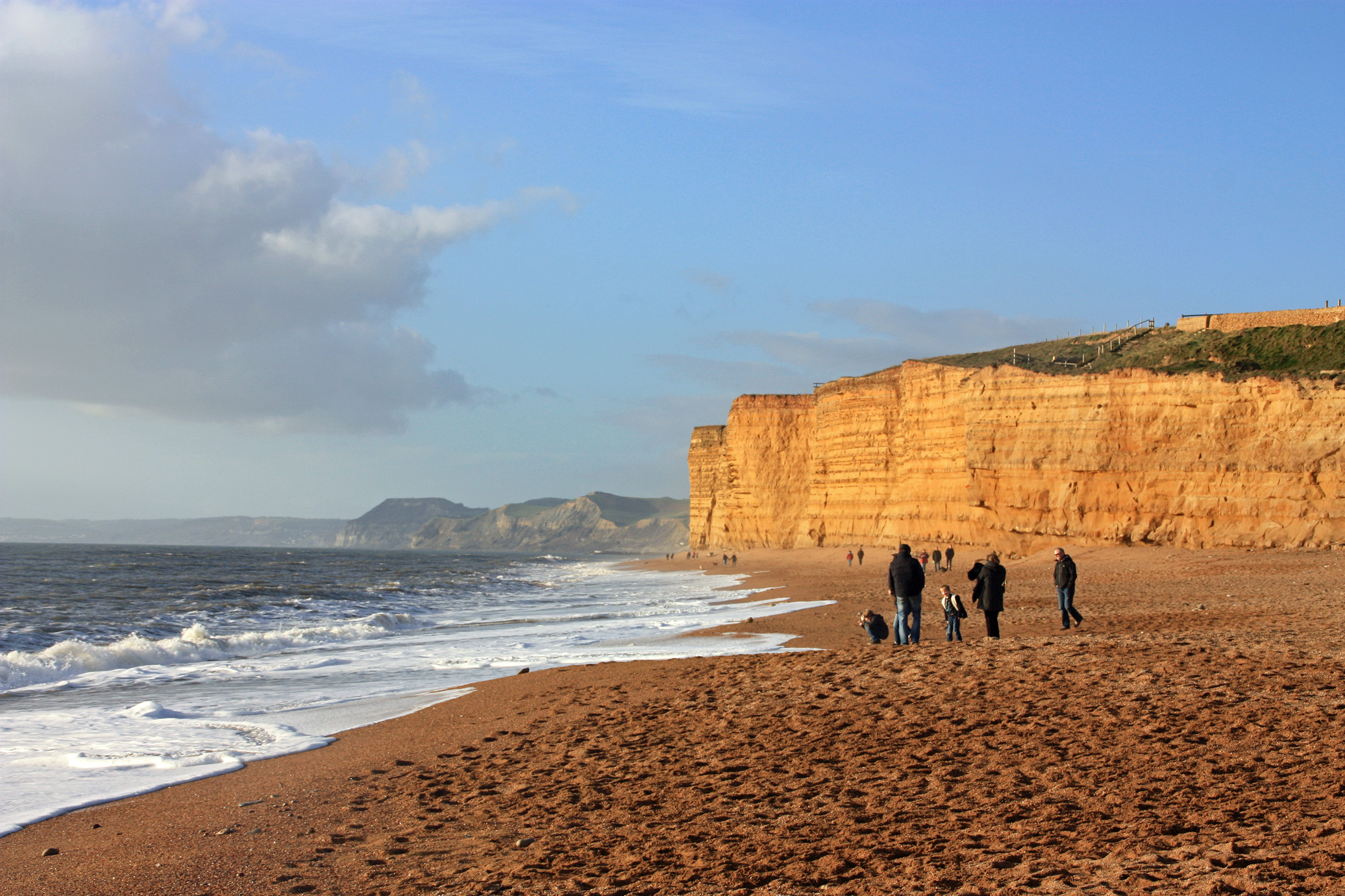
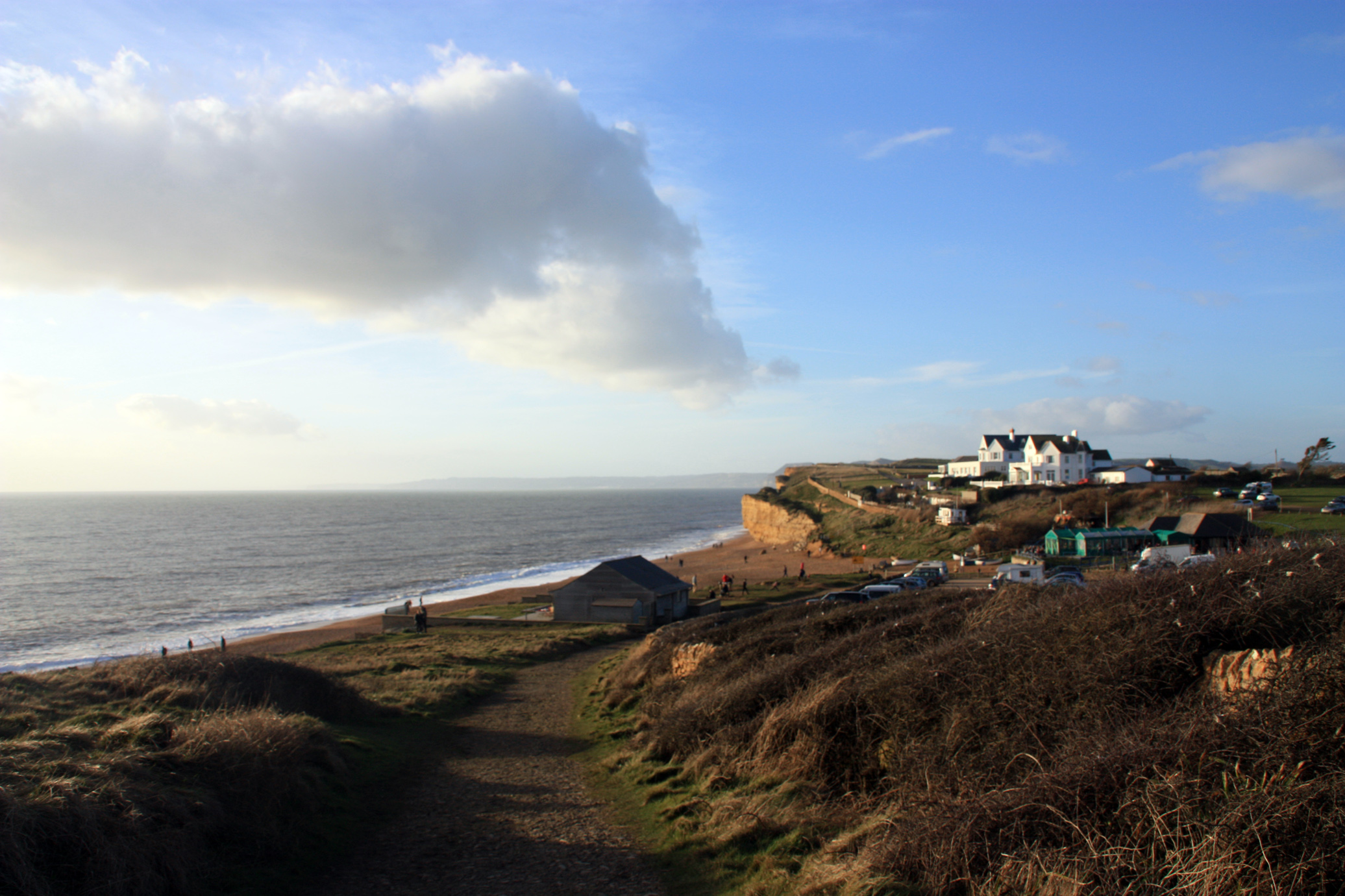
Something took on us past the Charmouth and Lyme turning, towards Burton Bradstock, ten miles further and passing through we stopped instead at Hive beach which has a National Trust car park and access to the South West Coast Path. Hive is a noisy beach, not human noise but nature’s noise, as the waves crash onto the shore and then rush back down the steeply shelved shingle.

Shingle beach
Shingle beach

There were quote a few people walking off the seasons excesses on the beach so we thought we would check out the view from the cliff path.

Looking back onto Hive beach

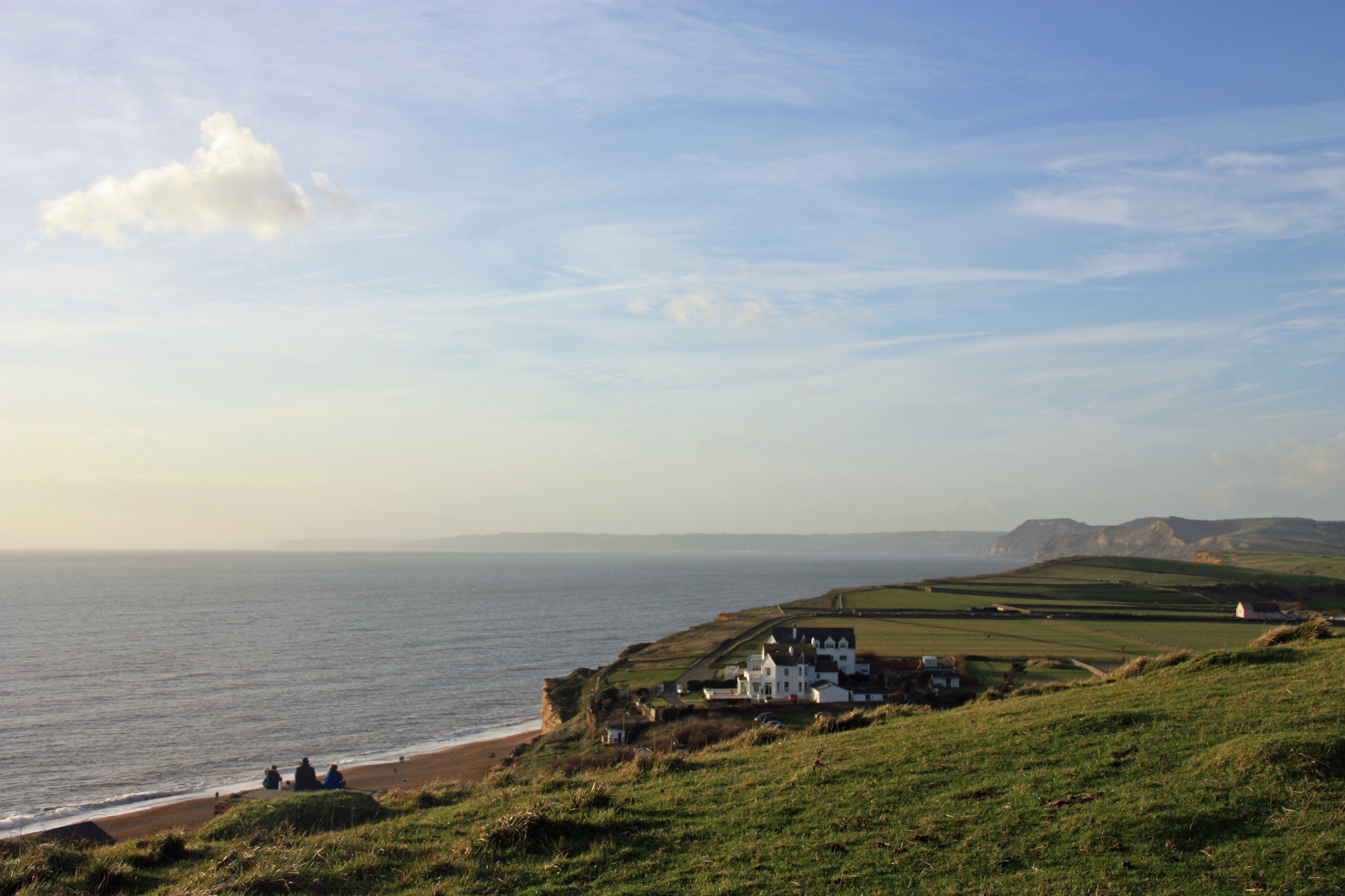
We climbed quite high and Lyme Bay opened up.
Lyme Bay

A gap along the path

At the highest point we looked north towards Bridport.

Countryside around Bridport

In the distance stands Colmer Hill, somewhere else I’d like to visit.

Colmer Hill
Colmer Hill

Then we circled around common land on the side of the hill.

The flat top hill is Golden Cap

And retraced our steps.

Lyme bay view
Lyme bay view

We had already sampled the Hive Beach Café’s coffee, so we set off to find tea and cake, tomorrow I’ll show you where!

We only had time for a short walk because the daylight was fading fast, but the area deserves some serious hiking, there is so much to see in West Dorset.

Descending Devon’s Rivers

This week, Cheri Lucas Rowlands at WordPress Daily Post asks that we show photos of our interpretation of ‘descent’. We can take it literally, experimenting with point of view or take it deeper.

I’m going to show you the descent of my favourite rivers, six of them that all descend to the sea on the south coast od Devon.

If you’ve known me a while you’ll know how much I love estuaries, those liminal, transitional places that tap into our ancestral memories.

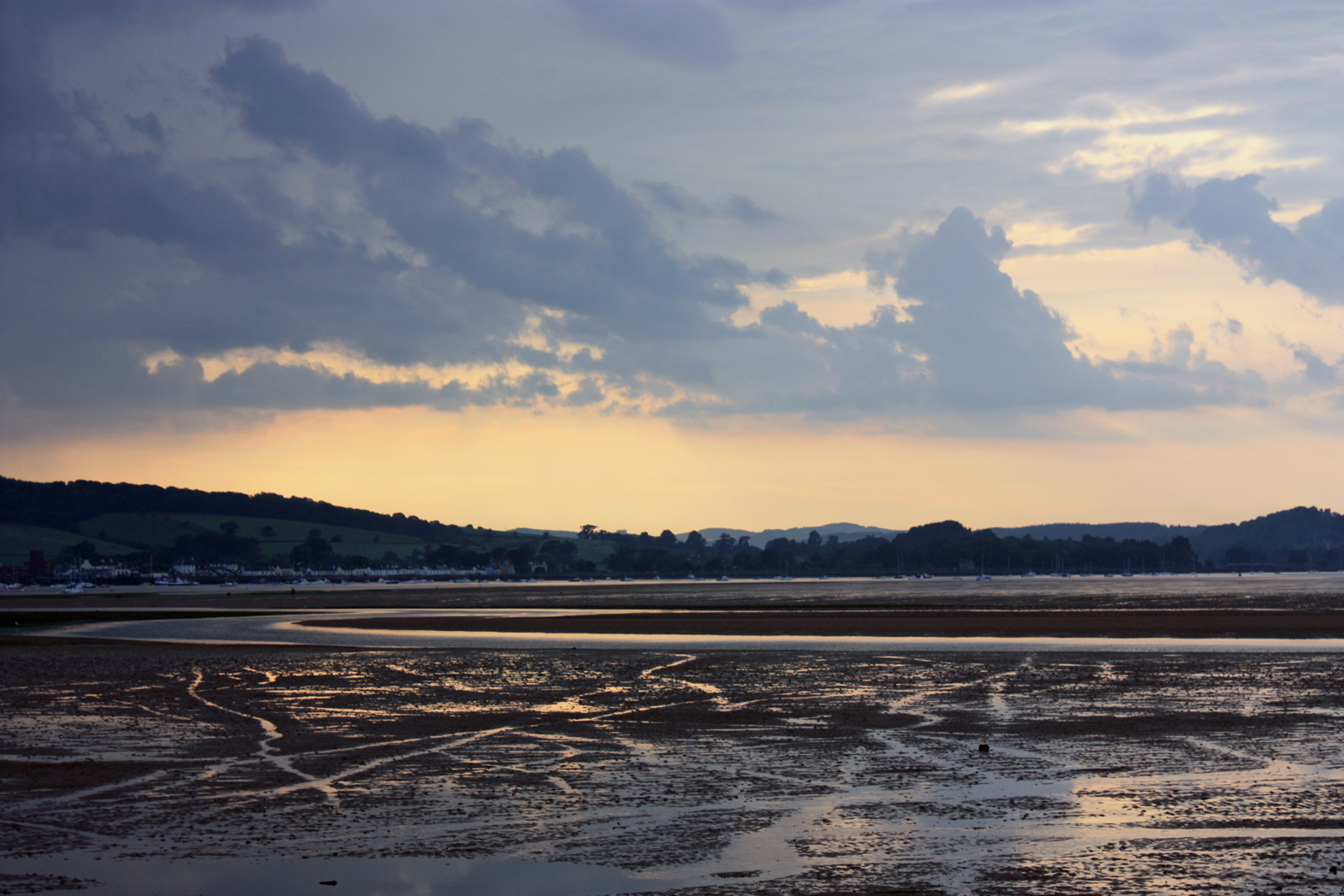
The first is my beloved Exe, flowing into the sea at Exmouth. exe
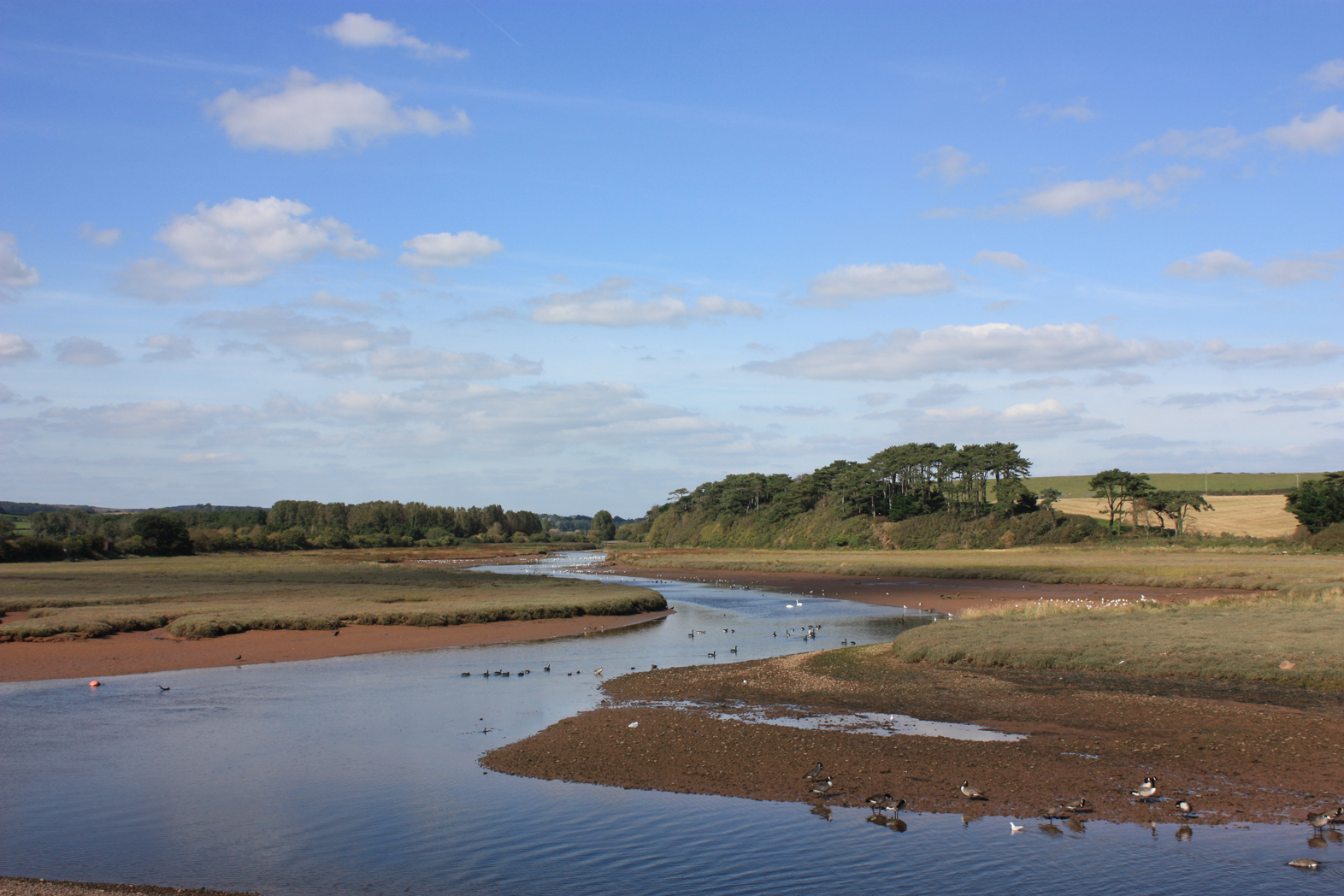
A few miles to the east is the river Otter – and yes, Otters and even Beavers have returned to the Otter!I’d like to be able to photograph them. otter
The river Avon is the furthest west, flowing into the sea near Bigbury, in the beautiful South Hams. avon
The river Teign flows down from Dartmoor to the estuary between Teignmouth and Shaldon. teign
The Dart also descends from Dartmoor to reach the sea at Dartmouth, via another of my favourite places, Totnes. dart
Back to east Devon, the Axe joins the sea at Axmouth, with Lyme Regis just around the corner in Dorset. axe
I’m going to end as I began, with the Exe. It may not be a mighty river like some around the world, but it’s my river and my soul is wrapped in it. exe descent

You can join in with the challenge and see lots more descents at,
http://dailypost.wordpress.com/dp_photo_challenge/descent/

Wistman’s Wood

It is believed that Dartmoor was almost completely covered in forest thousands of years ago, but it was gradually chopped down and used by the people living there at that time. Nowadays there are evergreen plantations and just a few natural woods remain, Wistmans Wood for one. It is a small, remote wood, just eight acres at a height of 1300 feet above sea leve,l with mostly oak trees, stunted by the poor soil and altitude. The surrounding area is open moorland, grazed by sheep, cattle and ponies. Without the clitter, fallen from the tors further up the hillside, the grazing animals would have put paid to Wistmans long ago. As it is, the clitter makes it impossible for them to gain foothold there.
Wistmans is one of many Dartmoor sites that is shrouded in myth and legend. Its name derives from Saxon wissen, to know, so Wissman’s or Wistman’s Wood, means wisemans wood and refers to the Druids and their sacred grove. You may indeed encounter the ghosts of druids past, if you dare to visit in the dark of the night. Far worse might be an encounter with the devil and his pack of fearful wisht hounds, Wistmans may be where he keeps them.
Rumour has it that adders lurk between every boulder, ready to strike if you dare clamber over, to find a path through the wood. What’s more likely to happen is that you will slip on damp moss and break an ankle, or worse, between these ancient granite rocks.
So brave traveller is you visit, listen for baying hounds, keep your eyes out for serpents, be careful what you turn your back on, and most of all if there’s a red flag flying stay away – the military have a firing area nearby and you don’t want to get shot!

Scarce hoarier seems the ancient Wood
Whose shivered trunks of age declare
What scath of tempests they have stood
In the rock’s crevice rooted there;
Yet still young foliage, fresh and fair,
Springs forth each mossy bough to dress,
And bid e’en Dartmoor’s valleys share
A Forest-wilderness”.
Sophie Dixon -1829.