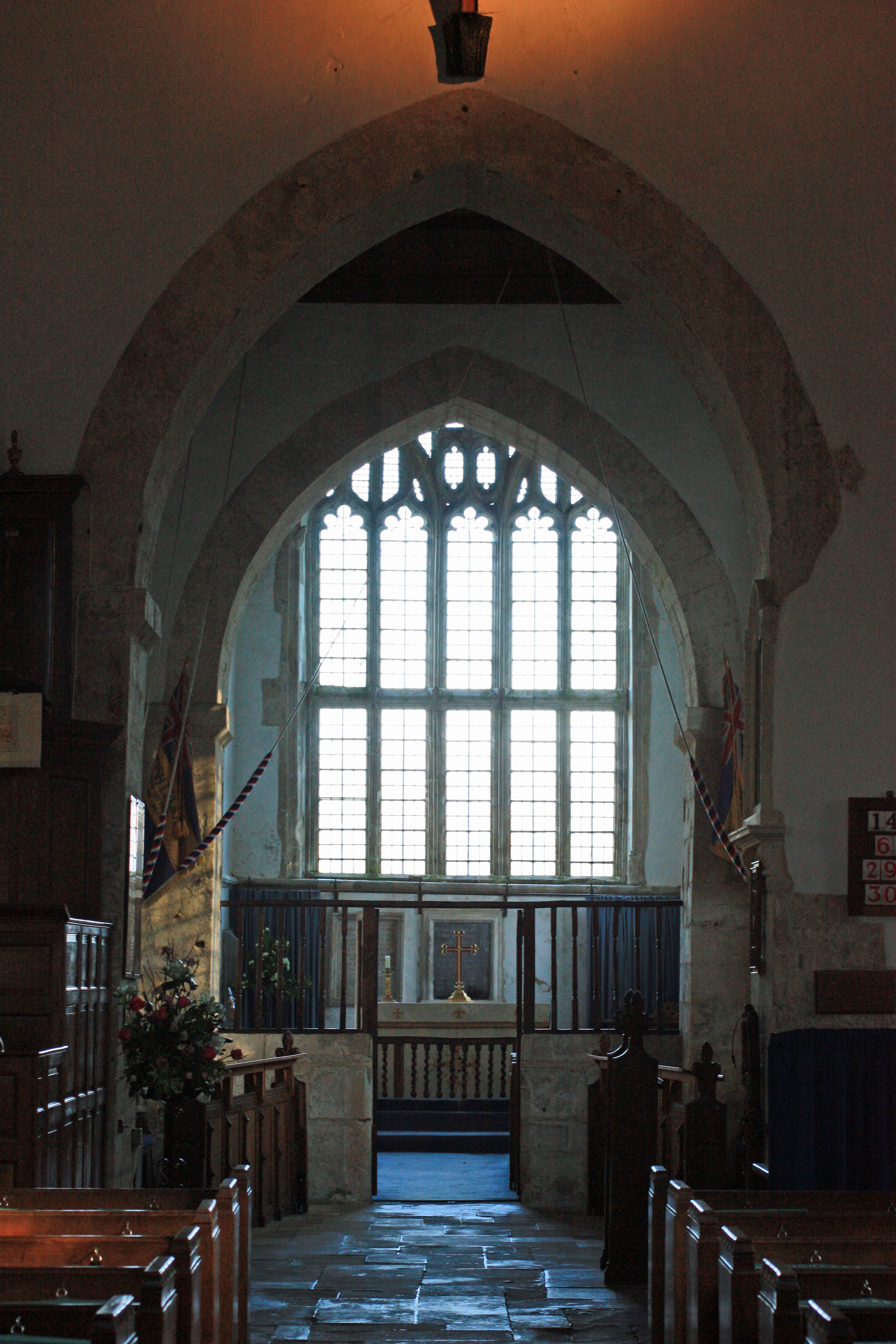
After leaving the beach at Branscombe yesterday we went up to see the church, St Winifreda’s.
Partly Saxon, but mainly Early English and Norman, there are some interesting and unusual features to be seen.
Like the Jacobean carved oak gallery above. And below, this 18th century three tier pulpit. The first tier is for reading lessons, the second for prayer and the top is for delivering sermons. I’ve never seen one before, have you?
St Winifreda’s has some beautiful little details to admire.
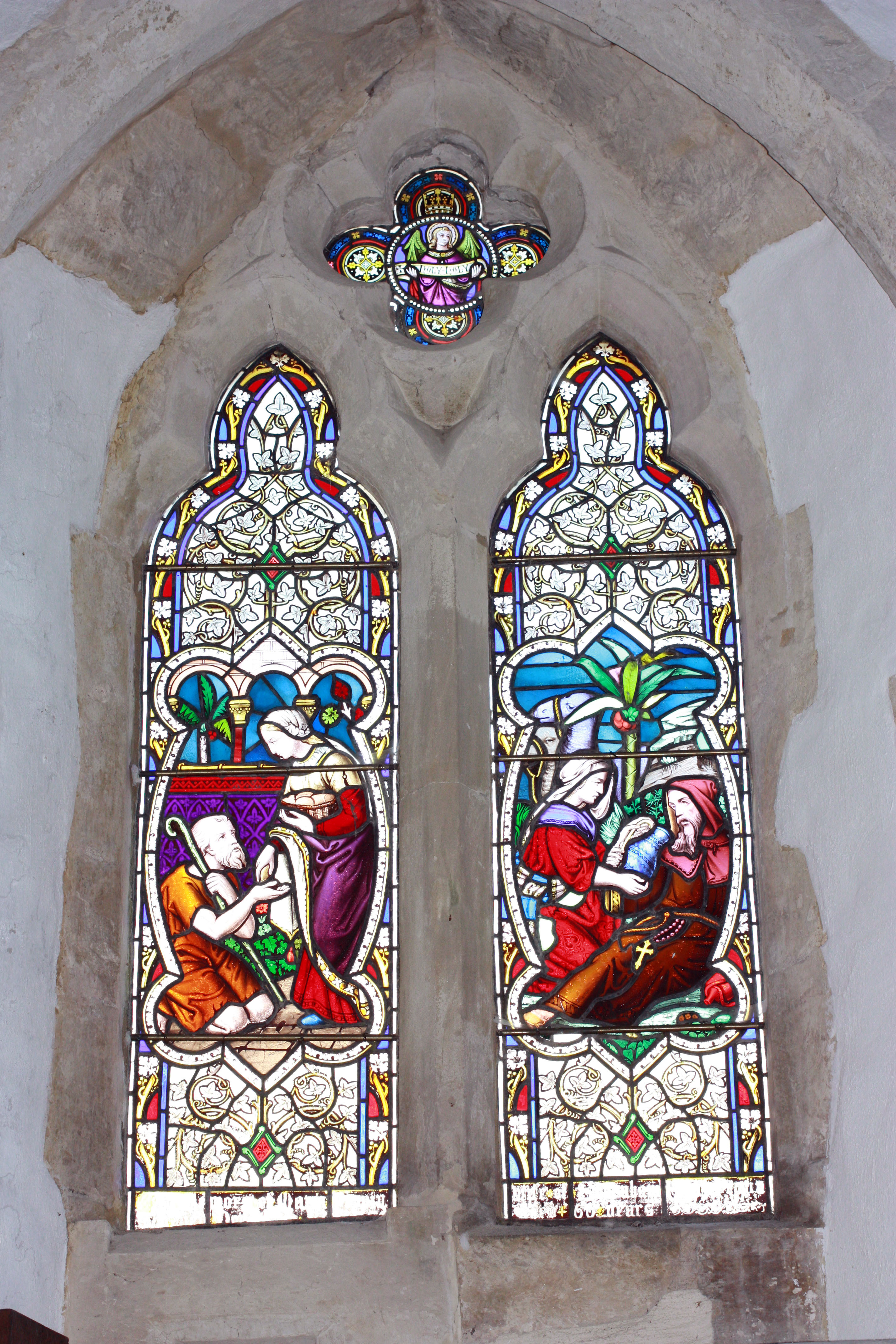
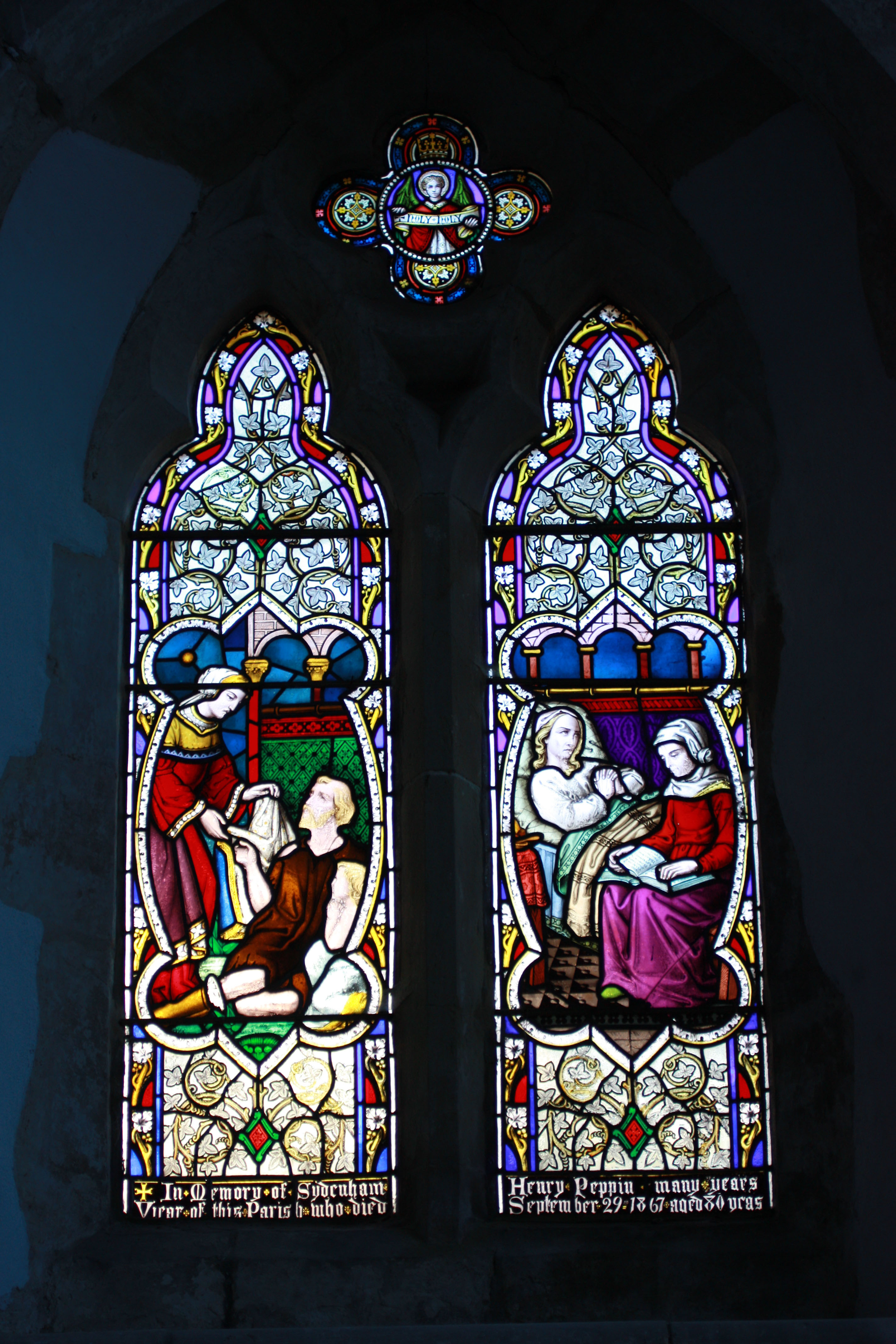
Just two of the windows were stained glass, but richly coloured.
Every pew had hand stitched hassocks, some in memory of parishioners, but also one for every monarch in English history. These are the most recent, Victoria, Edward V11, George V and GeorgeV1
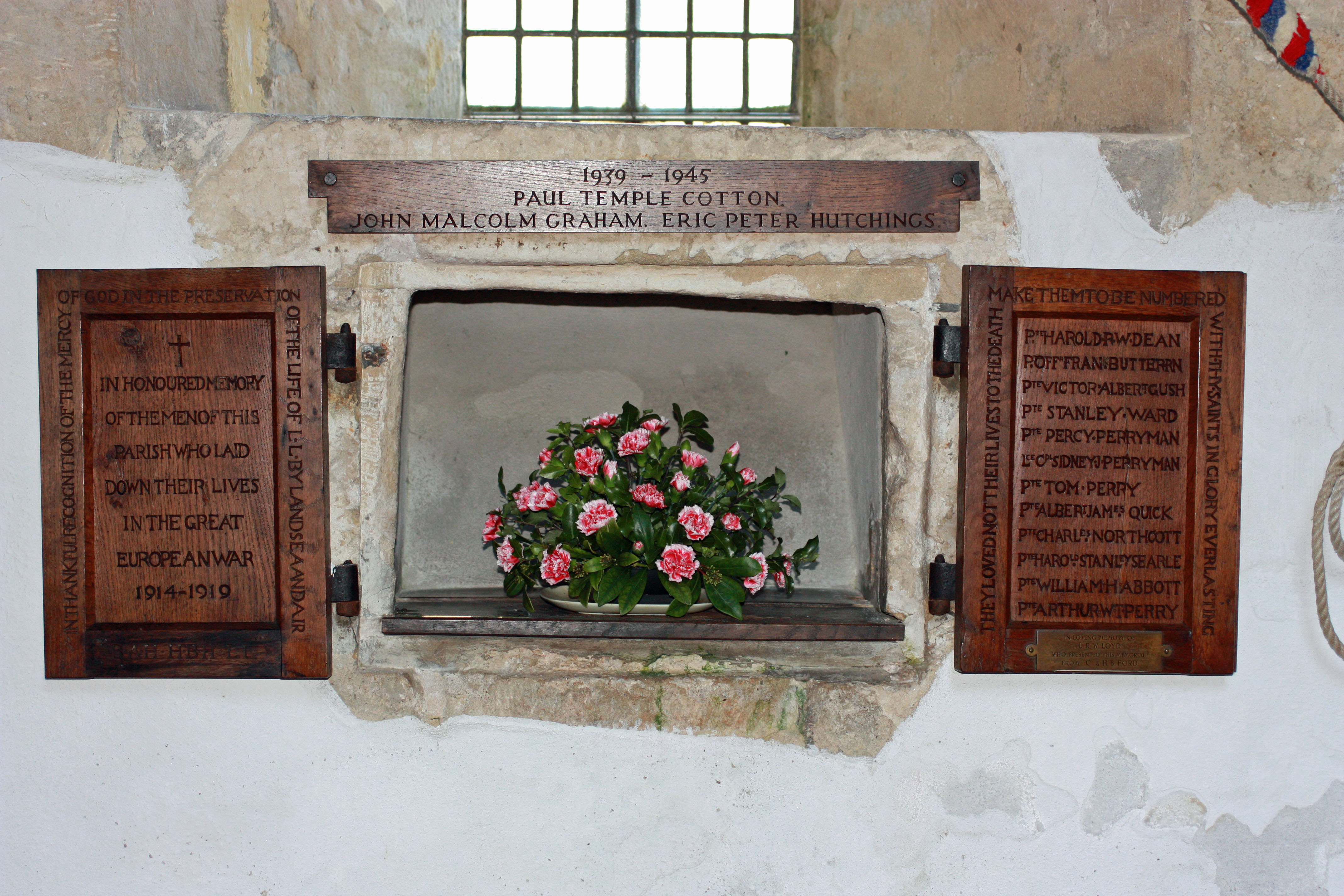
I thought this little niche memorial to Branscombe people lost in WW1 and WW2 was very special.
All in all , it’s a very special church. I like its simplicity, solid wood and stone floors and that it is so very ancient, how many hands have touched those old stones?
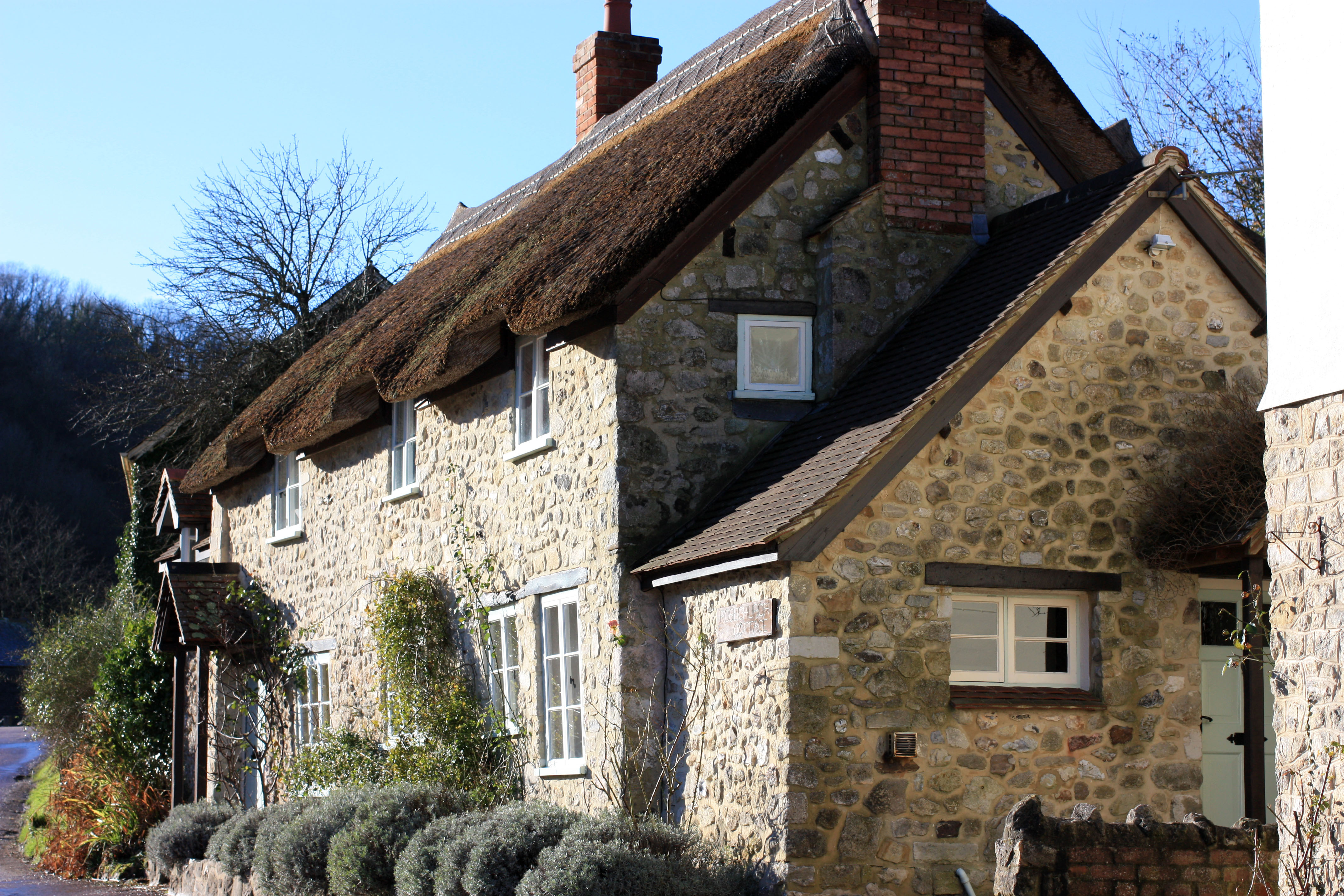
These pretty stone and thatch cottages are just along the road and that’s where I’ll leave you today!
The weather forecast got it right, yesterday was a blue sky day that shouted come and see me. So off we went, heading east to Branscombe, a little village on the coast between Sidmouth and Beer. A few years ago Branscombe hit the headlines because a huge container ship, the MS Napoli ran aground there spilling its cargo along several miles of coast line.
14 tonnes of anchor
How it happened
A sunny resting place
All is pristine now and once the long single track lane to reach Branscombe has been successfully navigated, it’s the perfect spot for some winter sun.
Heading out to sea
Towards Beer’s white cliffs
West towards Sidmouth
Cliff erosion
A little magic
Remains of autumn
Two very happy dogs, Dido and Daisy
Sunday was a day that kept on giving, more tomorrow!
I read about construction of a connecting section of the Exe trail some time ago and when I learnt that it had opened recently, I dragged the family out at Christmas to check it out. The trail covers about twenty six miles from Dawlish on the west of the Exe to Exmouth on the east and is part of National Cycle Route 2. Way back when I’ve cycled the west side, but now walking, camera in hand, on the east side is more my thing. I’ve shown you many photos of Topsham before and the new link begins at Bowling Green Marsh, from there it crosses the River Clyst via a new 120 metre bridge, which was floated down the Exe on barges. The bridge goes across the RSPB Goosemoor Nature Reserve, providing stunning views of the area that have never before been accessible.
Distant geese
Widgeon family
Widgeon flock
Towards Ebford/Exton
HIgh tide and floods
Hightide
The photos above are all on the original partof the walk.
Cycling over the bridge
Looking north from the new boardwalk
From the bridge to Odhams Wharf
A popular walk but I’m disappointed with the high sides
A whole new viewpoint
Peeping through the gaps
Over time the bridge and boardwalk will blend in. To be honest I’m disappointed that the sides are quite so high and there are just peepholes to look through, but of course the wildlife has to be protected.
It was a freezing cold day at the end of December but I’ll start at the bridge next time and head further east. It’s definitely a wonderful cycle route!
The thing I love most of all about travelling is meeting people and having glimpses into their world and way of being. There’s something very precious about these fleeting moments. One memorable encounter I had was in Ankara, where I met these women who immediately struck me with their warm open hearts. They were posing for photos in the Kemal Ataturk museum and they looked so beautiful that I asked to take one too.
Sadiman, on the right spoke English and was able to tell her family that I was happy to meet them and loved their country. We are still Facebook friends, as I am with Selin on the left. Selin was very young in my photo and I’m able to see her grow up through her Facebook photos. I don’t know the beamings mamas names, but through smiles and gestures we shared something special to treasure.
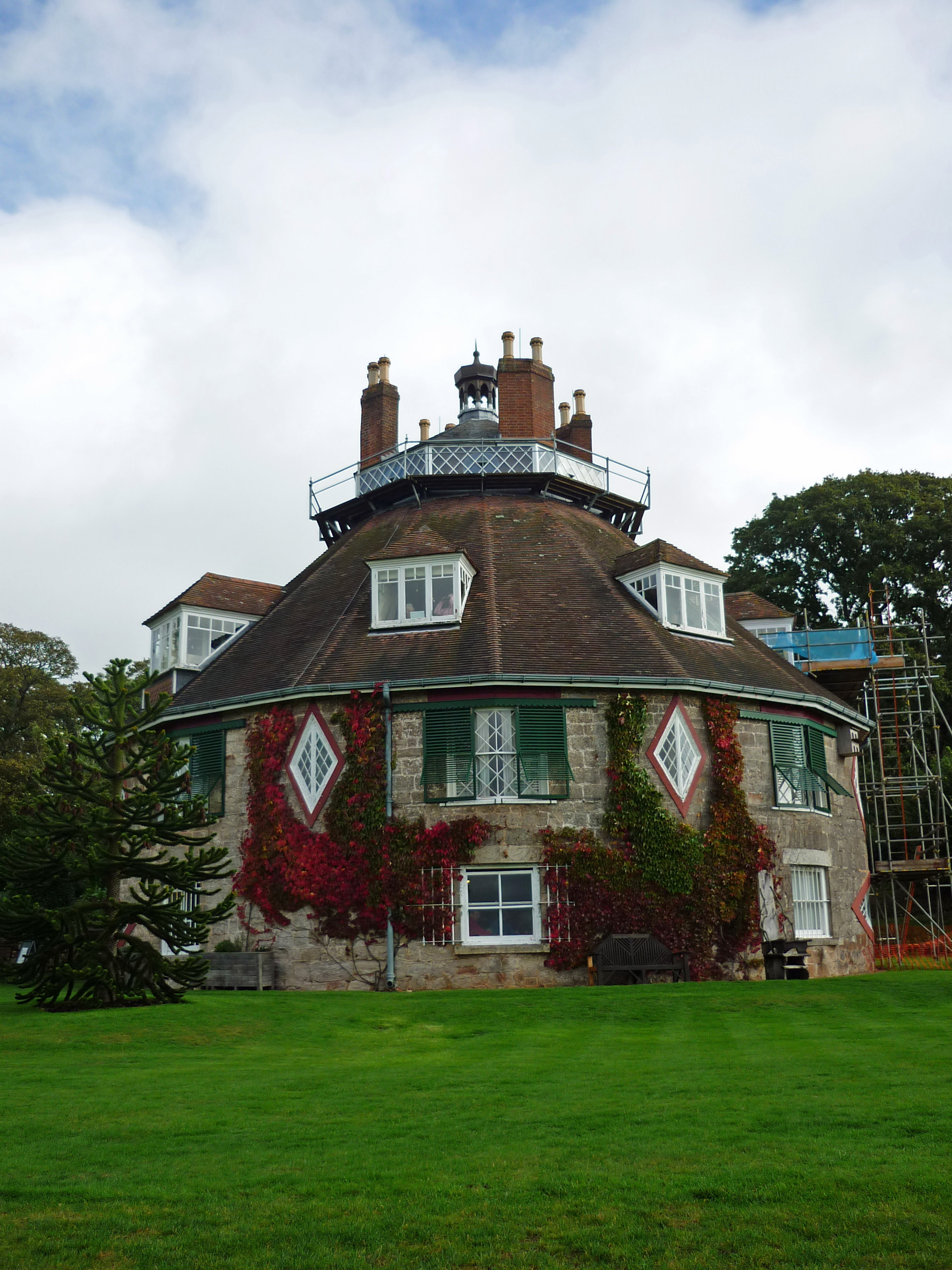
Just a few miles south east of Exeter is the National Trust property, A la Ronde. The house was built in the 1790’s by Jane and Mary Parminter. The two ladies , cousins, had a real sprit of adventure, and I’m sure if they were alive today they would be trekking the Sahara or leading expeditions to the polar regions.
They lived at A la Ronde for fifty years, filling it with things they had collected on their Grand Tour.
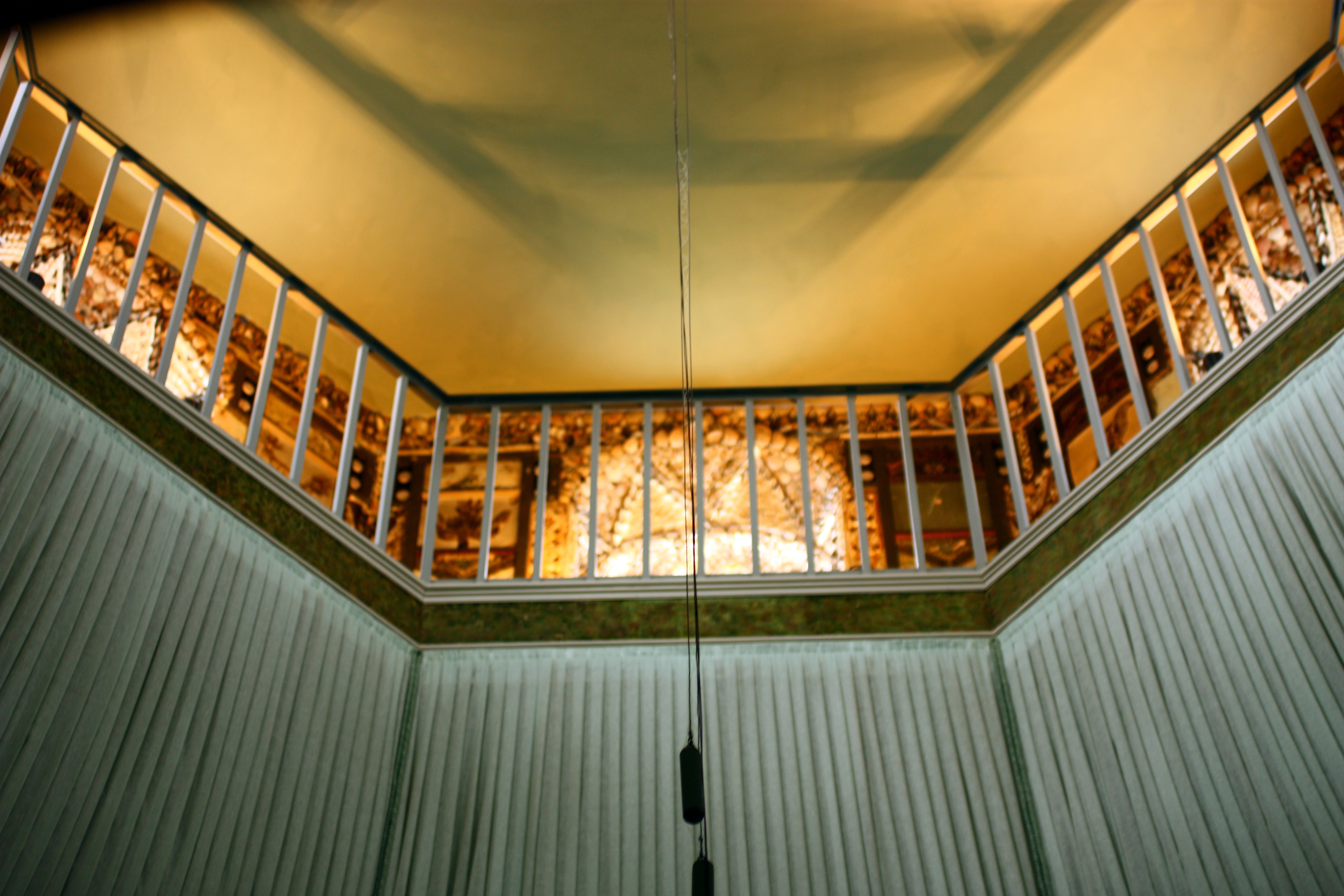
Although the name implies that the house is round , it actually has sixteen sides, it’s unique design takes advantage of natural light as the sun moves around through the day. The lower level that you see above is used as the restaurant by the National Trust, the diamond shaped windows are the ground floor. At the centre of the house is an area that rises to the top floor gallery with doors all around it.
It’s really difficult to take photos inside, flash is not allowed, and I’m too lazy to use a tripod. The answer is a very wide angle lens, patience with many other visitors and a steady hand. But here are a few interior shots.
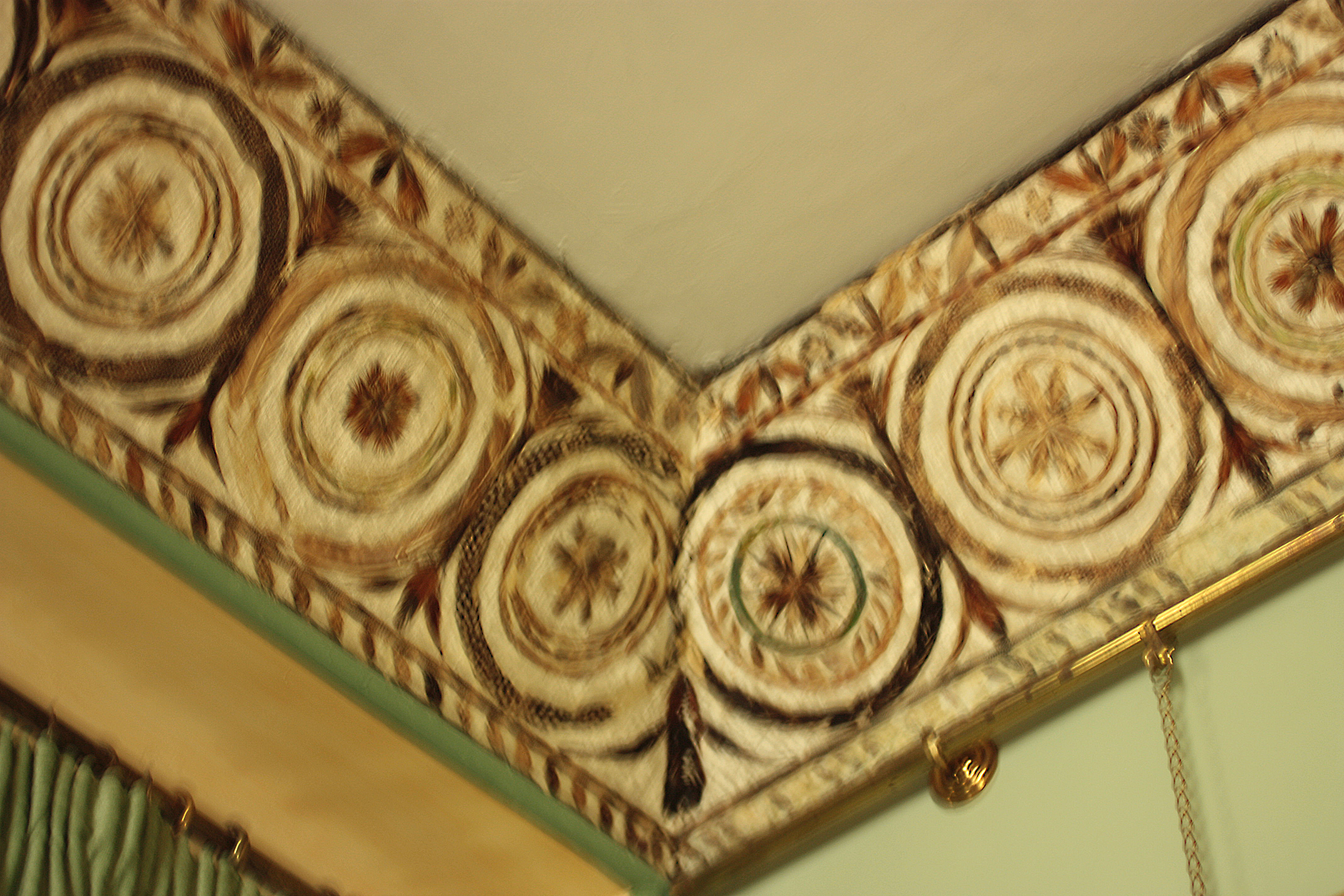
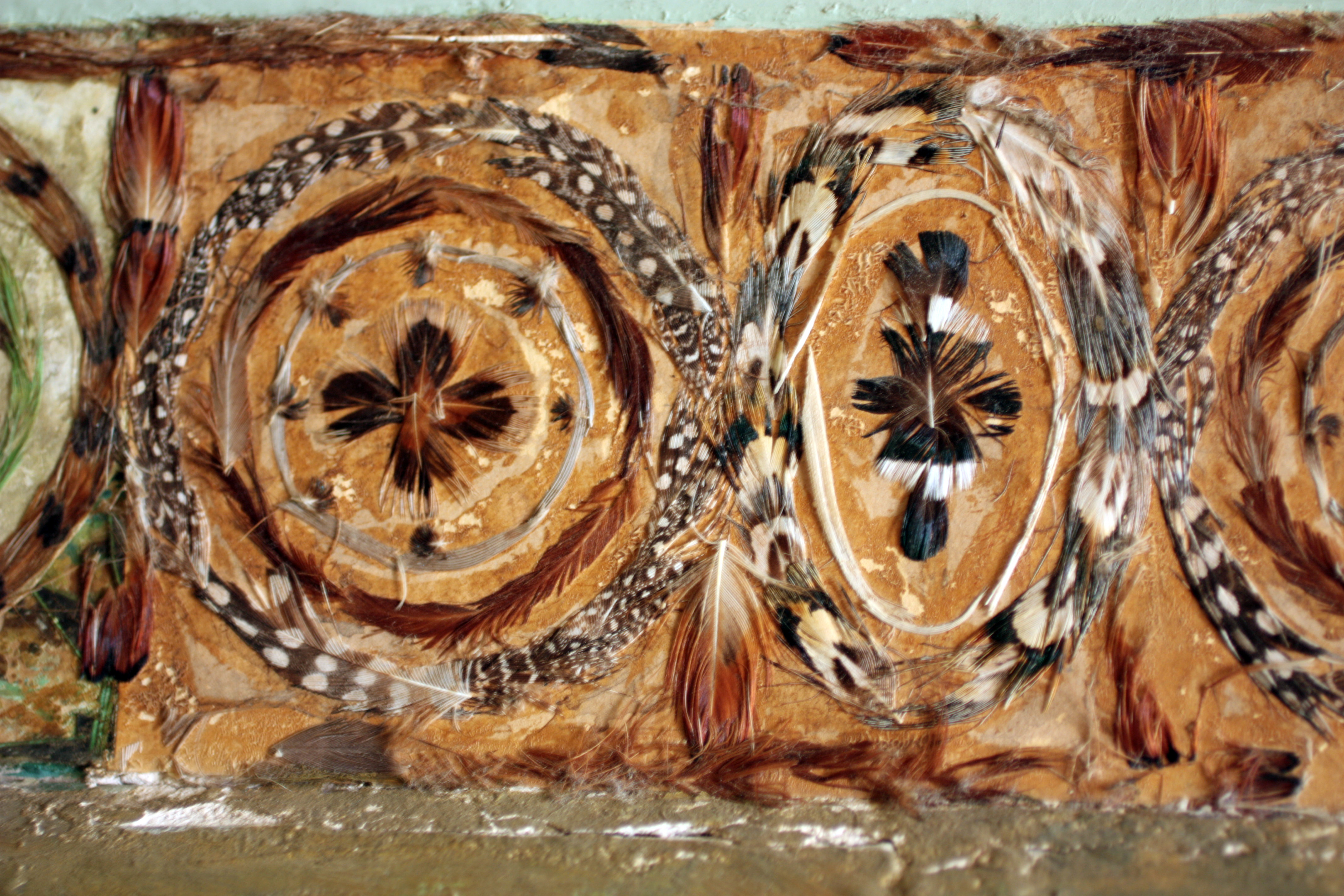
The ladies had several passions that filled their days, embroidery, shells and feathers to name just a few. The drawing room has been hand decorated by them with a feather frieze all around the room.
The feathers come from chickens, game birds and even parrots and have been applied with isinglass.
When I last went to A la Ronde thirty years ago, it was a private group visit and I didn’t really appreciate it. I did get to see the highlight of the house, the famous shell gallery. It’s closed now to preserve it for the future. With the help of well placed mirrors, you can get a tiny peep at it from the floor below, and this is my shot from the central room on the ground floor.
I asked one of the volunteers if she had been allowed up there and even they aren’t. So the photos below are of photos on display so that visitors can get an idea what it’s like. What is it like? beautiful, bizarre, indescribable. To think that these women spent probably years creating this.
This slideshow requires JavaScript.
So that’s A la Ronde, maybe one day you’ll visit if you’re in Devon, I promise you it’s like nowhere else anywhere!
When a friend of mine said she was plannning to start a blog about her beautiful creations, I immediately asked her to write an article for me. Paula makes exquisite, handstitched historical costumes, think costume drama, Elizabethan gowns, Renaissance garments embroidered with pearls, just as you imagine ladies in the Royal Courts of byone days wearing. If you are at all interested in history, you will love Paula’s work.
This is what Paula said.
My passion was awakened at the age of six when my Grandma gave me a children’s Singer sewing machine. It was basic, with only a chain stitch, but this was how I created clothes for my dolls. I was also intrigued whenever I saw Tudor portraits and people wearing sumptuously highly decorated materials that twinkled with gold embroidery entwined around precious jewels and pearls.
Tudor reproduction, Buckland
Little did I realise that this ‘magpie’ instinct would lead me to other things later in my life! As a child my greatest joys were the sewing lessons at a convent school. The hours of tedious theory and early lessons in practical applications have stood me in good stead and became the building blocks for this lifelong passion. Quickly these lessons developed a pattern. I would carefully cut out my project and prepare the ground work with tailor’s tacks before going home. By the time I returned to class a week later, the garment would be complete and my teacher would try hard to find fault but never did! My exam results were always in the high 90s. To some this might sound big headed but to me it was a natural process like breathing. As a teenager I was always making my own clothes, this then continued when I married and had children of my own. At one point I even worked in Quality Control in a busy factory manufacturing shirts. All these added to my knowledge of construction.
Like many I have dabbled in various forms of needlework apart from making clothes. For many years I created cross stitch pictures, some took months to complete but it was a great way to learn patience. Then twenty years ago I decided to take my City & Guilds in Creative Studies. At the same time I became a re-enactor in a large 17th century based society called the Sealed Knot. This was heaven for me; finally I found a way to marry together my keen interests in textiles with historically based garments. The C&G gave me the much needed inspiration to research, experiment and improve my needlework skills. Quite early into the C&G studies I decided not to make samples that sit in a box under the bed, if I was going to make things, I also wanted to use them!
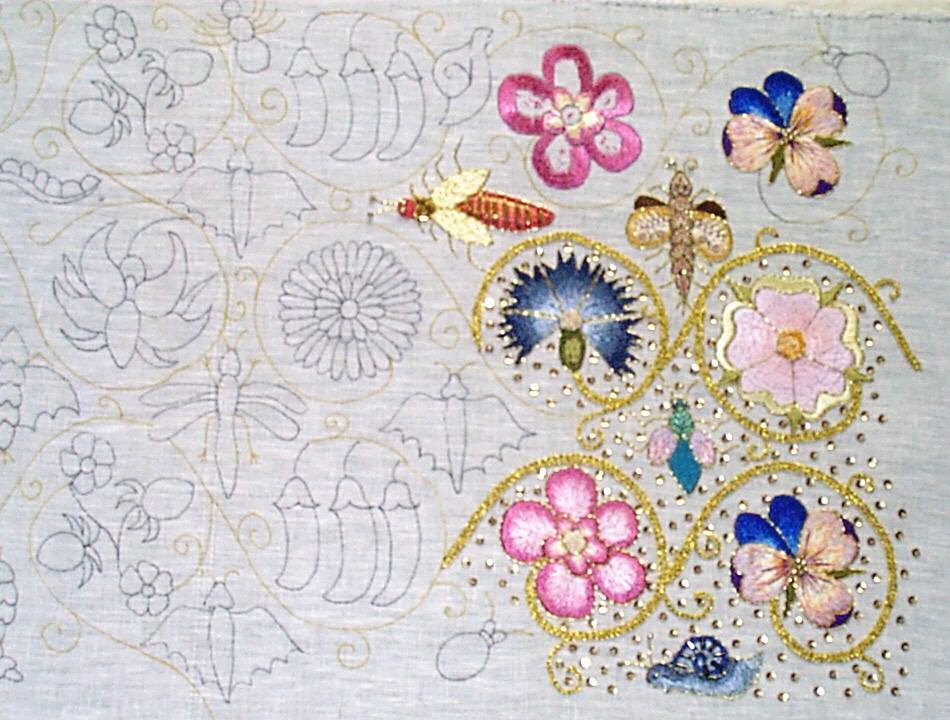
This is my reproduction of a 17th century coif panel in progress.
Research, research, research became my mantra. I couldn’t get enough of it. I toured museums in Scotland and England to feed the frenzy of more knowledge. Books, postcards, photographs and notes quickly filled and previous voids in the house! Creation of costumes was another aspect. Modern dressmaking techniques just didn’t produce the correct finished lines so I adapted and realised that this was more like engineering construction as opposed to the more usual dressmaking techniques.
I revelled in the museum visits; the hours spent practicing my new embroidery skills and even relished the research/design processes. Members within the Sealed Knot began noticing the outfits I was making for myself and the family. These differed greatly from the usual costumes that the members saw at the weekly musters and often I would be approached by others to see how I had constructed my garments. Frequently I would receive comments like ‘You look like you’ve walked out of a Vermeer painting’ or ‘How come we can’t get ours to look that good?’ but the best remark was ‘This is how we should be looking!’ You just can’t get better compliments than those from your peers.
A chance request from a local Embroiderer’s Guild to do a talk gave me another avenue to explore. It was then that I went out doing just that, speaking to groups and finally exhibiting at Sulgrave Manor alongside other known embroiderer’s and costume makers. One of the strangest was to address a group of metal detectorists but they gained an insight as to how buttons (that they frequently found) were made and how they were utilised on an historical doublet.
An example from Buckland Abbey
So what now? Life, like for most people got in my way. I had to turn my back on this enjoyable aspect of my life to earn a living but more recently, to gain an honours degree. I am now ready to take up my needle again. Life has thrown another curveball in my direction and the need to develop another way to earn my living. Yet again, I am planning to pick up where I left off but this time with even more appreciation of the history and skills my forebears put into their textile creations. My interests have now widened to encapsulate different historical periods. Already my brain is leaping somersaults and I can visualise medieval motifs aping the exquisite illuminated manuscripts that were a sign of conspicuous wealth. The Viking Age is another aspect that I would love to indulge in. Mythical beasts sinuously curving around golden stitches and intricate Celtic knot patterns seem to fill my imagination.
I am looking forward to 2014 and being able to start in a new direction. My acquired skills from a lifetime of sewing, my C&G and degree studies are now enthusing me to start researching again. I have taken up knitting too as perhaps my eyes and hands are no longer up to more intricate works that previously I could spend hours working at. Until I try I won’t know what I am capable of, but one thing is sure, I will fully enjoy whatever way my future interests will take me!
Paula Kelly BA (Hons).
I hope that you will all pop over to Paula’s new blog. If you follow her it will be interesting to see her blog develop and her work evolve , a real treat for the history buffs amongst you . She can be found at
Windows are everywhere. Depending on where you are — your bedroom, your office, a hotel room, or a tiny tourism office overlooking a lively street in a beach town in the Dominican Republic, shown above — a window can reveal different things.
They are portals into the world’s stories. Glimpses into other people’s lives. Looking out (or into) a window can tell you about where you are — and where you’re not — and mark a particular moment in time, linking you to a physical place. Windows are also enablers of our daydreams and desires, and can stir up memories and big ideas.
This week, in a post created specifically for this challenge, share a photo with a window, say Cheri Lucas Rowlands at the Daily Post.
This photo was taken on a balmy summer evening from inside one of my favourite restaurants. It is looking across the green at the Norman Cathedral of St Peter, here in Exeter. There can be few better views to enjoy while waiting to be served and the photo – with my phone – doesn’t do it justice, so you’ll have to imagine the rest or search my tags for other posts about the cathedral!















 Lucid Gypsy