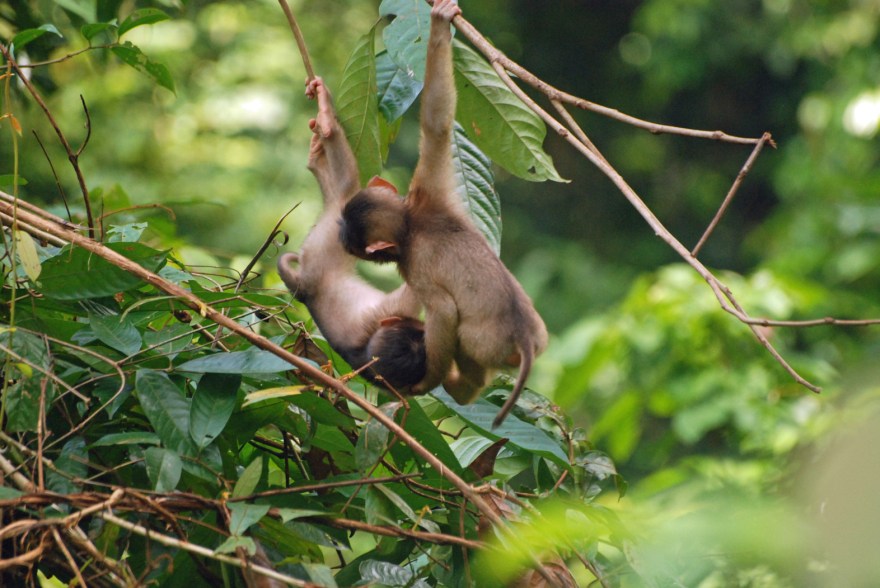
Sabah, Christmas 2009, at the Sepilok orang-utan rehabilitation centre. I was beginning to feel pretty rough, dizzy in fact and I didn’t get better for a few days. It was annoying because we’d found somewhere to have an English Christmas dinner and I could only watch my friends enjoying it. Before that though, I’d seen a troup of orangs arrive for lunch in the centre. There were lots of long tailed macaques, cashing in on the free tuck. Very cheeky monkeys, who would sneek up behind you to see what they could find. Like the baby orangs they were cute when tiny, but here are a couple of pre-teens.
I don’t know what they were up to but they were definitely partners in mischief!
Yesterday I grabbed a little bit of sunshine and walked the dogs in towards town, with no particular plan. They aren’t very keen on the High Street, so I took a right and headed up Northernhay Street to the park. It was the first time I’ve been there for years and a perfect day for a peaceful stroll. Back in the days when I worked in the Civic Centre, it was a regular lunchtime spot in summer. When I was little and when my own children were, it was a favourite spot, along with the adjoining Rougemont Gardens, for roly-polys, so there I was again.
At the Gate
The first borders on my left were mostly new to me.
This slideshow requires JavaScript.
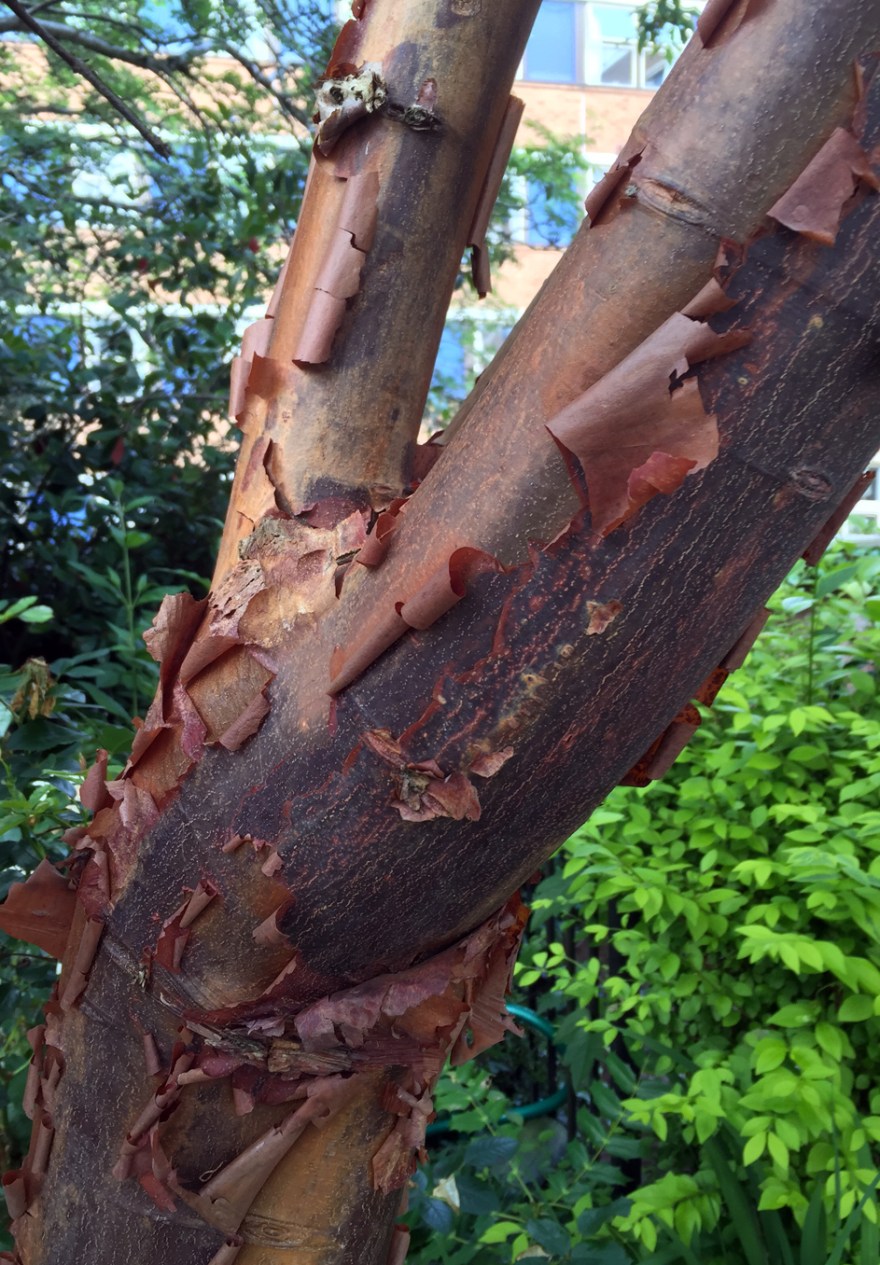
And I don’t remember this Paperbark Maple (Acer Griseum)
Acer GriseumStunning borders
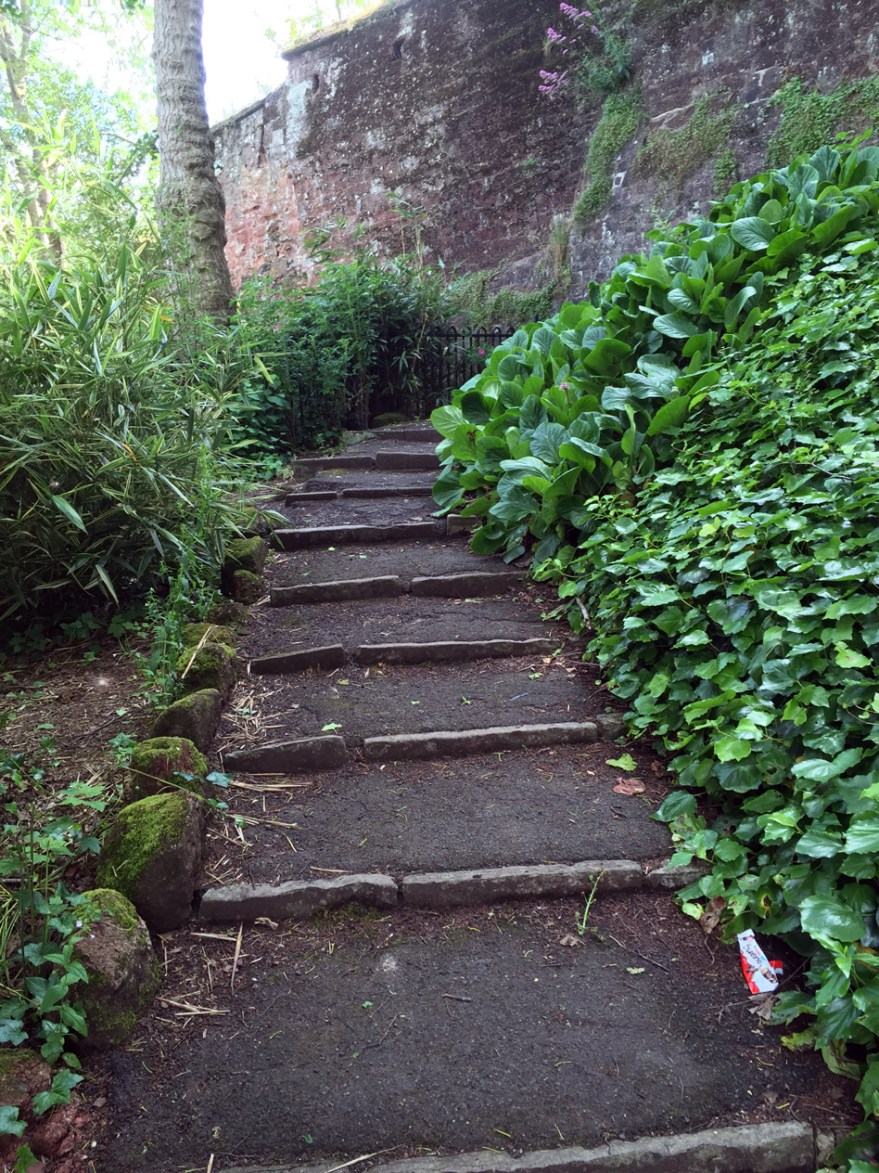
Time to walk up the steps
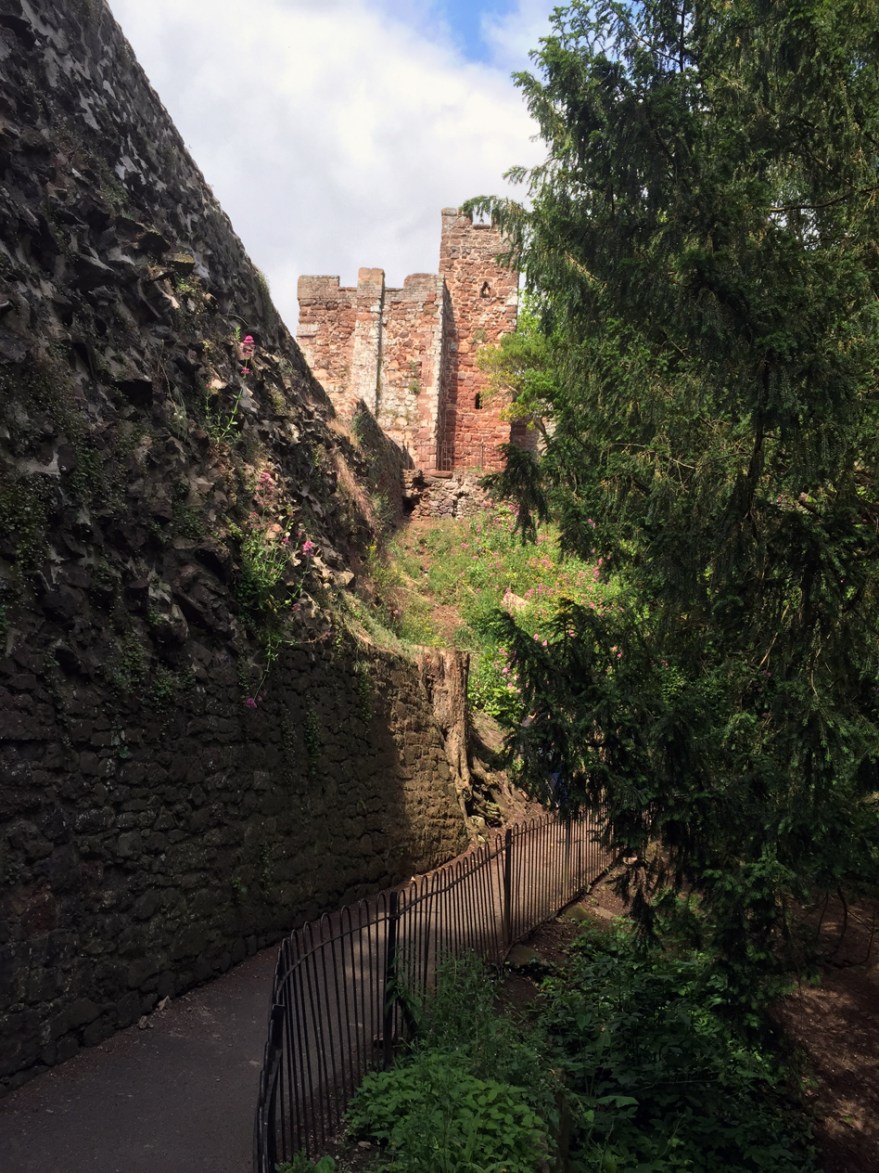
This is part of the old city wall.
But it feels like I’m walking in the woods.
One of the old gates, walking on past there are places to peep through.
Dido and Daisy prefer the shade and would like to run off into the trees, I like the sun on my face.
One of the city’s great and good on a nice curvy path
This wall cries out to stroked.
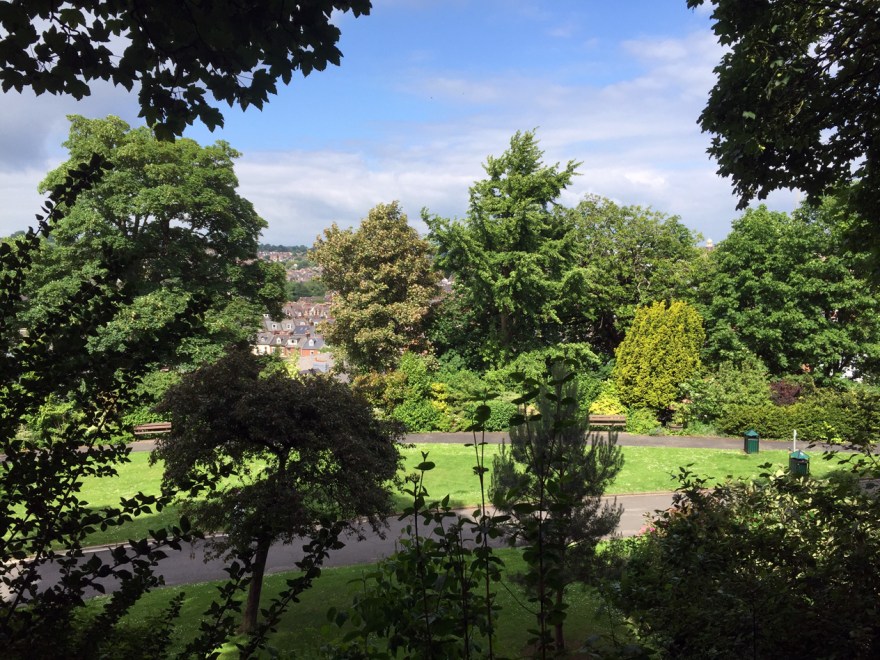
Ahh more steps!
But the view makes it worth it.
This is the entrance I was looking for. The path through Athelstan’s tower leads to Rougemont garden where you can walk inside the wall.
This slideshow requires JavaScript.
I didn’t linger in Rougemont, a sign said no dogs, but I ignored it long enough to spot the teenagers through the trees above.
And to get another angle on the tower.
Okay, time to follow the rules and back through to Northernhay. By the way the ‘hay’ part means field and we have Southernhay as well.
A rather show offy foxglove variety.
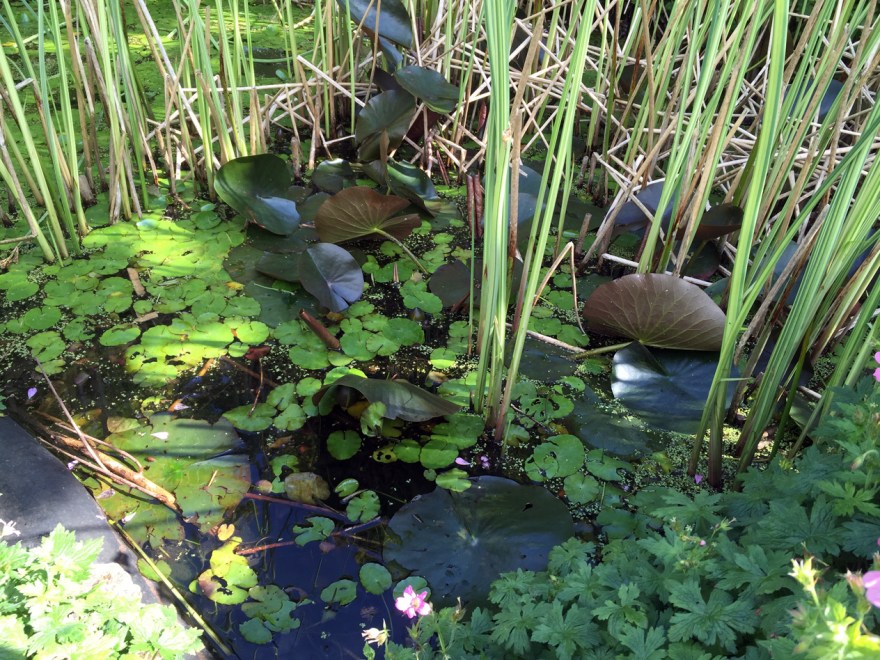
I walked up past the war memorial, to the little pond at the bottom of the slope.
When I was little there were goldfish that I loved to see, but no-one’s home now.
This is a short circular walk, part of the longer City Walk Trail, perhaps I’ll take one of the Redcoat Guide tours one day. For now I’m nearly back to the beginning, with the wall high above me. Northernhay is actually England’s oldest public space, it was created as a pleasure walk for local people in 1612, 400myears and still giving pleasure. I hope you enjoyed it, are you walking with Jo this Monday?
A last little bit of treasure.
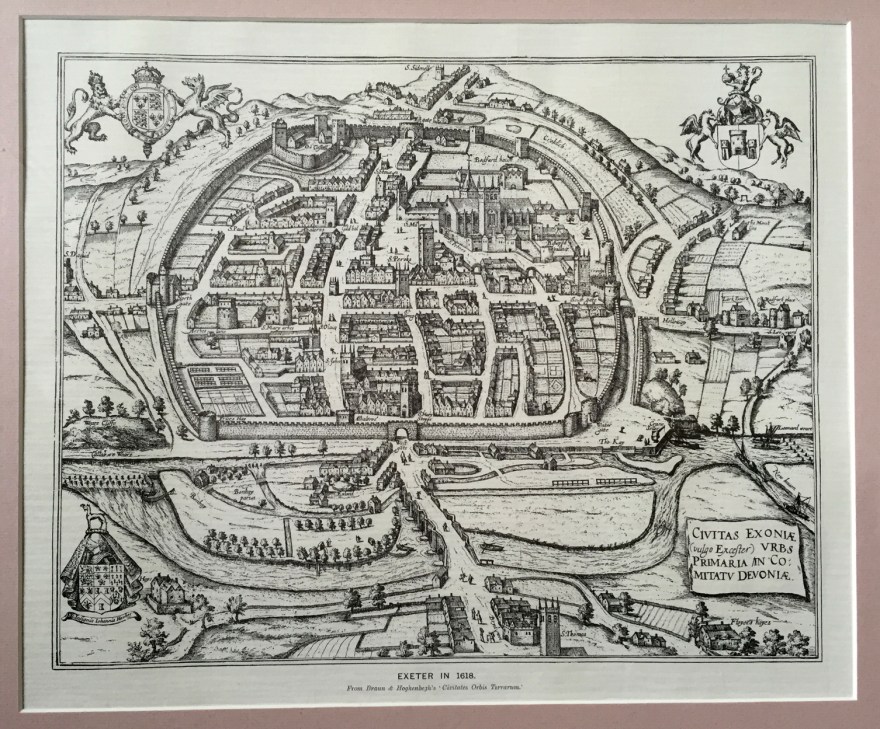
Exeter’s history began nearly 2000 years ago, when the second Augustan Roman legion settled here in 55AD. A fortress was built overlooking the lowest crossing point of the Exe, known as Isca and manned by 6000 soldiers. An earth and timber rampart with a deep ditch in front protected the fortress.
Over the centuries the original grey volcanic rock was repaired using Heavitree Breccia, white Triassic sandstone and a pink Permian sandstone was used in the 17th century.
When the fall of the roman empire the city was pretty much abandoned and the land inside the wall returned to farmland, and little is known until Saxon times and from the 9th century the city grew quickly becoming one of the most prosperous in the country.
King Athelstan is credited with repairing the wall in time to withstand Viking attacks in 1001 AD and William the Conqueror in 1068 AD.
This photo is of a print I have, showing the city in the 17th century with the wall still intact, about seventy percent remains now. You should be able to click for a bigger view.
Cheri at the Daily Post has chosen the theme of curves for this weeks photo challenge. I have a friend who likes straight lines in imagery, but I’ll always choose the curves and swirls we find in nature, in any design or art.
I took this first photo a few weeks ago at Coldharbour Mill, in east Devon. It was leaning against a wall at the back of a courtyard and I had to capture it.
Next, there’s a humpy hedge behind these curvy evergreens. Apparently when it was a baby hedge, there was a very harsh winter and it was weighed down by snow. The gardeners tried to repair it, but failed and knowing they’d lost the battle, they decided to allow it to grow it’s own curvy way.
Pamukkale is a town in Western Turkey and its name means cotton castle. Part of the landscape looks like a large terrace of ice, but it is in fact a travertine terrace formed by mineral rich water cascading down a steep valley.
When I went, you could walk on the terraces, barefoot and at your own risk, because they were rather slippery. Now I believe you can only look from above, well done turkey for protecting this very unusual Unesco site. On a sunny day the surface looks turquoise, but here under a grey sky, and looking into the misty distance the landscape looks quite spare.
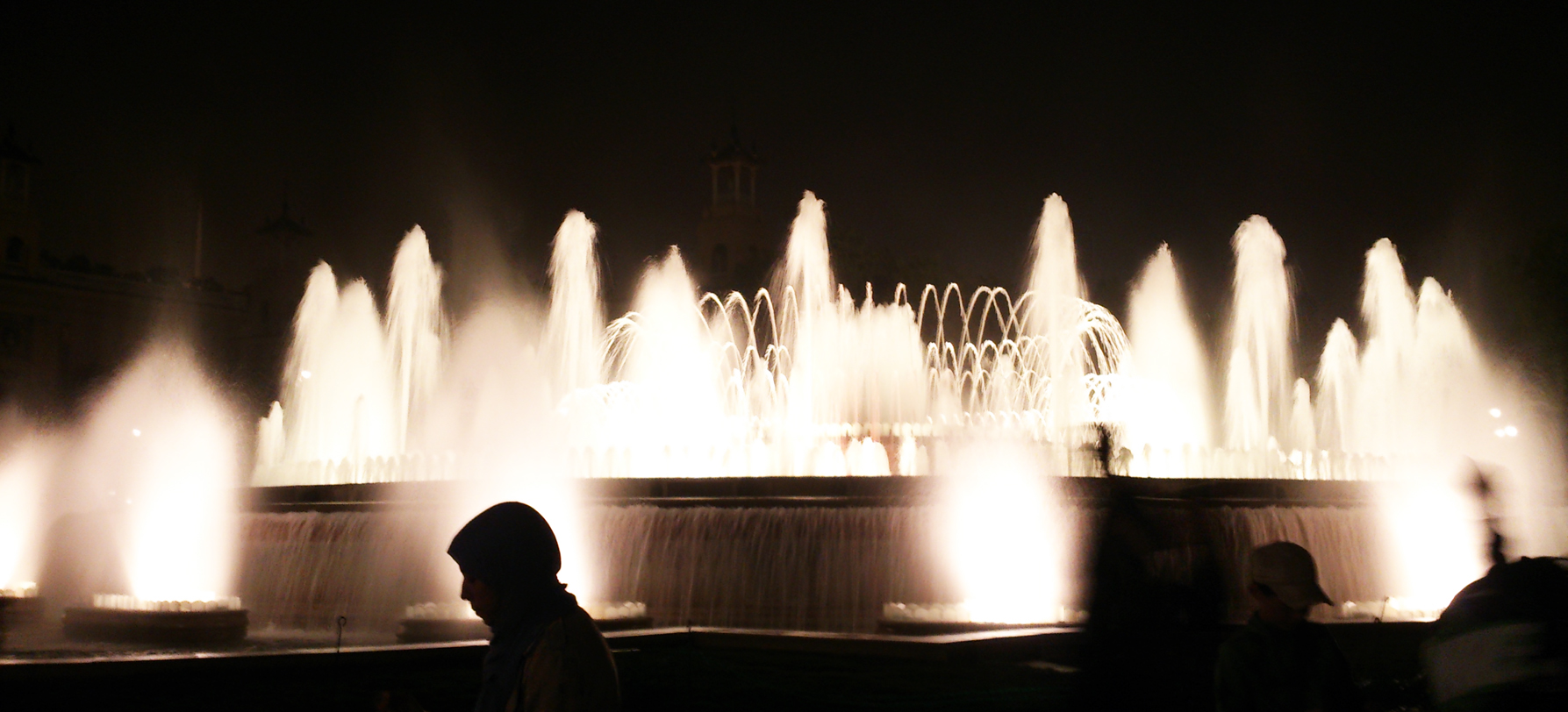
It’s Paula’s special Thursday and I’ve got the day right! Paula says that we all need light and glow in our lives, and she wants to see glowing images. I’ve picked this one from Barcelona last year, maybe I’ll get a better shot when I go back in September.If you want to join Paula with a glowing image she would be delighted.
I had to work out from dates where I took this photo. I know it was near Techiman, perhaps Baobeng Fiema in the Brong-Ahafo region. But I’ve never forgotten the joy on these children’s faces, jubilation even. They will be teenagers by now, I wonder how their lives have evolved.
Last Sunday afternoon I paid a flying visit to Lanhydrock, a National Trust property in Cornwall. Arriving just before 2.30 there wasn’t much time to linger, and after the bluebells, the grounds beckoned.
Down the long drive we go.
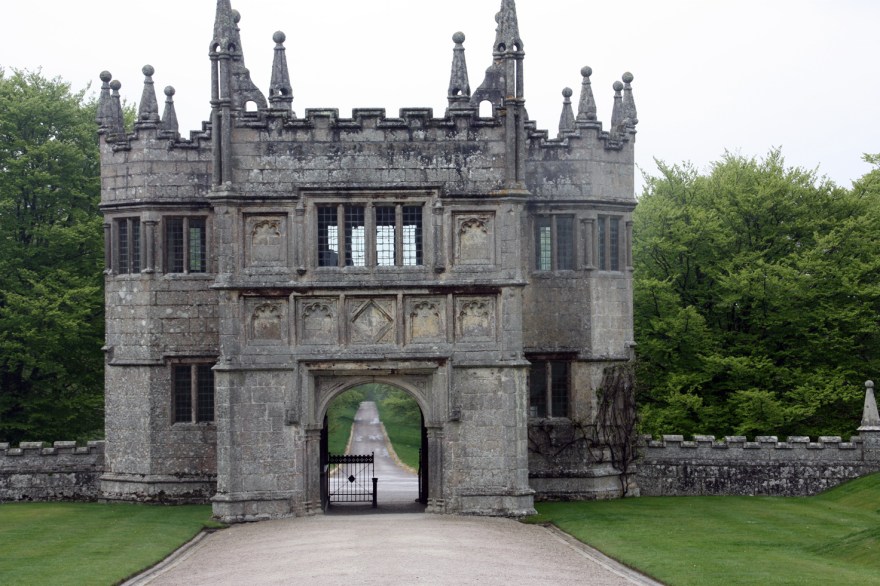
Here’s the gatehouse.
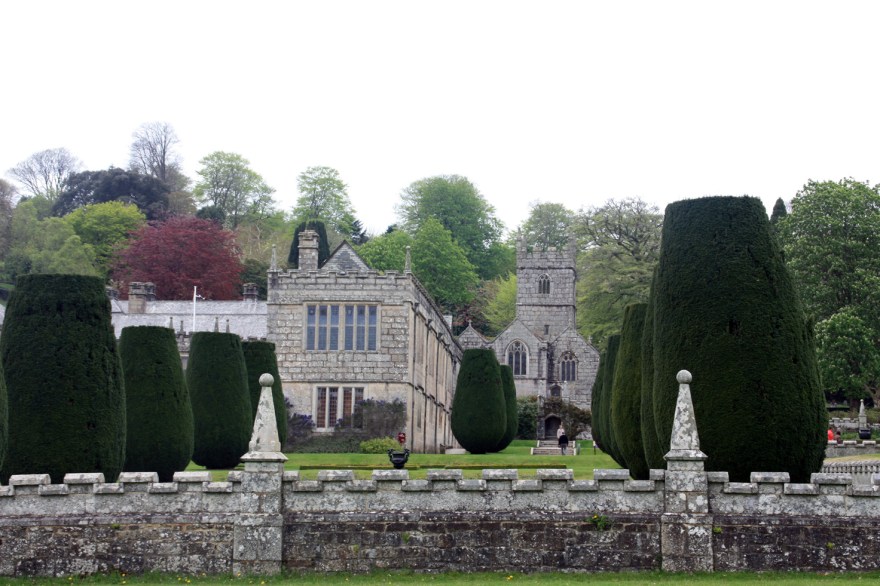
First look at the formal gardens, with the chapel in the background.
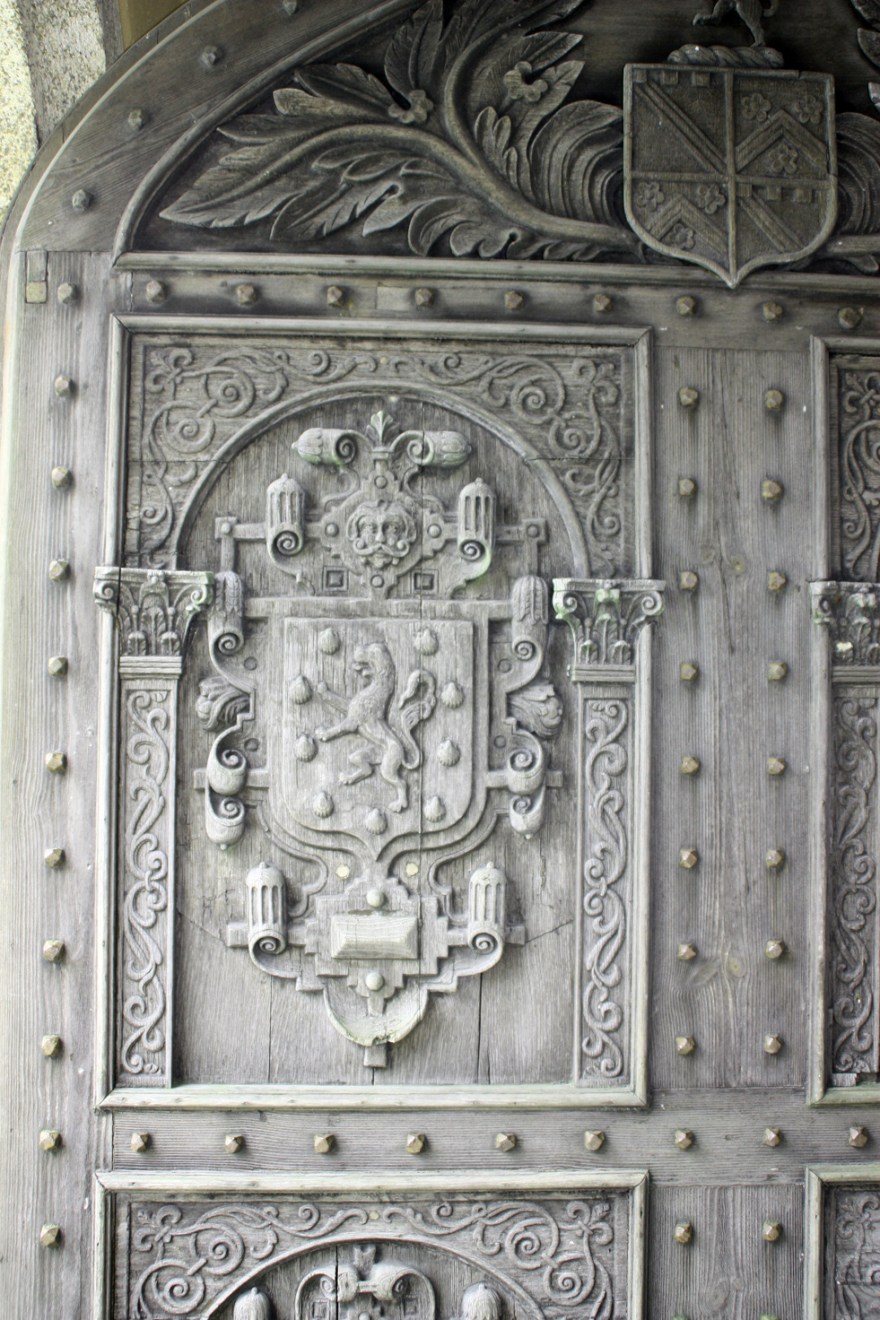
Part of the gatehouse door.
It’s raining so I’m going inside the house and I may take you one day, but for now you can see the view through some of the windows.
This slideshow requires JavaScript.
After exploring the vast house full of treasures great and small, I resisted the gift shop. Luckily my friend didn’t, so there was fudge to share 🙂 and this door led to the courtyard.
Where an equally handsome door was firmly closed.
We head around the corner, where a very pristine garden waits.
This slideshow requires JavaScript.
Which isn’t really my cup of tea, I prefer a far less structured, wild look, but I can still admire one occasionally. The rain is annoying now, the mizzely kind that while not heavy, get’s you very damp. We walk back through the gatehouse,
wishing for more time to explore the windy paths.
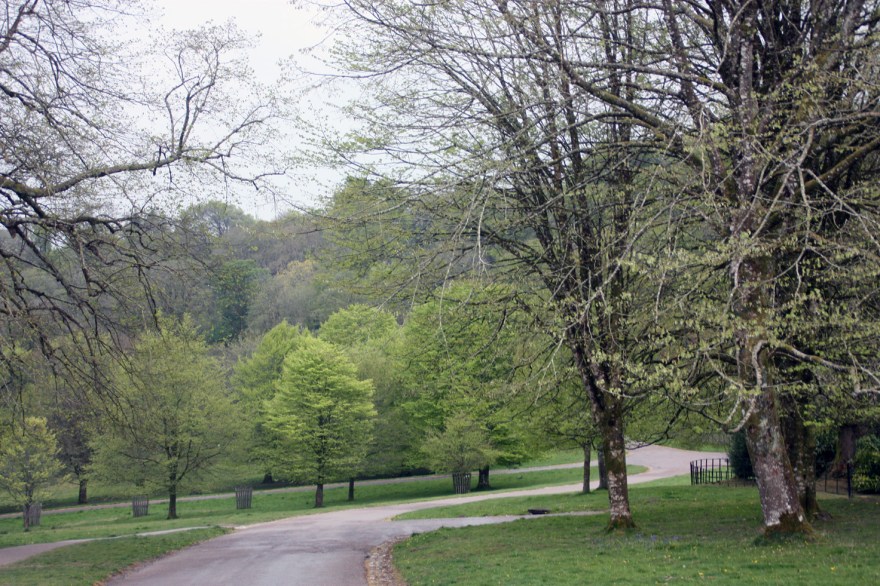
And back up the long drive to where we began, passing the bluebells growing on top of the banks, with late primroses at the bottom.
I’m sharing my Lanhydrock visit with Jo. She’s been travelling Europe for weeks, but I think she’s still walking for Mondays,
For this weeks photo challenge, Jen H askes that we share our vision of our magnificent earth through our lens.
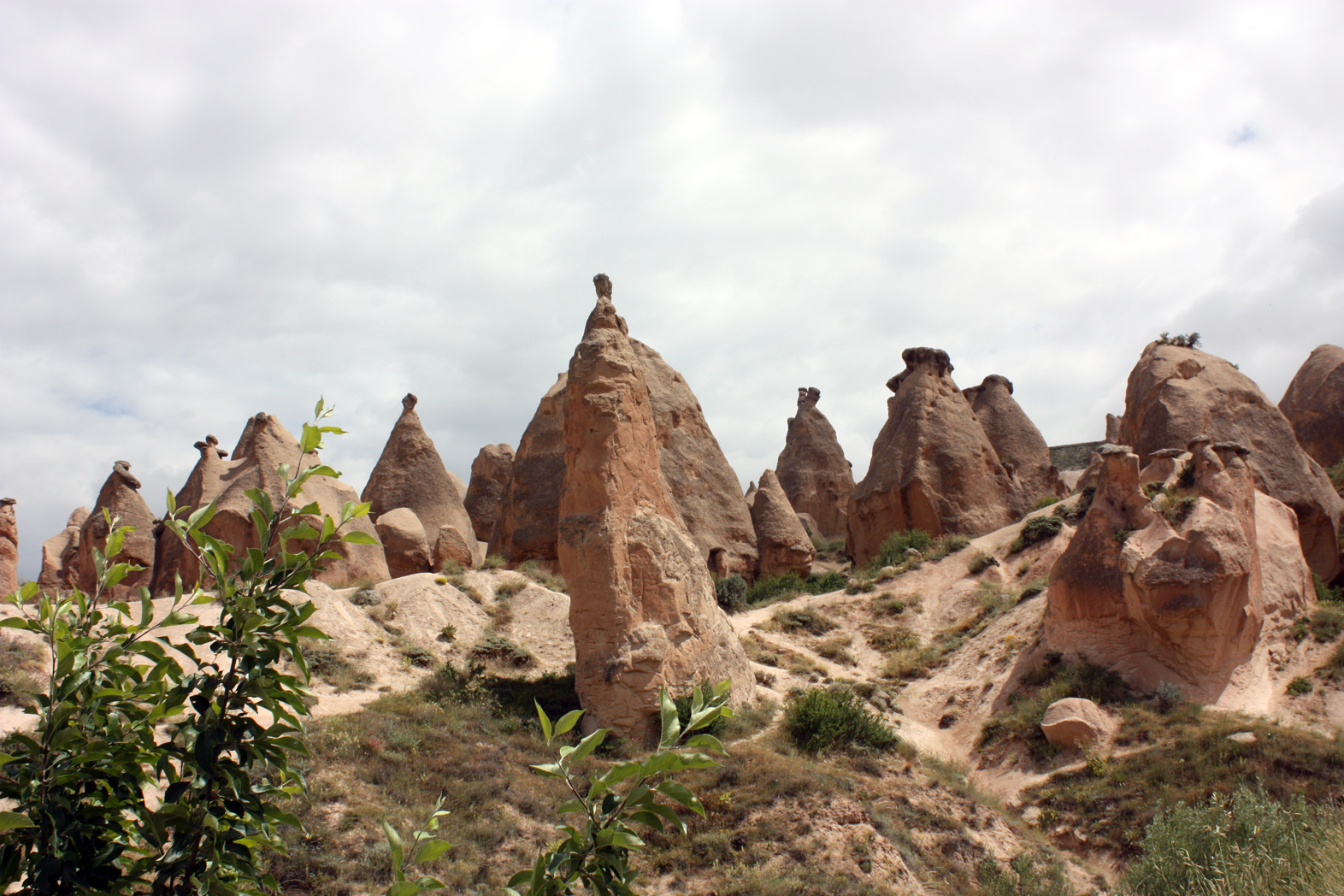
I’ve seen some remarkable places on our planet, but the images that sprung to mind right away were the ones I took in Cappadocia, a few years ago. Situated in central Anatolia, Goreme National Park has troglodyte villages, fairy chimneys and rock hewn churches, that date back to the 4th century.
This is an unforgettable world heritage site, that more than repays the effort it takes to visit. To learn more visit the Unesco site.
 I don’t know what they were up to but they were definitely partners in mischief!

 This is part of the old city wall.
 But it feels like I’m walking in the woods.
 One of the old gates, walking on past there are places to peep through.
 Dido and Daisy prefer the shade and would like to run off into the trees, I like the sun on my face.

 Ahh more steps!
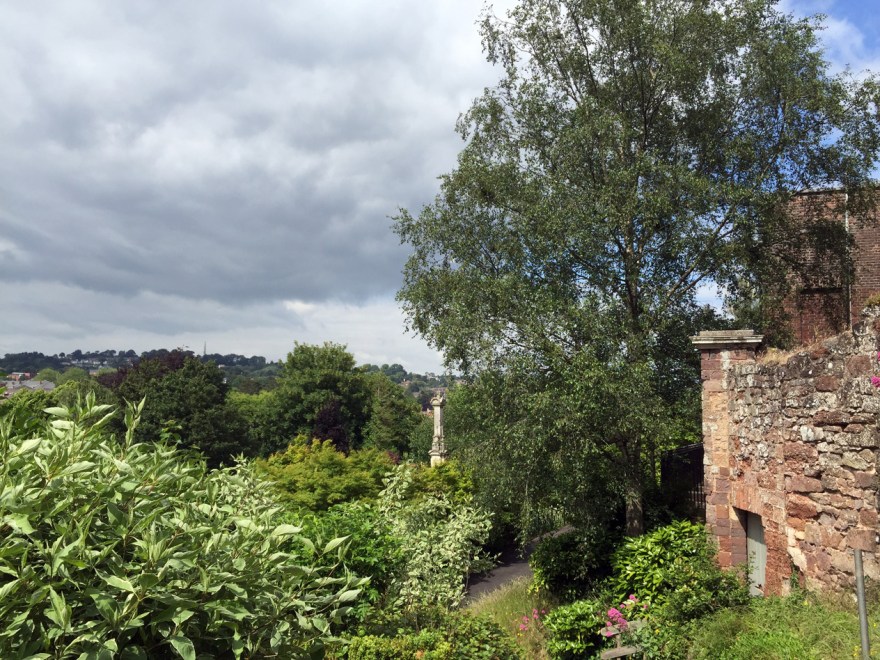 But the view makes it worth it.
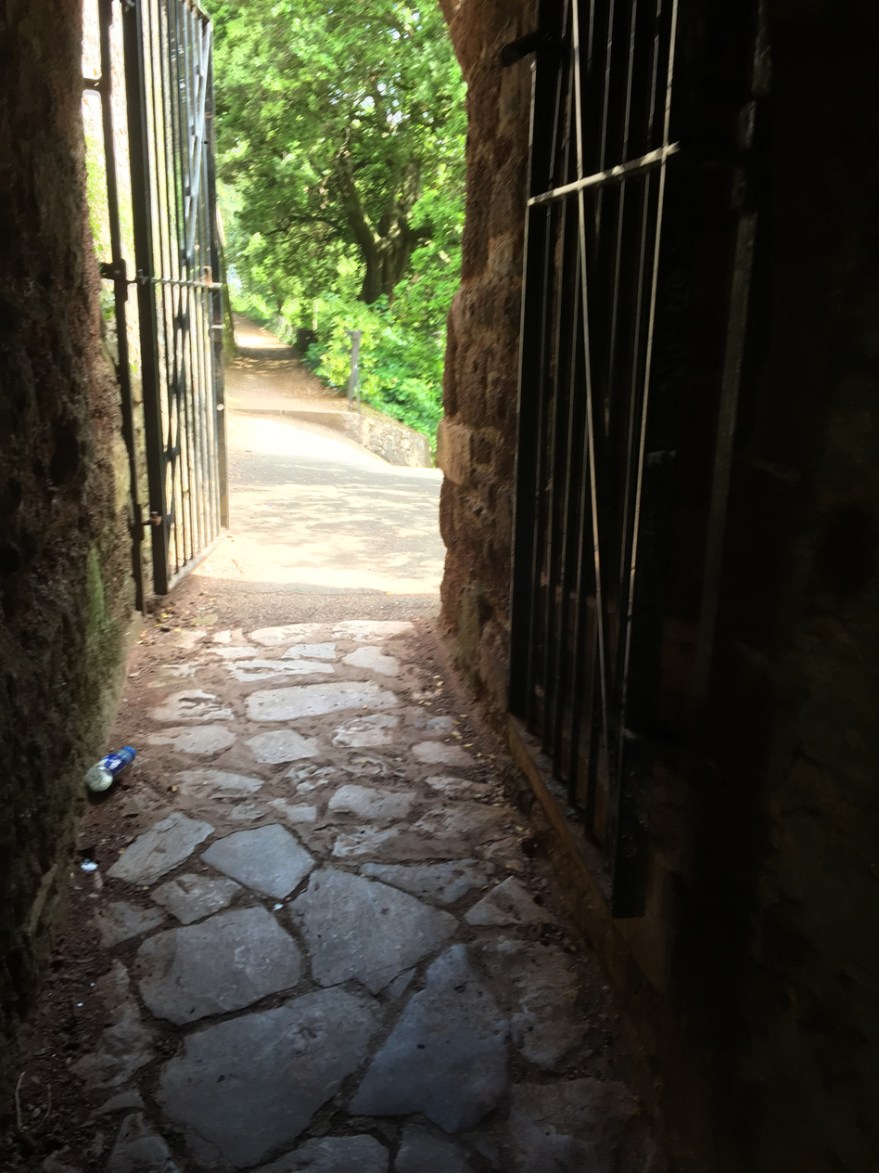 This is the entrance I was looking for. The path through Athelstan’s tower leads to Rougemont garden where you can walk inside the wall.



 A last little bit of treasure.
 Next, there’s a humpy hedge behind these curvy evergreens. Apparently when it was a baby hedge, there was a very harsh winter and it was weighed down by snow. The gardeners tried to repair it, but failed and knowing they’d lost the battle, they decided to allow it to grow it’s own curvy way.

 Via Topsham Quay, looking back down to the estuary.
 and back up towards Exeter.
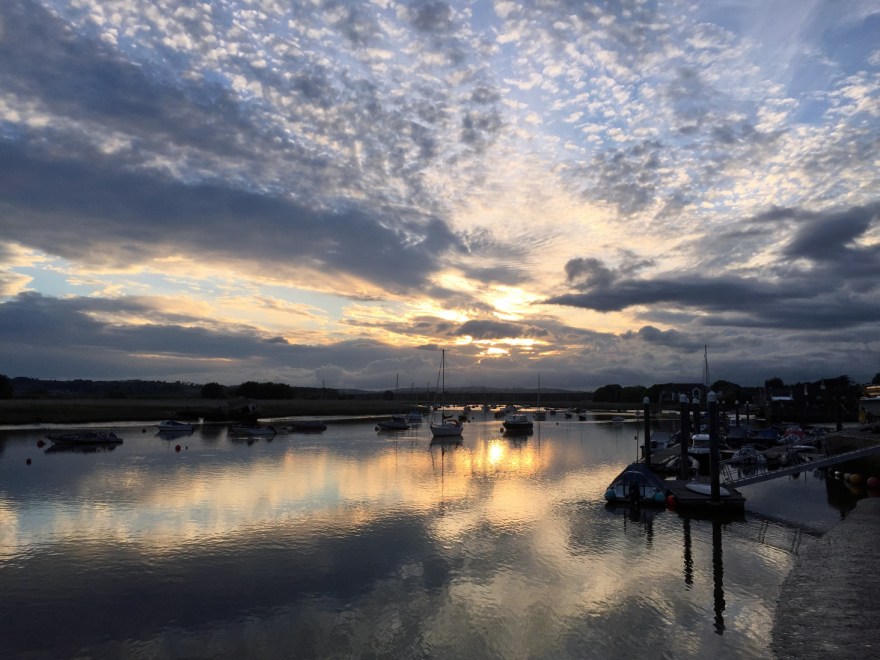 The grey sky and heavy rain of the afternoon cleared away for a lovely evening.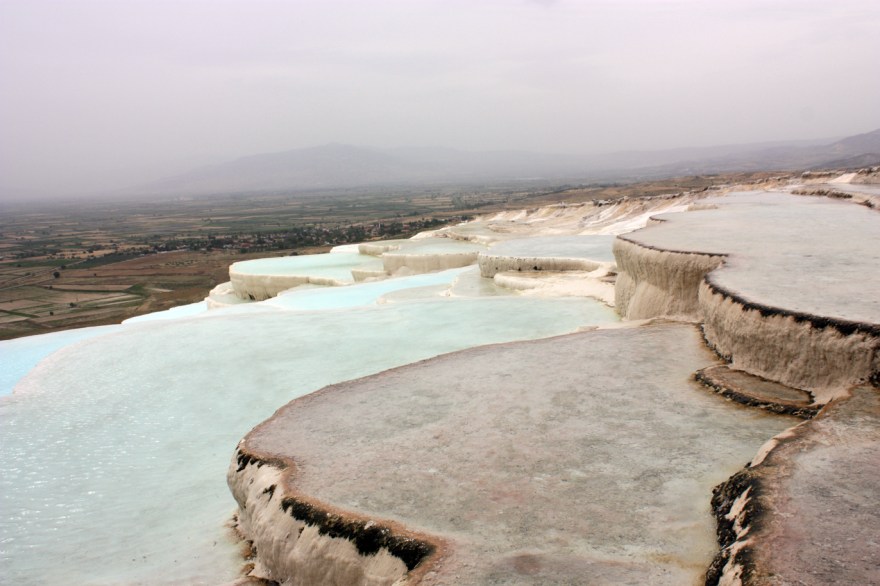

 They will be teenagers by now, I wonder how their lives have evolved.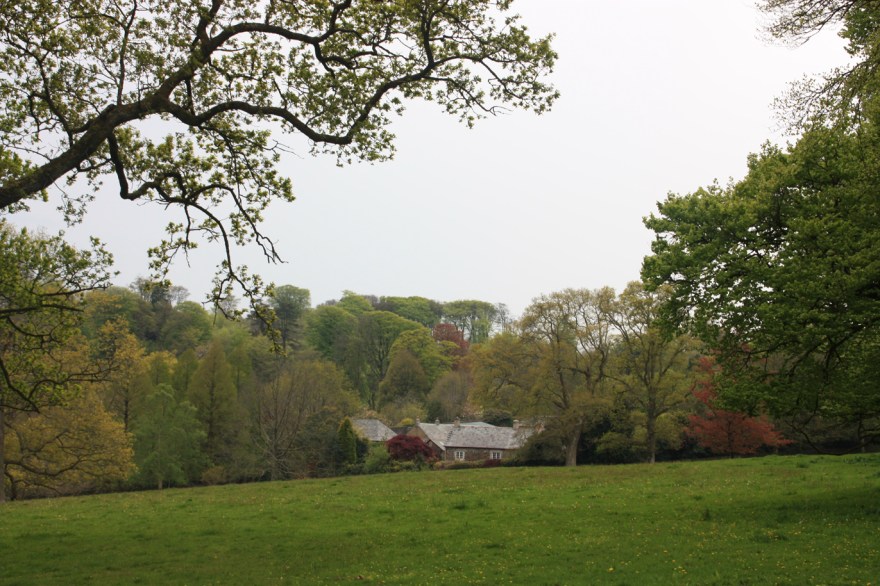






 Lucid Gypsy