What kind of image helps you relax? Perhaps it would include a sofa, a TV, a glass of wine? Mine would always relate to somewhere warm, with water and a lovely view.

This is the place . . .
Come away with the raggle taggle gypsy-o
What kind of image helps you relax? Perhaps it would include a sofa, a TV, a glass of wine? Mine would always relate to somewhere warm, with water and a lovely view.
This is the place . . .
It’s Black and White Sunday again, the week has flown by. Paula thinks that landscapes are everyone’s favourite theme, well I’m not sure that I agree, I find them quite difficult, especially in black and white.
My entry this week is an image of Aphrodisias, an ancient Greek city in central Anatolia.
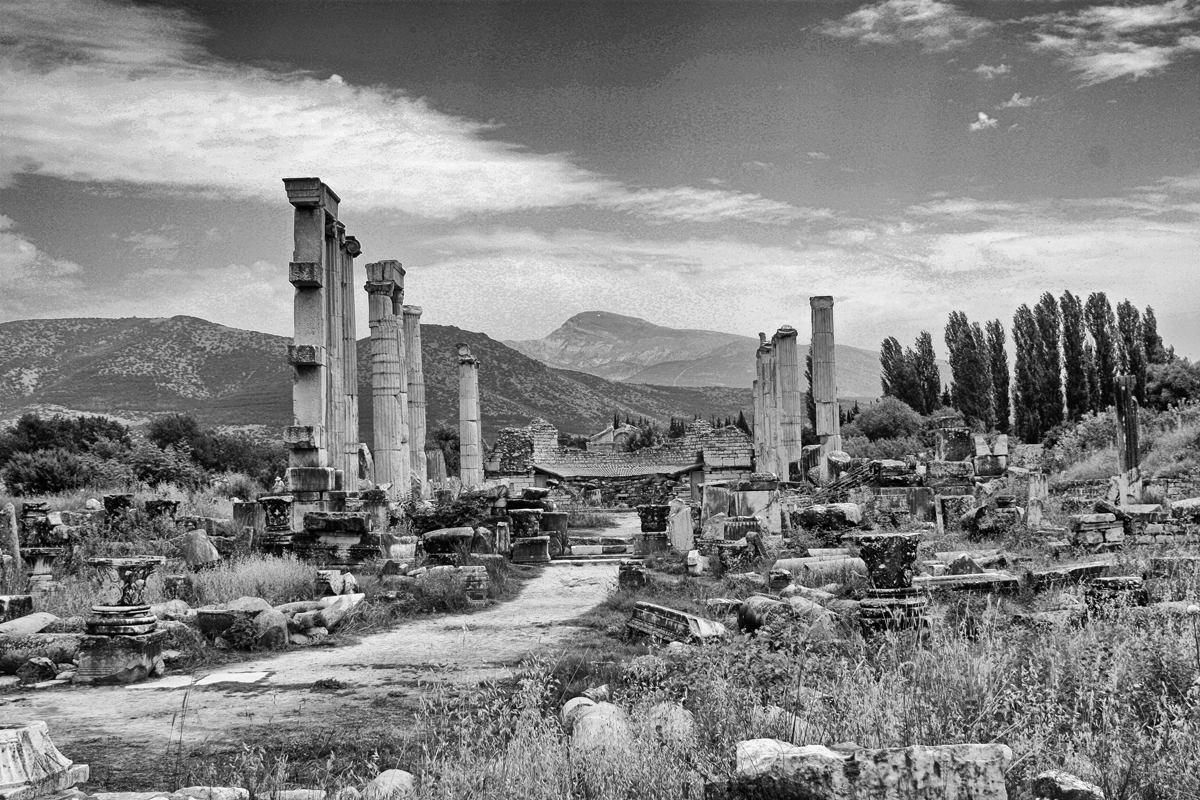 The city was named after the Greek goddess of love in the second century BC, but it’s long been a sacred site. It’s believed that neolithic people worshipped the mother goddess nearly six thousand years earlier. It’s less visited than Ephesus, but is far more interesting, especially with its connection to the sacred feminine.
Paula’s Thursday Special this week is twilight. I wasn’t going to post this week, because any photos I take at twilight tend to be beside the sea or river, and I’ve posted similar many times. But, I had a quick flick through and decided I like this shot of the Exe, taken at 9pm close to the longest day in June.
 You have until Thursday to join Paula’s challenge, meanwhile she has a gorgeous twilight photo of Florence.

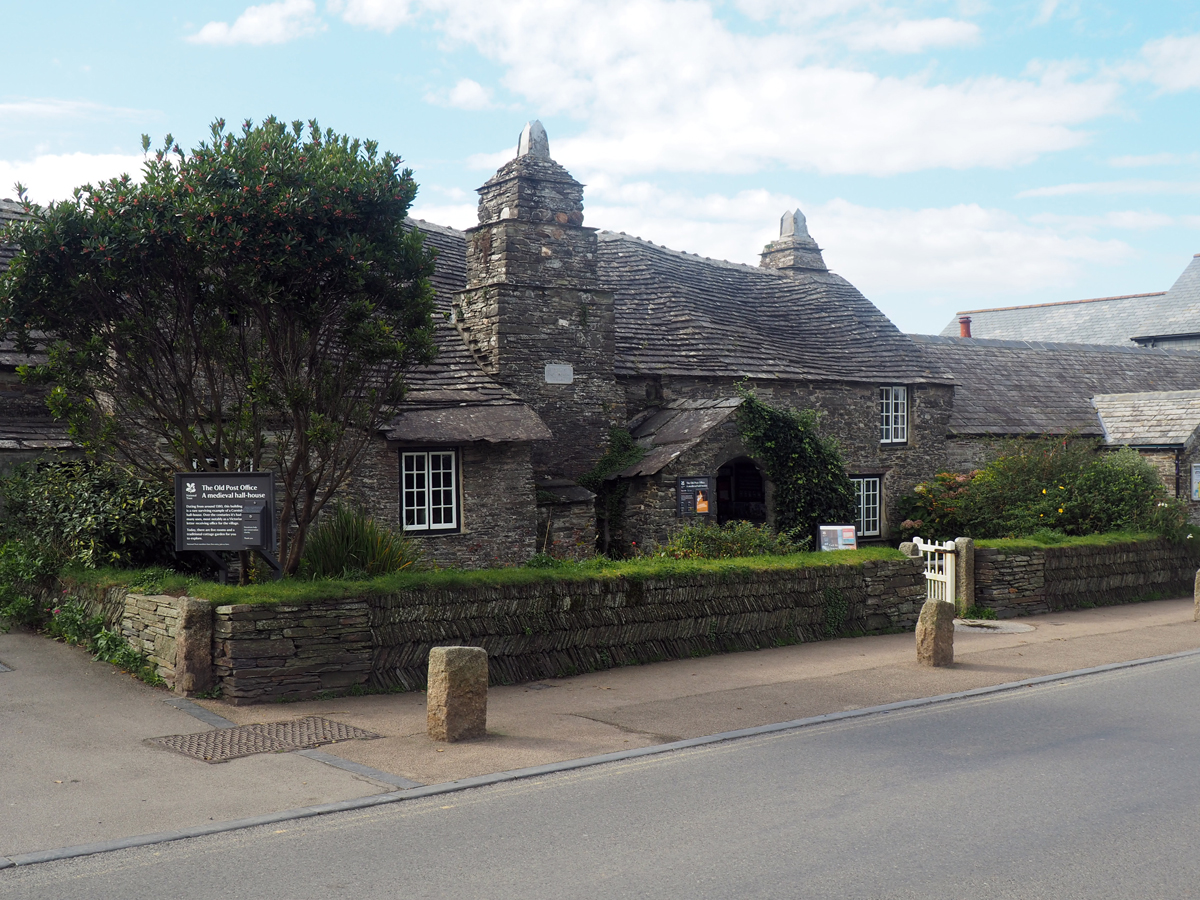
Tintagel in north Cornwall is a little village with a big story, it has long been associated with King Arthur. One of the first buildings you come across as you walk down the main street, is the Old Post Office. Dating from the 14th century,this grade 1 listed former manor house became a post office in the 19th century. It’s now looked after by the National trust. I was trying to avoid people, so it’s hard to see the wavy shape of the roof.
 The village is one of the most visited places in Cornwall and hence has many touristy souvenir shops.


A late start and an attempt at stopping in Boscastle, unsuccessful because of a lack of parking places, had led to empty tummies, but we managed to resist the lure of fudge! Instead we found the King Arthur’s Arms,

and had a tasty pub lunch. It was wonderful to be able to sit outside, in full sun even though it was October. All fuelled up we walked down the village, perhaps a hundred yards in the direction of the sea, and took a left turning from the road.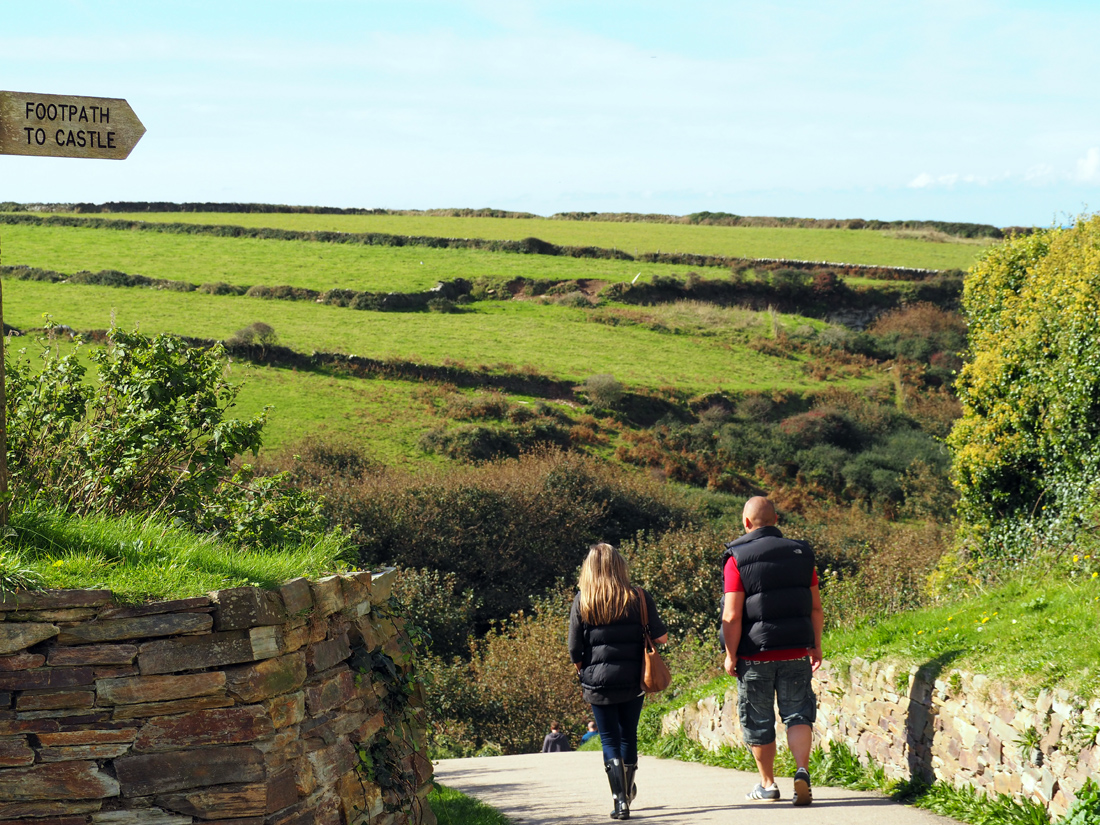 This is the lane that leads to the coast path and the castle.
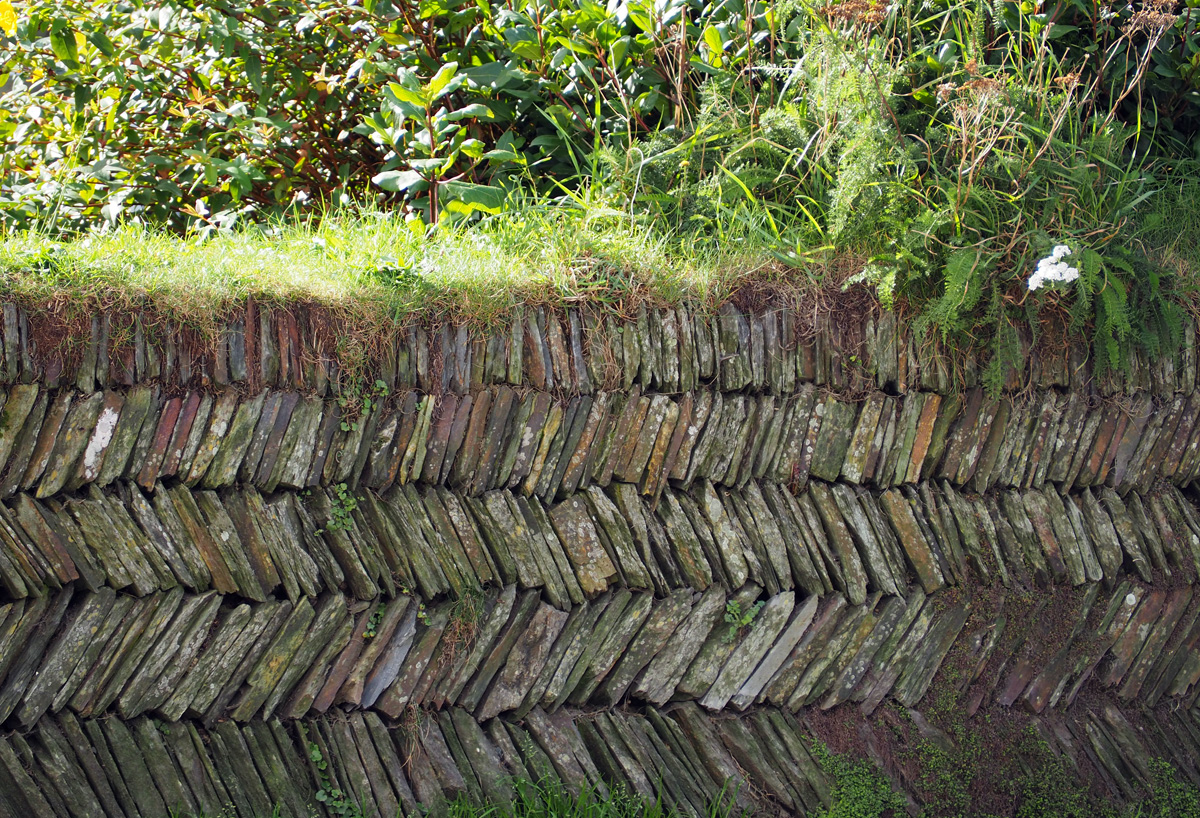 We passed this beautiful example of a Cornish dry stone wall.
 This old gate post shouted out ‘please photograph me’, knowing I’m not the only one who would like it, I thought it was my duty.
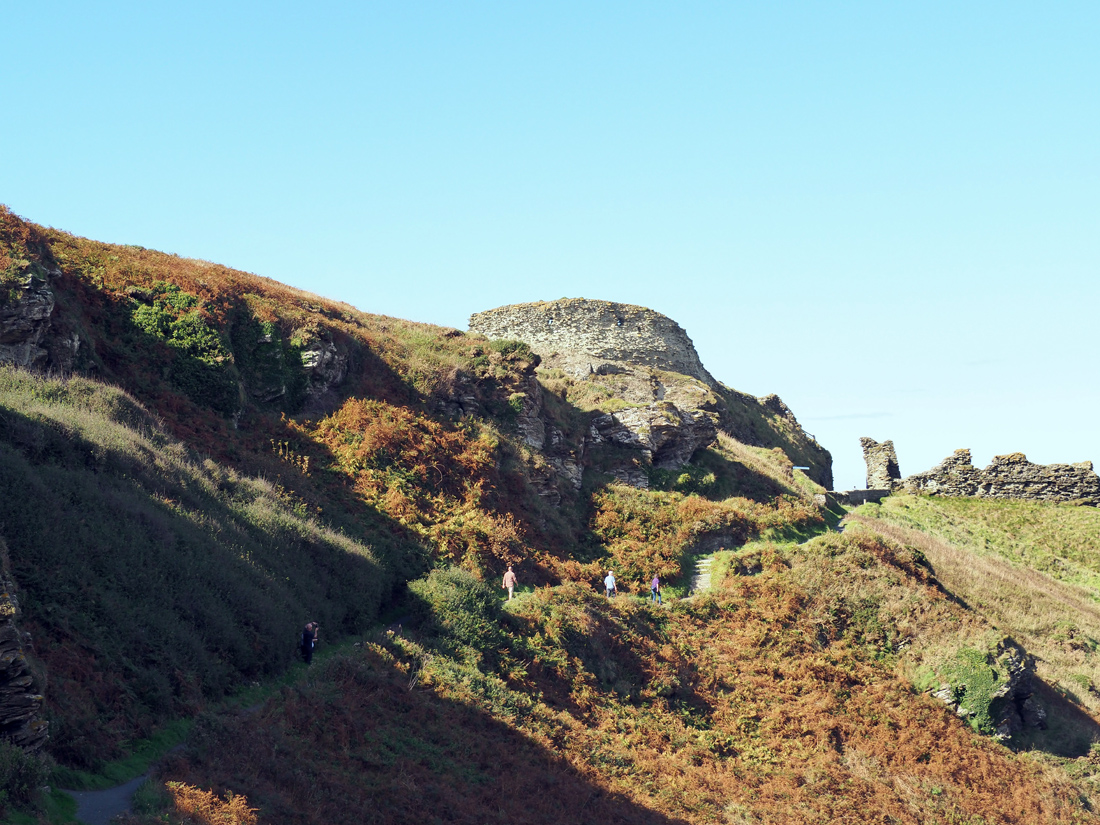 The track continued down towards the sea, but we took the footpath leading to the cliffs.
  It’s too late for the Thrift this year, the pink flowers will be back next spring, meanwhile the lichens and mosses cling on.
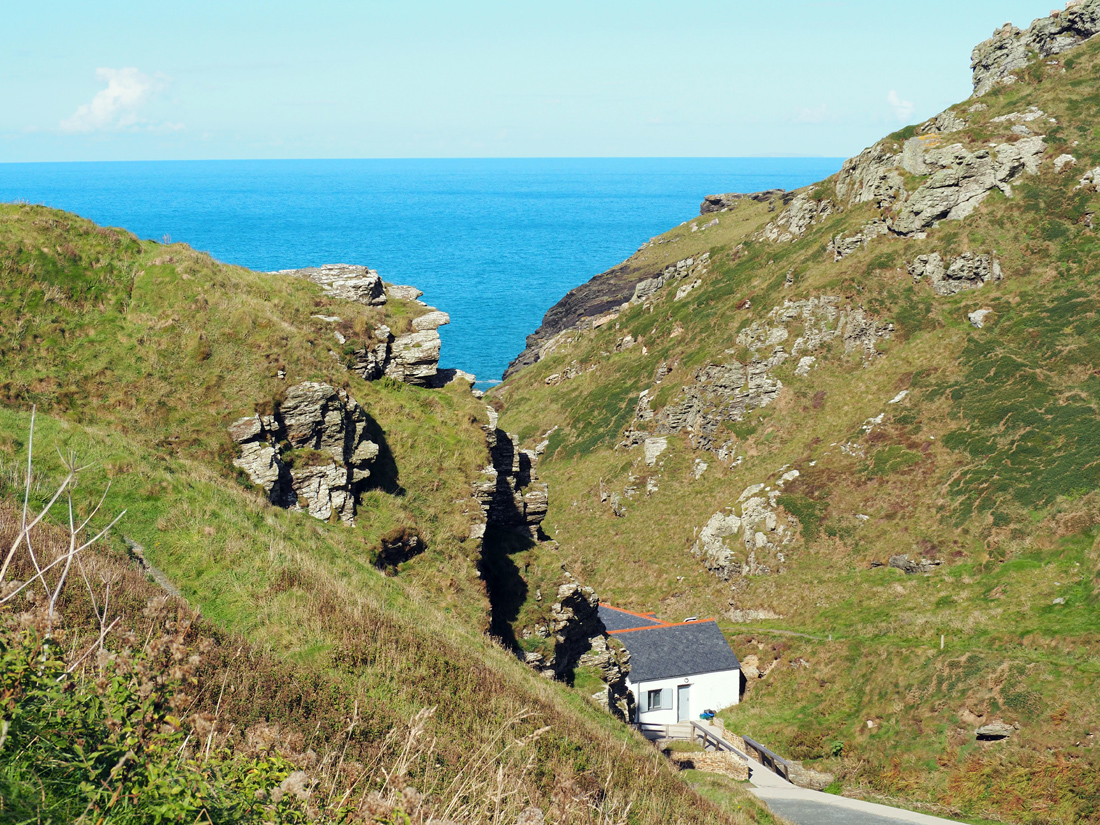 Looking down from the footpath, our first glimpse of the turquoise sea. It could be a Mediterranean island.
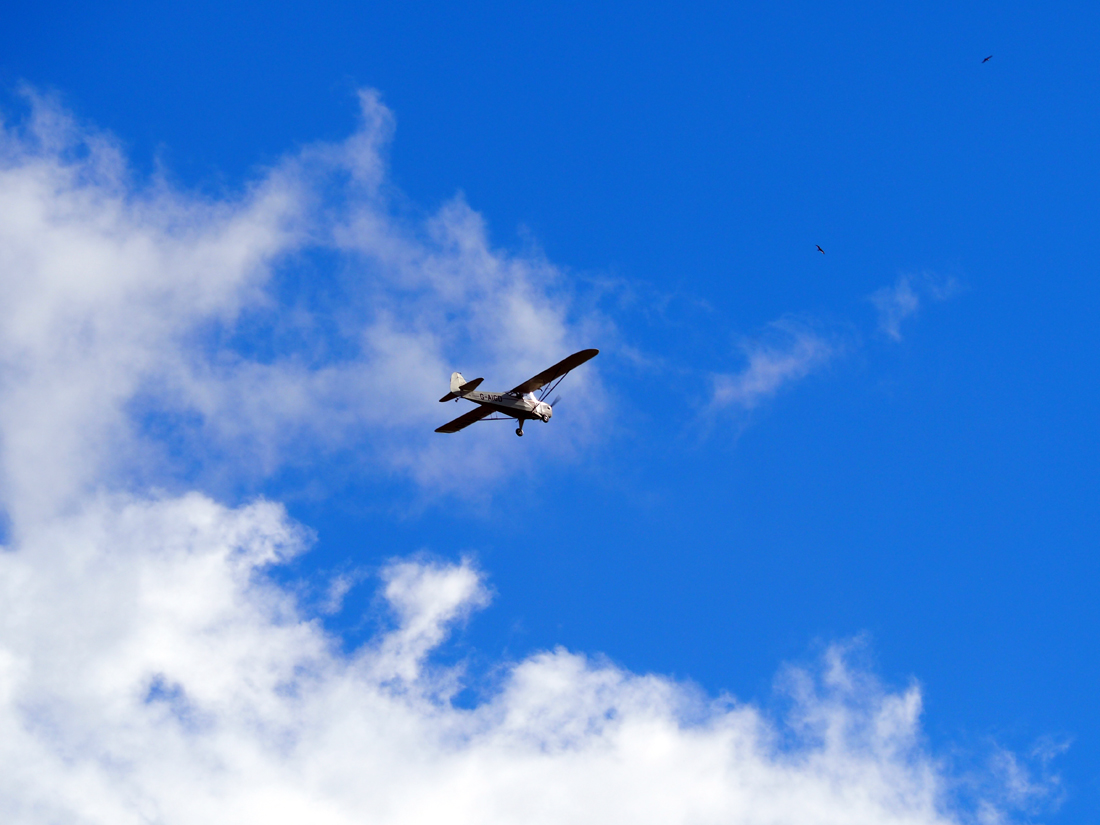 And above, a different shade of blue, and what a fantastic view the pilot of this plane had!
 I’m happy to settle for this view, of the amazing craggy rock stacks.
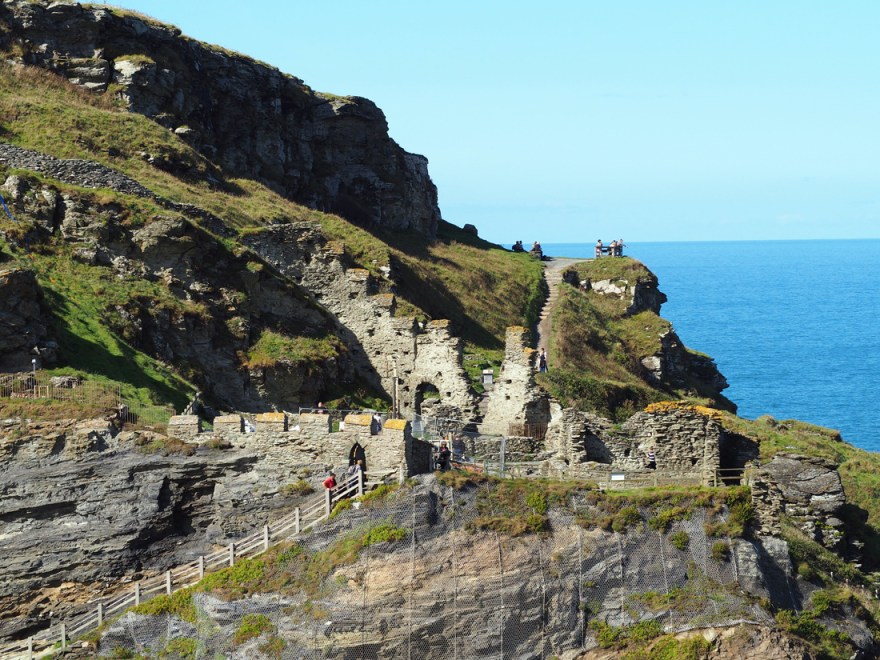 Across in the distance was the way to the castle, an English Heritage site. If we were earlier we might have had time to justify the entry cost of £8 each, but for an afternoon stroll we preferred the peace of the hill.
 So up we went, and then he came down, crazy guy, I wouldn’t have had a hope of staying on a bike on that track.
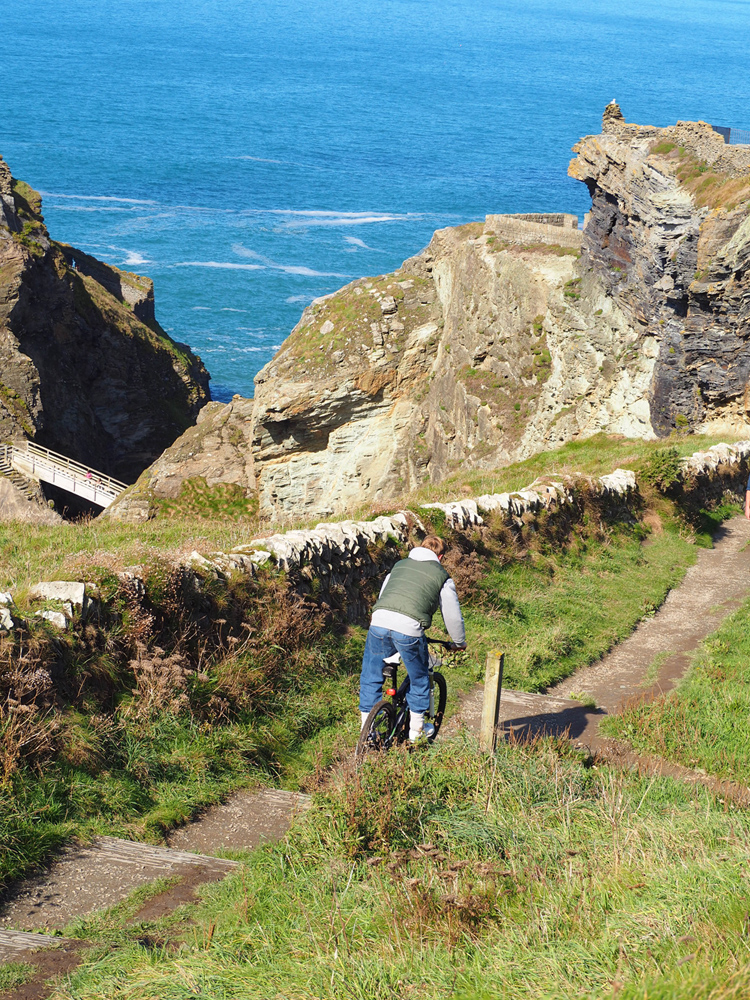
Through the narrow gap at the top of the path, the view opens up of the footbridge leading to the castle.

 I don’t think that footbridge would be everyone’s up of tea, do you?
We’ve made it up the hill though, and so have they, how clever bringing their own seats.
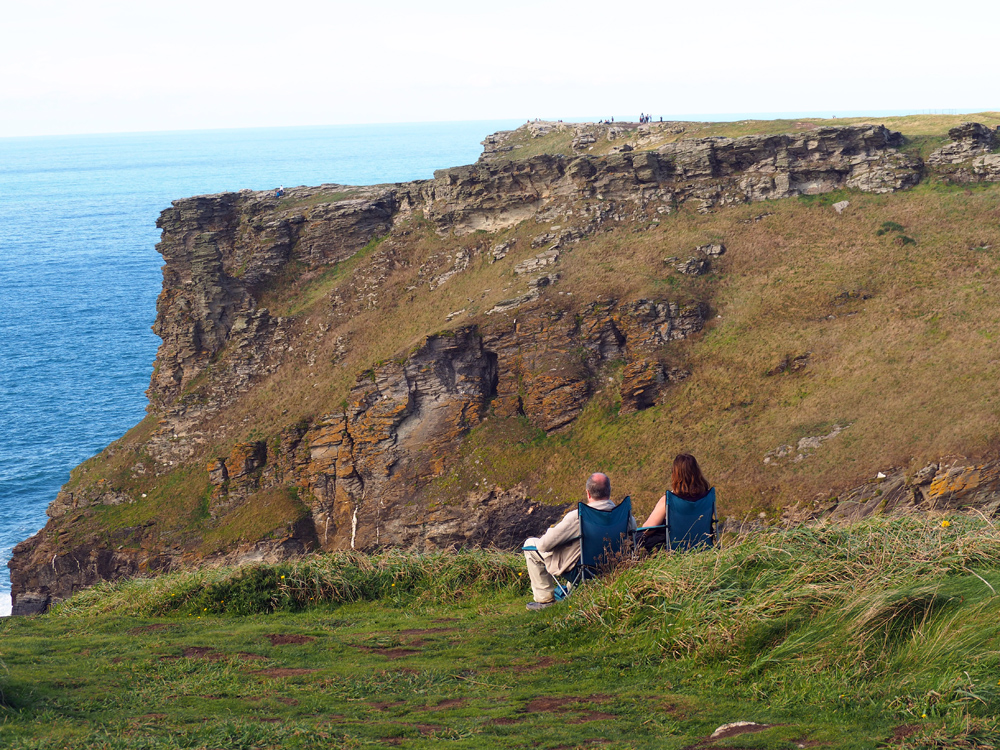 A few well places benches up here would be wonderful.
 Never mind we’ll walk on. It isn’t very far along the top and should you prefer driving there’s a car park at Glebe cliff, that I think is National Trust. From there you could walk east towards the castle, and enjoy the views while avoiding any climbs.
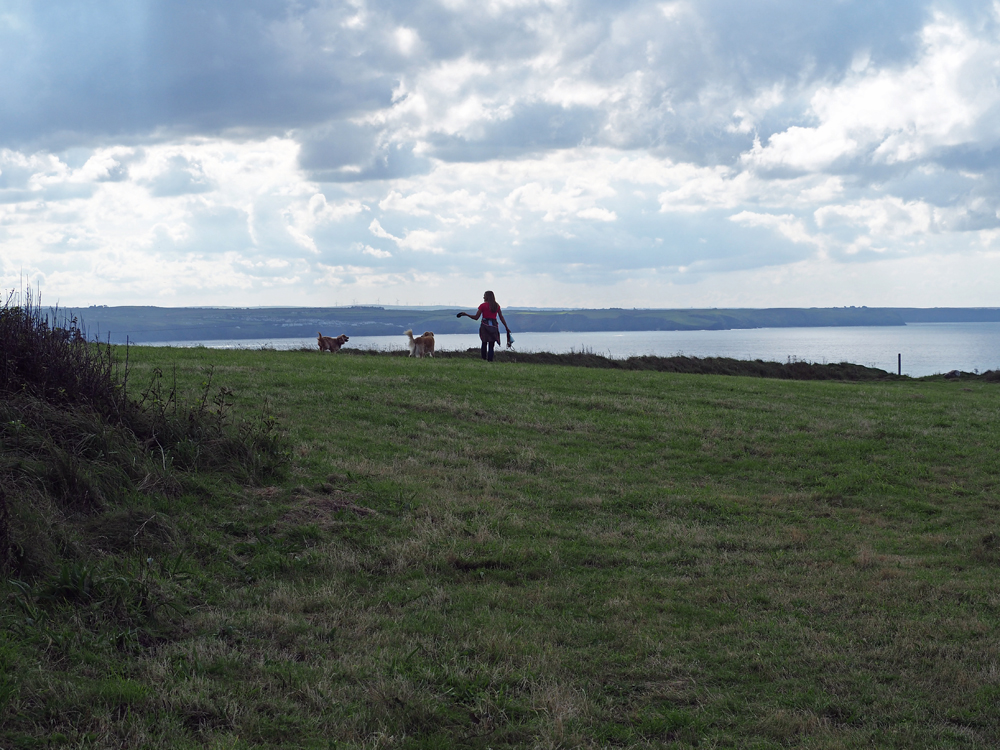
It’s a great place for dog walking, Dido and Daisy were happy.

We left the sea behind to look in the church, and there were more stone walls.


Another old gate post
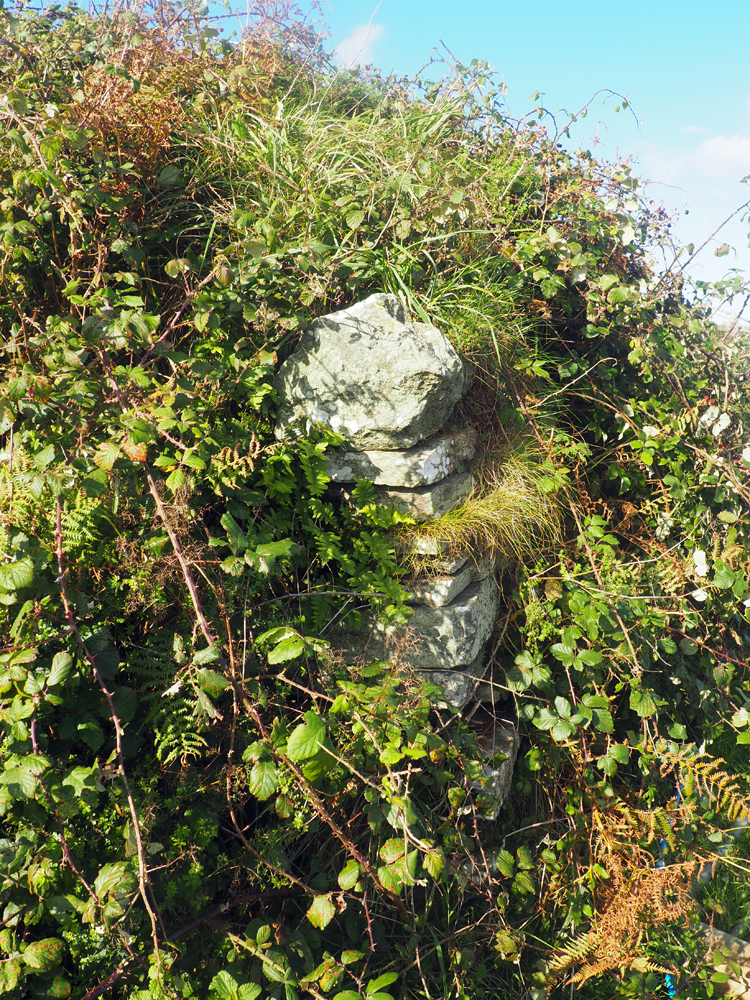 And then a lane leading back to the village.
 A last look at the Old Post Office – for now!
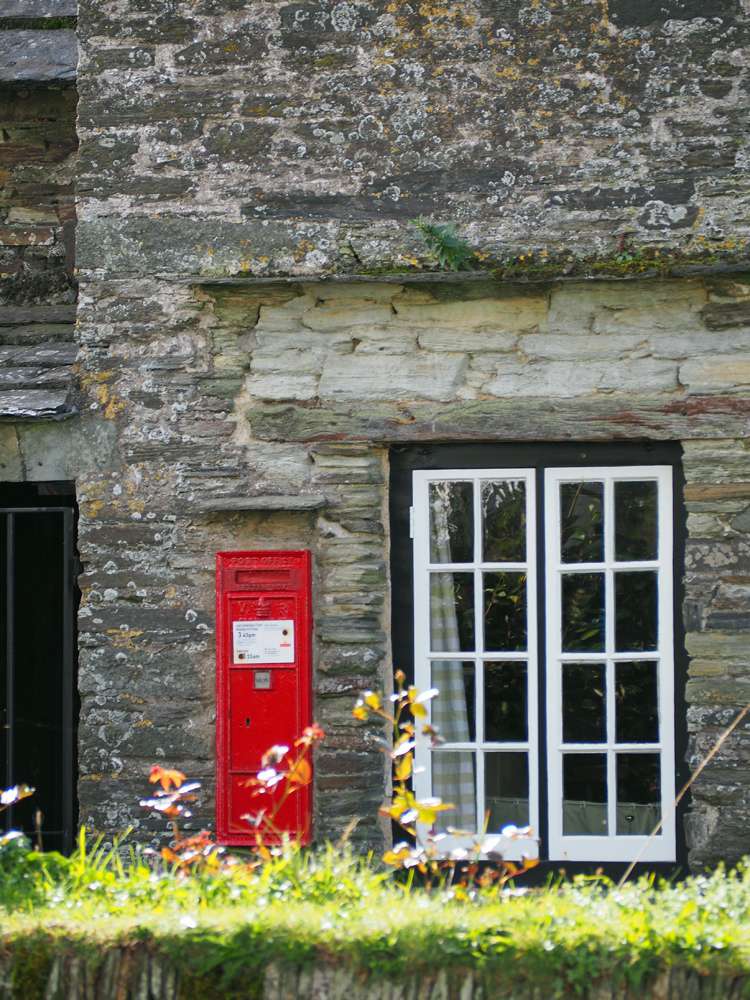 I’m sharing this walk with Jo, visit her Monday Walks to see where her other friends have been this week. Mine is a mere two miles, but worth it if you’re in the area and you can always walk the whole of 630 miles of the South West Coast Path while you’re here.
As someone who likes sculpture, I have to confess to being a complete idiot. You know how you walk past something regularly and don’t even notice it? well this is one of those things. Commissioned in 1977 by Exeter city Council, for the Queen’s Silver Jubilee, it’s one of a series by Peter Thursby, and named Looking Forward.
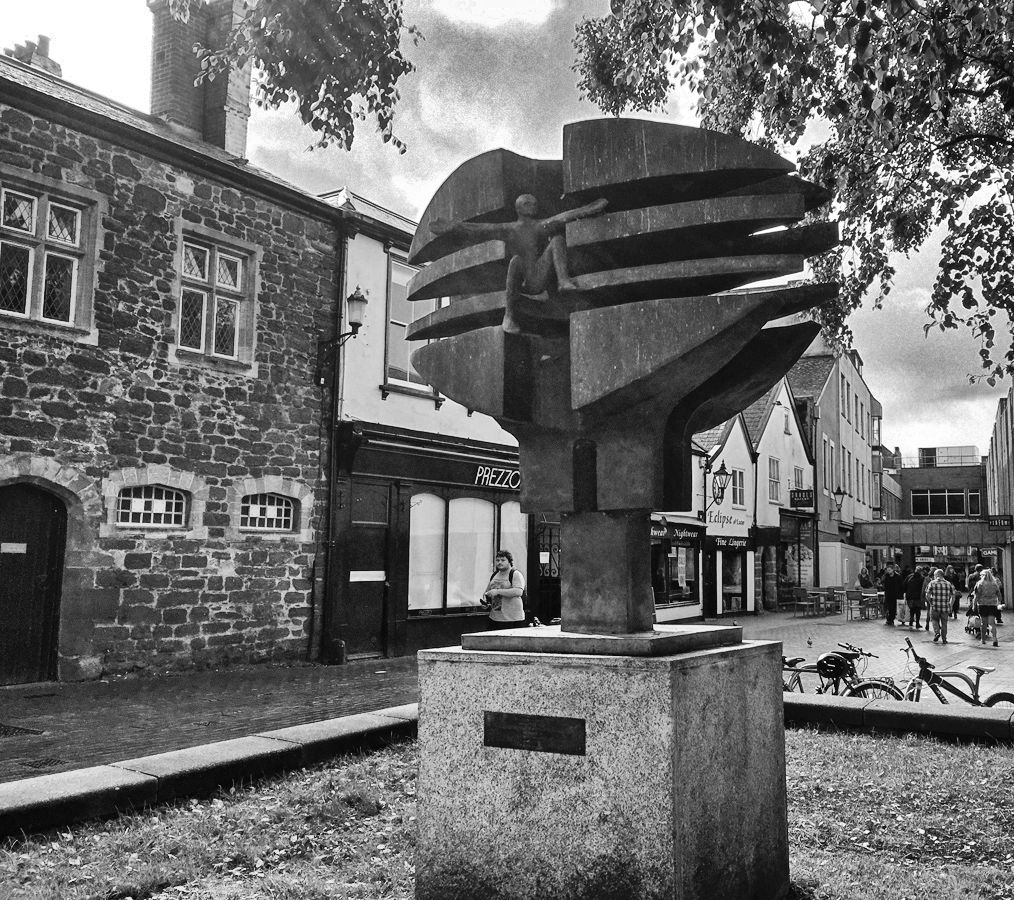
The sculpture depicts a Podman, they were ‘Little men on scaffolding, constructing buildings. They appeared to be framed in boxes, like peas in a pod’. Thursby made a full sized model from polystyrene in his Exeter studio. The finished work was cast by the Chris Blackmore foundry near Ashburton.
Will any of you confess to discovering something that you’ve walked past hundreds of times and not seen?
Paula has given us a list of five words to choose from for her Thursday special this week. I’ve chosen two, ascending and luminosity, in one photo.
 Taken with my i phone 6, I think the graininess adds atmosphere – that’s my excuse anyway – from the 6th floor of Hotel Casanova on the Gran Via in Barcelona.
The other words on Paula’s list are idleness, jaunty and whiff in case you’d like to join in, you have until Thursday.
Happy Sunday!
Cheri at the Daily Post has challenged us to celebrate the tiny things in life for this weeks photo challenge. This miniature cottage is a replica of the building I was standing beside, the Old Post Office at Tintagel, Cornwall, a National Trust property.

Do you have anything tiny to share? Join in here.
Barcelona’s Cathedral of the sea, isn’t actually a Cathedral at all, but a beautiful 14th century Gothic church. It was on my list of places to see in Barcelona this time, but on no particular day. In the event, we stumbled upon it by accident while wandering around El Born and La Ribera areas. In case you want to find it, it’s at the end of the street where you’ll find the Picasso museum, heading towards the sea.
The exterior of the church is a little dull, squeezed as it is in the narrow streets of the Ribera, and once you climb to the rooftop, you’ll see just how densely built the area is. You can enter the church without any cost at certain times of the day, but we were happy to pay our 8 euros for a tour of the rooftops. A tour was about to begin, so we had little time to consider the impact on our knees of climbing 140 steps!


There’s another chance to draw breathe after 60 more steps, then just 10 and you’re on the roof.


The church of Our Lady of the Sea was well worth the visit, I’m so glad we stumbled upon it. I believe that if your timing is good, you may get to hear musical rehearsals. It’s known as the people’s church, and because of it’s beauty, it’s also one of the most popular for weddings. I hope you enjoyed sharing my visit.
I went to Park Guell last year, but my friend didn’t so that was a great excuse to go again! But I won’t bore you with more of the same, instead, I’ve created a gallery of some of the smaller details, the Trencadis mosaics.


It’s commonly believed that Gaudi, Park Guell’s architect, invented the Trencadis modernist style, but it’s more likely that it originated in the ancient Arab world. I’ve tried mosaic work, just making a house number. The result was pretty good, but it was very hard on my hands, and I wouldn’t want to do it again. I can’t imagine the number of hours it must have taken to create Park Guell.
 Lucid Gypsy